 Guide On Map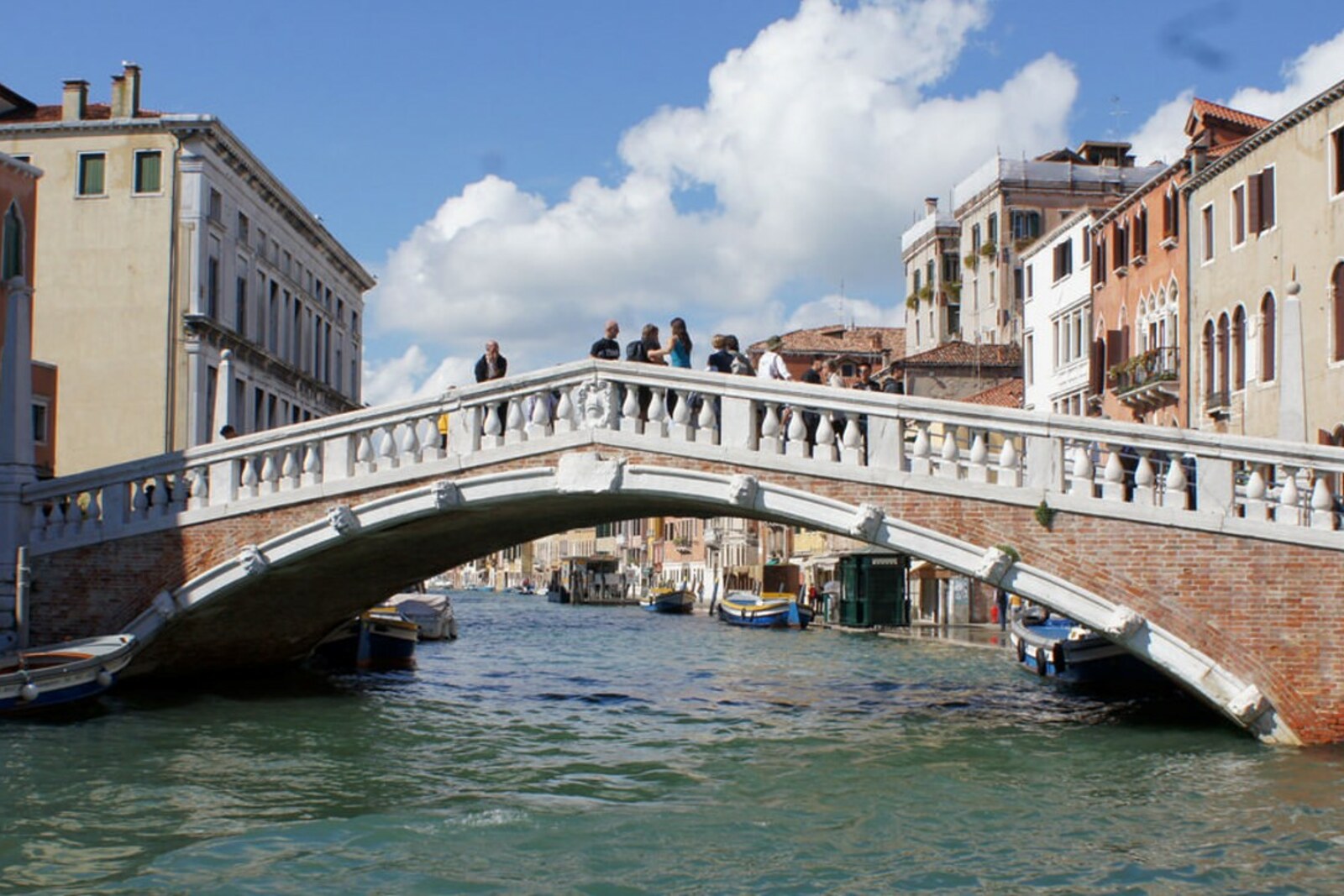
Look around first
What to notice
- Four stone obelisks
- Stone arch
- Balustrade with the master builder's name and the doge's coat of arms
- Canal beneath the bridge
The story of the place
Four stone spires on the balustrade immediately identify the bridge across Cannaregio; a later reconstruction gave it its present name. The stone arch links the bank by San Geremia with the route from the railway station toward Strada Nova and the streets of the ghetto. Beneath it, boats still travel between the Grand Canal and the northern lagoon.
At the end of the thirteenth century, people crossed the Cannaregio Canal here by raft. For pedestrians, the water broke the road, while boatmen used a direct route between the Grand Canal, Murano, and the northern lagoon. The crossing point was chosen by the bank of San Geremia: land routes already converged here.
In twelve eighty-two, Doge Giovanni Dandolo and his council proposed connecting the banks with a temporary bridge. The whole district was to bear the expense, and the temporary bridge was given only one year—they wanted to test whether the crossing would hinder navigation. The Great Council of Venice rejected the proposal. Supporters of the bridge sought an uninterrupted pedestrian route; opponents defended boat traffic and access to the quays.
Sixteen years later, the dispute flared up again. This time, the bridge's supporters prevailed, but they did not block the navigable canal. The wooden crossing was made drawbridge-style: its two halves rested on rows of piles and opened apart, allowing boats with masts to pass. This is how the bridge is shown on an early sixteenth-century map of Venice. Pedestrians gained a route across Cannaregio, while boatmen retained access to the lagoon.
In May fifteen eighty, the chief master builder Marchesin Marchesini replaced the wooden crossing with a stone arch. His name and the coat of arms of Doge Niccolò da Ponte were left on the balustrade. The arch was raised high enough for vessels to pass beneath it: movable sections were no longer needed.
At that time, the bridge was called Ponte di Cannaregio—the bridge of Cannaregio. Four stone obelisks were added at the ends of the balustrade during the reconstruction of eighteen twenty-three. They were called guglie, meaning spires, and this later ornament gave the bridge its present name—Ponte delle Guglie.
Now a pedestrian route runs over the stone arch from the railway station toward Strada Nova and the streets by the ghetto. Beneath it, boats still travel between the Grand Canal and the northern lagoon, and the four spires above the balustrade distinguish the bridge from all other Venetian bridges.
Useful on site
Open urban space; usually accessible around the clock.
Checked: June 28, 2026. Check the official source before visiting.Look at the lower details without lingering in the middle of the narrow passage. Everything important is accessible from outside.