 Guide On Map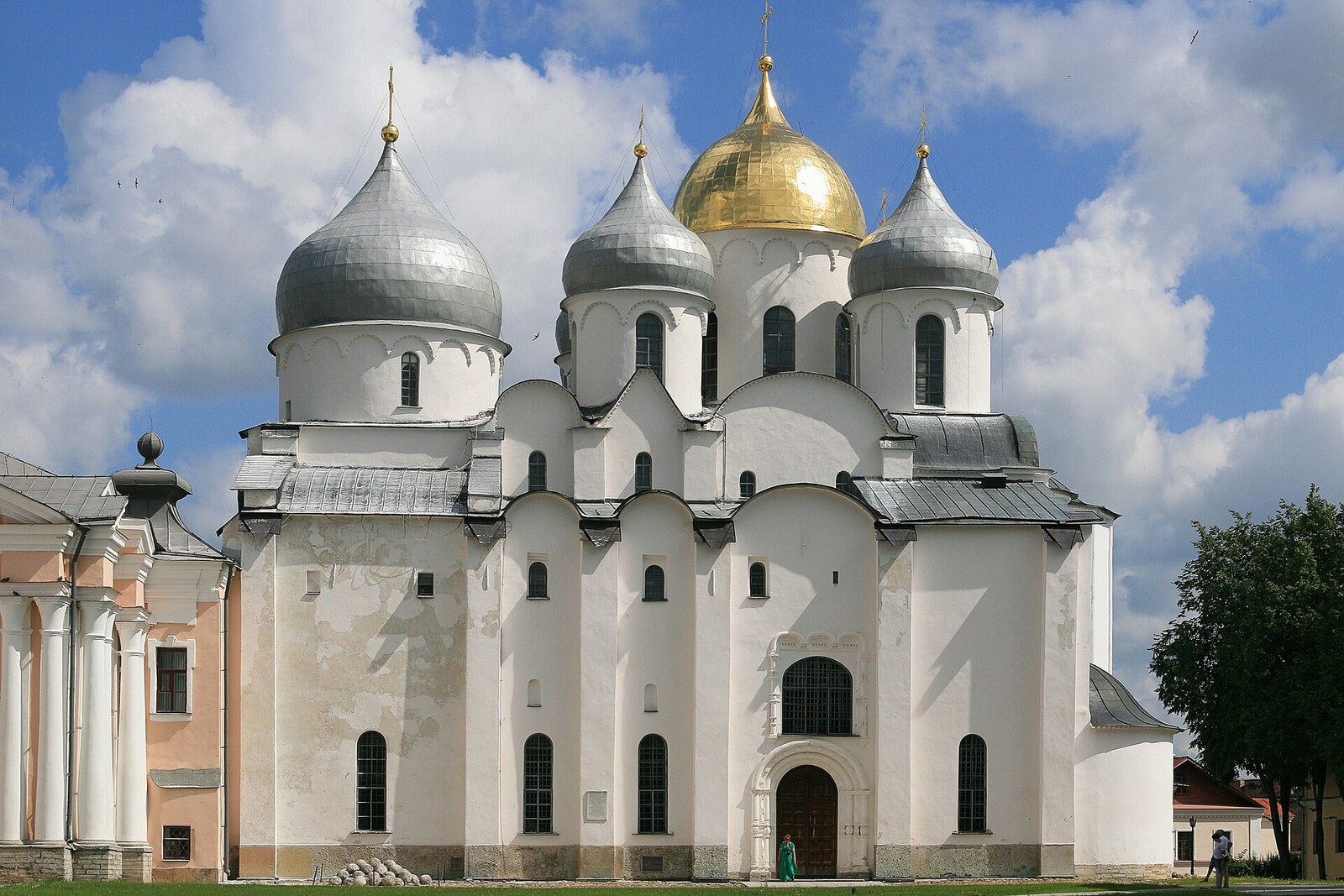
Look around first
What to notice
- Tsar's Prayer Seat
- Interior of St Sophia Cathedral
The story of the place
On August twenty-sixth, fifteen seventy, they began dismantling Archbishop Pimen's carved prayer seat in St Sophia Cathedral. A prayer seat was an enclosed chair beneath a canopy, reserved for the senior clergyman during services. Ten years earlier, Pimen himself had commissioned it from craftsmen in Veliky Novgorod and ordered them to carve an inscription on the cornice: made under Tsar Ivan IV, by order of the Archbishop of Novgorod.
Pimen headed the church of the vast Veliky Novgorod land and wanted to preserve his position before the tsar. His office came with the cathedral church, a court beside it, a treasury, and revenues from the lands of the House of St Sophia—the name for all the possessions of the Archbishop of Novgorod. Pimen had received Ivan IV here before, held prayer services for the tsar's health, and sent him icons and expensive gifts. The inscription above the chair also began with Ivan's name.
St Sophia Cathedral itself was the city's main church. In the middle of the eleventh century, it was commissioned by Prince Vladimir Yaroslavich of Novgorod and Bishop Luka. “Sophia” means “wisdom” in Greek: the cathedral is dedicated to Divine Wisdom, not to a female saint named Sophia. The head of the Novgorod church served here, his treasury was kept here, and princes and bishops were buried here. That is why conflict with the archbishop inevitably entered these walls.
In the winter of fifteen seventy, Ivan IV brought an oprichnina army to Veliky Novgorod—a special tsarist force sent to punish those suspected of treason. The tsar believed that the townspeople wanted to go over to the Lithuanian king and called Pimen the leader of a conspiracy. When the archbishop met Ivan and extended a cross for a blessing, the tsar did not approach the cross and publicly declared Pimen a traitor.
After this, both entered St Sophia Cathedral. Pimen held a service for the man who had just rejected his blessing. The archbishop then invited the tsar to a feast in the adjacent Faceted Chamber. Soon after the feast began, Ivan ordered his host arrested and ordered the Archbishop's Court and treasury plundered. The oprichniki also devastated St Sophia Cathedral and other city churches.
Pimen was taken out of Veliky Novgorod, forbidden to officiate, stripped of his archiepiscopal rank, and sent into monastic confinement. A year later, he died there. The revenues, court, treasury, and place in the cathedral for which he had spent years affirming his loyalty to the tsar were taken away.
By Ivan's order, craftsmen dismantled Pimen's chair and began making a new one for the tsar beside it. The carved Tsar's Prayer Seat, completed in the early fifteen seventies, is still inside St Sophia Cathedral. Pimen's seat has also survived, but dismantled: its parts are kept in the Veliky Novgorod Museum.
Useful on site
The cathedral is open daily from 08:00 to 20:00; services are usually held at 10:00 and 18:00, except on Monday and Tuesday.
Checked: date not specified. Check the official source before visiting.Remember that this is an active cathedral: during a service, pause your sightseeing, mute your audio, and follow the accepted dress rules.