 Guide On Map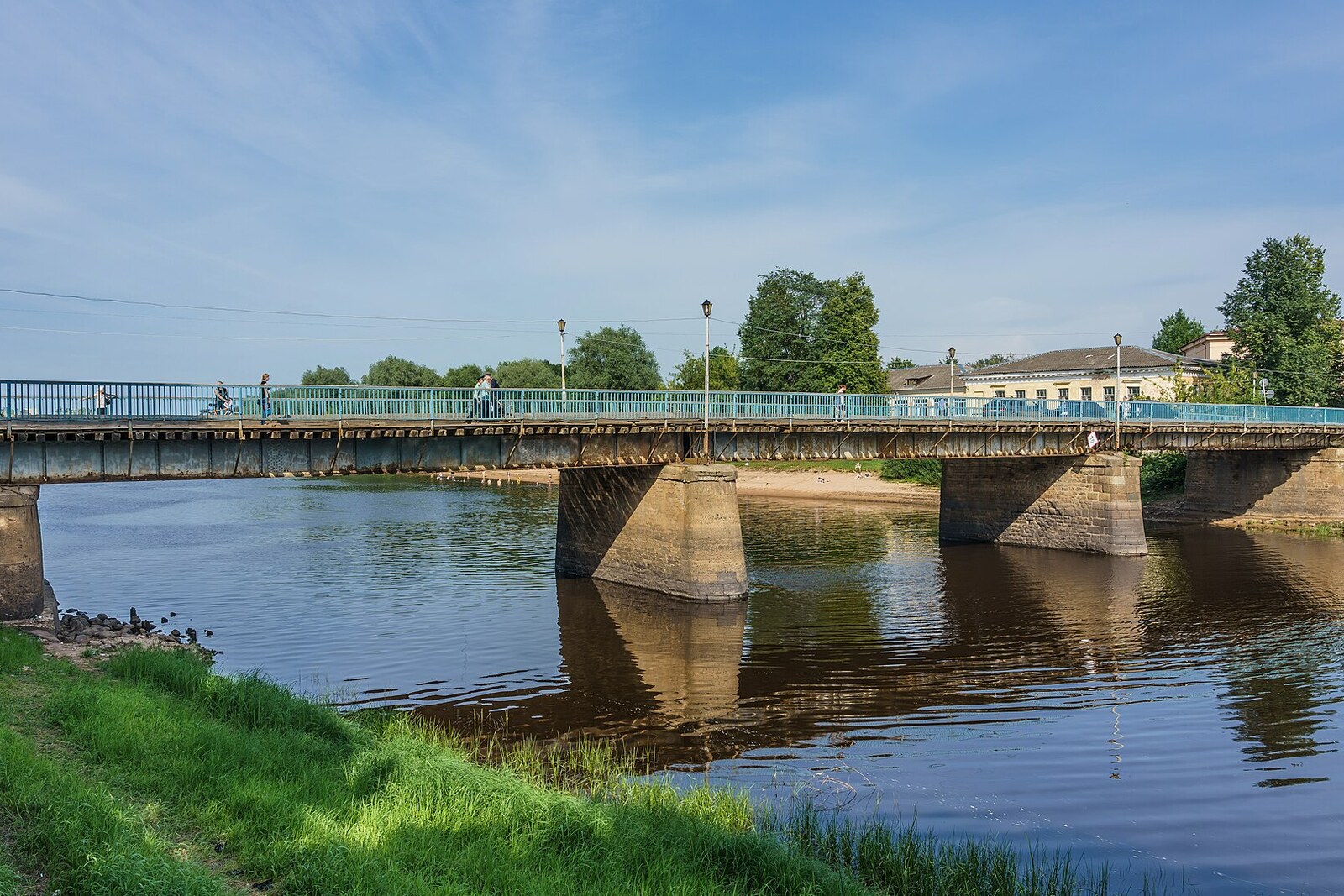
Look around first
What to notice
- The narrow channel of the Polist
- Short spans
- Bridge deck
- Road from the Dubovitsy side
The story of the place
The present-day Zhivoi Bridge occupies the narrowest point of the Polist. At first, the Uzhinsky Ferry operated here; then the townspeople connected the banks with a pontoon bridge made of bound-together rafts. Beneath cart wheels, the rafts swayed and drifted apart on the water—hence the popular name. In eighteen thirty, the floating crossing was replaced by a permanent bridge on stone piers and ordered to be called Alexandrovsky Bridge. The people of Staraya Russa did not accept the new name.
A year later, it became clear how important this very narrow crossing was. At that time, Staraya Russa was the center of military settlements. The surrounding peasants cultivated the land and were also listed as soldiers: their families lived off the harvest, while the householders themselves were subject to drill discipline, performed duties, and quartered military personnel. During the cholera epidemic, unfamiliar sanitary measures and rumors that officers and doctors were deliberately poisoning people were added to the existing discontent. In July eighteen thirty-one, soldiers and townspeople rose in revolt; from Staraya Russa, it spread through the surrounding regimental districts.
On July twenty-first, under the calendar then in use, a crowd of military settlers moved from Dubovitsy toward the town. General Nikolai Leontyev, commanding the troops assembled in Staraya Russa, was to hold them back beyond the Polist. A cannon was positioned on the bridge, aimed along the road, and a company was drawn up at the entrance.
However, a reserve battalion of the same regiment to which the advancing men belonged was stationed in the town. On one side of the river stood the settlers; on the other were their fellow villagers and relatives in soldiers' ranks. One of the crowd's leaders, the noncommissioned officer Vasilyev, demanded that the general, the officers, and the officials of the regimental administration be handed over. The soldiers in the square refused to obey their commanders, pushed back the artillery crew, and seized some of the guns.
When the settlers moved toward the bridge, the officer commanding the cannon asked for permission to fire. Leontyev still hoped to stop the people without a volley and ordered the cannon taken back. The crowd saw that the passage was open and rushed across the bridge. The soldiers on the town bank greeted their fellow villagers with shouts and let them through to the square.
Leontyev tried to take shelter among the ranks of the jägers, but they parted. Workmen from the Tenth Military Workers' Battalion and settlers pulled the general from the ranks and beat him; he died that night. Another twenty officers were killed that day, and about thirty were severely beaten. By evening, the settlers had gone back to their districts.
By the end of July, the uprising had been suppressed. More than five and a half thousand people were arrested in connection with it; over one thousand seven hundred were sentenced to punishment by running the gauntlet, the whip, or rods, and more than nine hundred were sent to serve in remote corps. In November, Emperor Nikolai I reorganized the rebellious districts: instead of permanent military service, the inhabitants began to pay quit-rent and provide recruits.
The bridge by which the settlers entered the town has not survived intact: it was rebuilt, and two spans were later destroyed during the war. There is no memorial marker at the cannon's location. What remains is the short crossing itself between the road from Dubovitsy and the central square—and the name that the townspeople refused to change even by the highest imperial order.
Useful on site
According to the published repair schedule, the bridge is closed to vehicles, but pedestrian access is expected to remain. The planned completion date is July 21, 2026; actual access should be checked on the day of your walk.
Checked: date not specified. Check the official source before visiting.Before approaching, check whether pedestrian access is open. On the bridge, stay within the permitted section and do not linger where you obstruct traffic.