 Guide On Map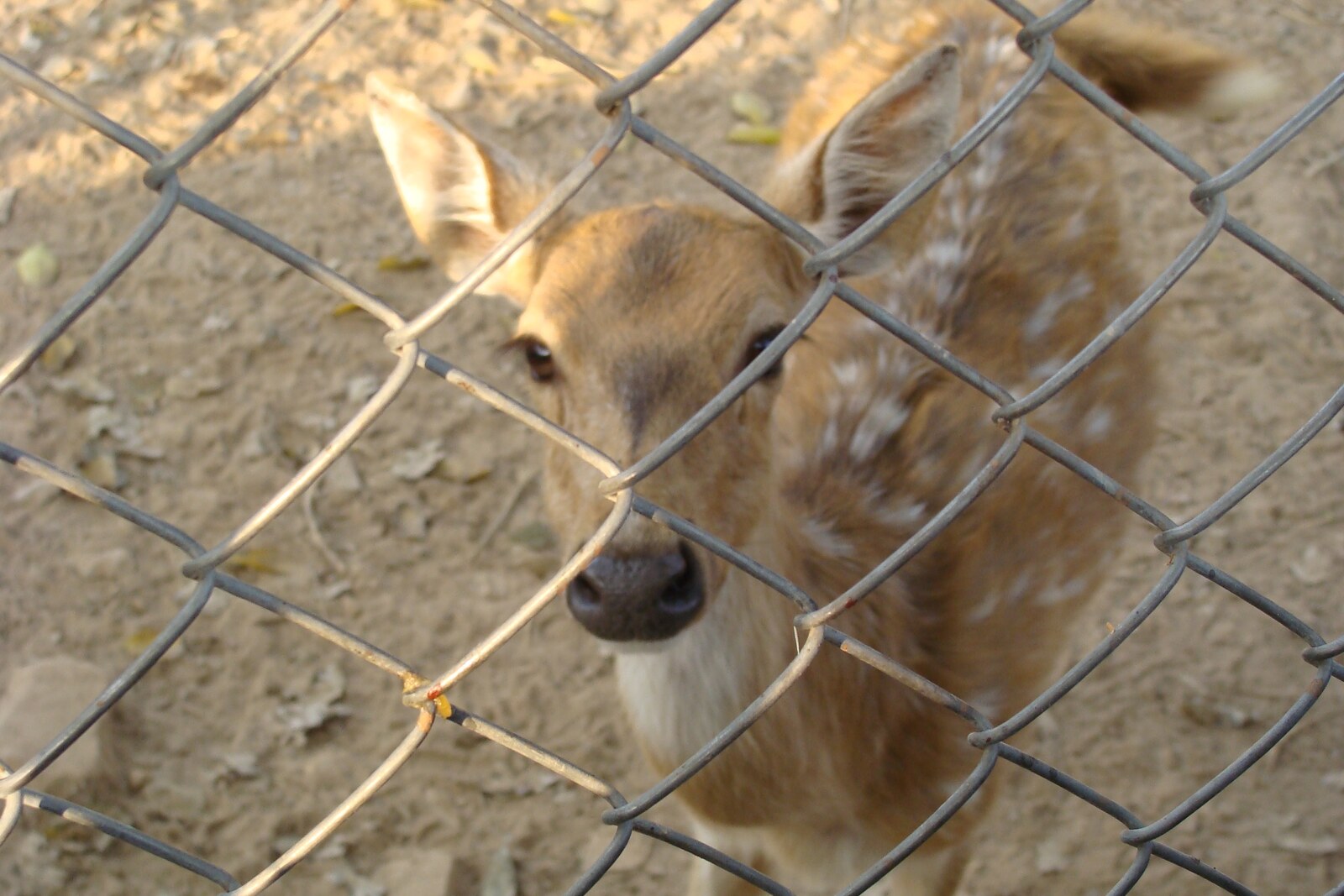
Look around first
What to notice
- Park fence
- Mesh of the enclosures
- Deer
The story of the place
Behind the fence stretch the mesh enclosures of a small zoo, where deer are still kept. The park opened in nineteen fifty-six in memory of a much older grove, to which it is linked by its name. Nothing remains here of the king's garden or the marked fields remembered in the legend: the present-day mesh fencing appeared many centuries later.
Gautama came here because five of his former companions had stopped in this grove. The area was called after deer even before the sermon. Mrigadava means “deer grove”; Buddhist tradition connected this name with a jataka—a story of a previous birth of Buddha. This is a legend, not a record of an actual establishment of a sanctuary.
In the legend, the king of Benares demanded that venison be served to him every day and, for the sake of hunting, drove townspeople and farmers away from their usual work. While they combed the forest, trade and fieldwork came to a halt. To get their working days back, the subjects fenced in the king's garden, stocked it with grass and water, and then drove two deer herds inside. Now the king's servants needed only to enter through the enclosure and take the next animal.
The king spared only the two golden leaders. The other deer panicked when the hunter appeared and injured one another, so the leaders set up a rotation: each day, one animal went out on its own to the place of slaughter.
One day, it was a pregnant doe's turn. She asked for her death to be postponed until her fawn was born: then one would die, whereas now two would. The leader of her herd refused. The doe turned to Nigrodha, leader of the second herd, who in this story is considered a previous birth of Buddha. Nigrodha released her and lay down with his own head on the block.
He already had personal immunity, so the king's cook did not dare strike him and summoned the king. The king offered to spare Nigrodha and the doe. Nigrodha asked what would happen to the others. Step by step, the king expanded his promise and finally forbade the killing of deer throughout his kingdom. The doe gave birth to a fawn, and the herds were freed from the daily rotation for slaughter.
The freed deer began eating the crops. The farmers did not dare drive them away because of the king's ban and came to complain. The king replied that he would sooner give up the kingdom than break his word. Then Nigrodha forbade the herds to enter the fields and told people to mark the boundaries with tied leaves. The legend claims that after this, the deer did not cross such markers. The safety granted to them gave the grove the name Mrigadava—a place given over to deer.
Nothing remains here of the king's garden with its driven-in herds or of the fields marked with leaves. The modern enclosed Deer Park has the status of a mini-zoo; it opened in nineteen fifty-six in memory of ancient Mrigadava. The present-day mesh fencing appeared many centuries after the jataka, but the name remained the same.
Useful on site
Access to the modern Deer Park is separate from the ASI ruins and may change; check local opening hours/costs before relying on a fixed 08:00-17:30 interval.
Checked: June 26, 2026. Check the official source before visiting.Do not feed or disturb the animals, do not approach the enclosures, and keep possible access restrictions in mind. For a quiet pause, choose a permitted spot away from the passage.