 Guide On Map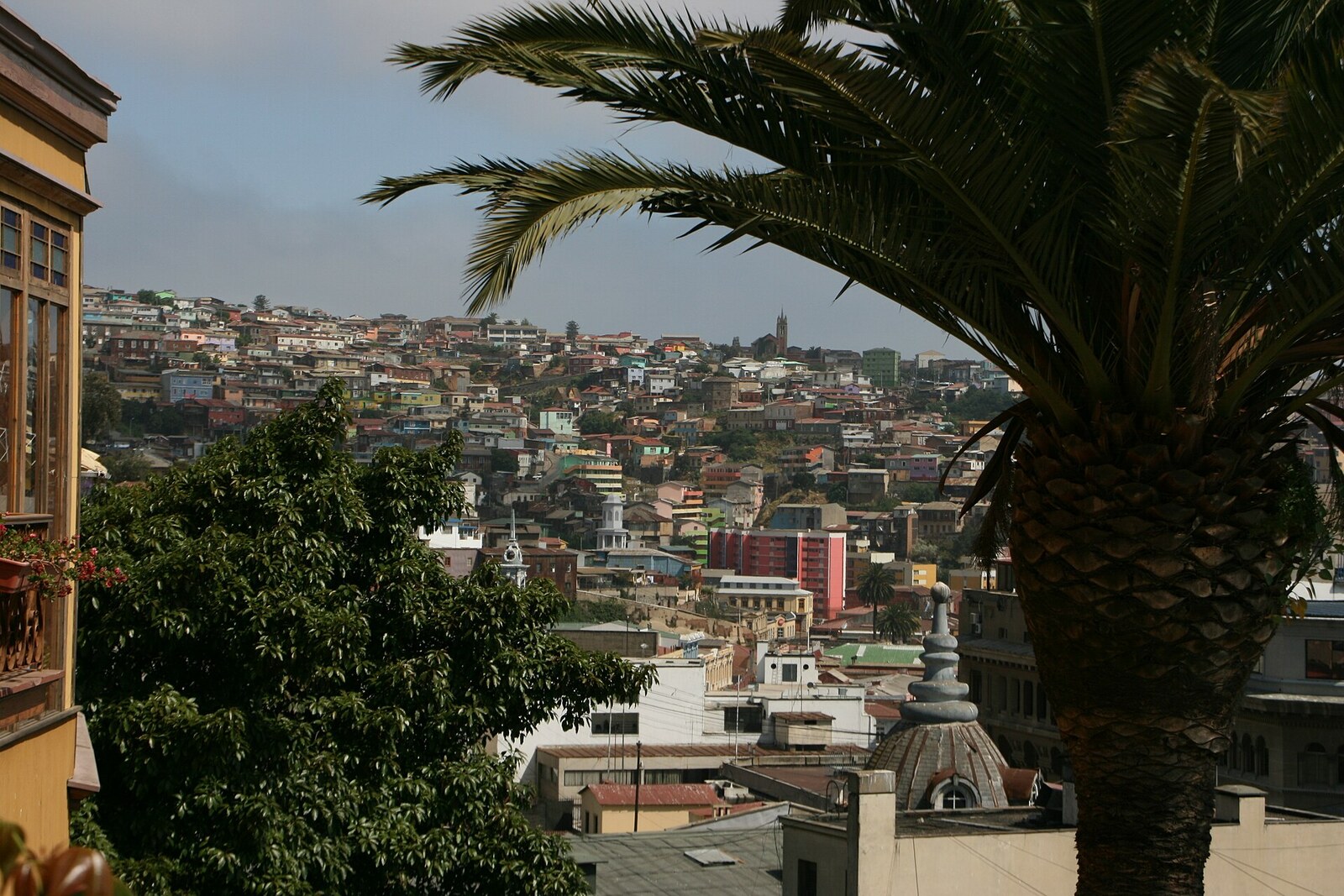
Look around first
What to notice
- Upper station of the Concepción Funicular
- Terrace railing
- Paseo name sign
- Wooden cars
The story of the place
The upper station of the Concepción Funicular stands right at the edge of Paseo Gervasoni. It was placed here for passengers who needed to travel daily between the commercial center by the port and their homes on Cerro Concepción. Many of the hill’s residents were merchants, bankers, and specialists, while the financial district lay directly below them.
The first person to try to bring a funicular here was the foreign entrepreneur Isidoro Peyrou. In eighteen seventy-seven, he submitted a project to the municipal council, but construction never began. Five years later, the journalist Liborio Brieva took up the same idea, seeking regular transport for the hill’s residents. He launched a campaign in the local press and founded the Compañía de Ascensores Mecánicos de Valparaíso.
On the first of December eighteen eighty-three, two wooden cars began running between Prat Street and this terrace. Brieva and his partners risked their money in a city where no one had yet proved that a short rail line on a steep slope would pay for itself. The passengers provided the answer: in the first year, the cars made two hundred thirty-four thousand one hundred seventy-eight trips. Valparaíso then had a population of about one hundred thousand. The company made a profit and later built lifts on Cerro Cordillera and Cerro Artillería.
This terrace received the Gervasoni surname later. Tommaso Gervasoni arrived from the outskirts of Genoa in eighteen sixty-four and at first earned his living on a small vessel. He then called his brothers to Chile and divided the family business among the ports: he himself remained in Valparaíso, while Pascual Gervasoni and Luis Gervasoni settled in Coronel. The brothers carried coal from there, and grain and other agricultural produce from Tomé and Constitución.
Trade brought the brothers a fortune. Tommaso invested it in salt and mining enterprises, joined the management of a steamship company and the city branch of Banco de Chile. For Italian settlers, he served as vice-consul of the Kingdom of Italy: he represented them before Chilean institutions and maintained ties with their homeland. On Cerro Concepción, Gervasoni acquired a large property and built a mansion, although historians have found no reliable evidence that he lived specifically by this terrace.
Gervasoni died of cancer in Valparaíso in January eighteen ninety-nine. After public expressions of grief, the city proposed preserving his surname in the name of a street and chose this viewing promenade. The merchant’s house here has not been established with certainty. What remained was the name on the signs, and beside them the upper station of the funicular that, during Gervasoni’s lifetime, turned the edge of the hill into a daily entrance to Cerro Concepción.
Useful on site
The promenade is open as a public space; Museo Mirador Lukas is listed in Registro Museos Chile as closed to the public.
Checked: June 24, 2026. Check the official source before visiting.Do not linger by the station exit, and leave the way clear for passengers. Treat a ride on the funicular as a separate option, not a required step.