 Guide On Map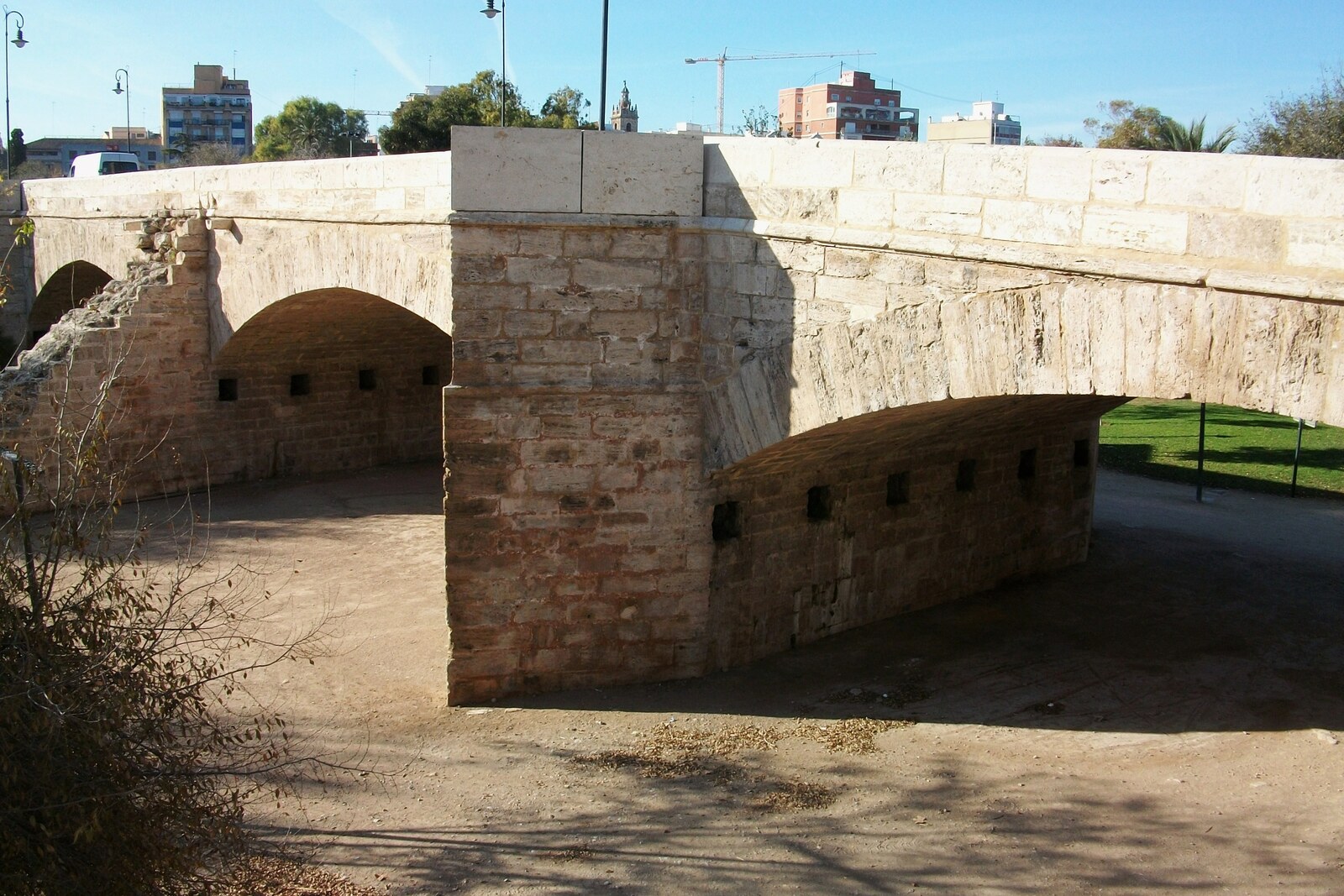
Look around first
What to notice
- Nine stone arches
- Straight stone parapets
- Triangular platforms
- Serranos Gates
The story of the place
At the beginning of the nineteenth century, two covered chapels stood on Serranos Bridge, with five religious statues inside them and beside them. Stone benches occupied triangular platforms above the piers, where pedestrians could let a carriage pass. All of this was destroyed by Valencia’s own defenders.
The bridge served as the city’s main northern entrance. It crossed the Turia River diagonally, continuing the street that led directly to the Serranos Gates and then to the old roads toward Sagunto, Maestrazgo, and the mountain districts. The word serranos was used for highlanders. According to city tradition, the name became associated with people from the Teruel serranía, who arrived with Jaime I during the conquest of Valencia in twelve thirty-eight and settled by this exit. Another version attributes the name to merchants arriving by the northern road from the mountain lands. Thus the bridge, the gates, and the street beyond them acquired the same name.
The present nine stone arches were built after the flood of fifteen seventeen carried away the earlier crossing. Three centuries later, the structure had to be defended from an army rather than from the river.
After the uprising against Napoleon’s invasion in eighteen eight, the defense of Valencia was led by the professional officer José Caro. He inherited a city with an old wall and gates to which the enemy could bring artillery across this bridge. The covered chapels and projecting platforms gave gun crews ready positions and stone cover right beside the entrance.
Caro and the members of the city council ordered both chapels, the benches, and the side platforms dismantled. The cross, statues, inscriptions, and fragments of the structures were thrown into the Turia River; some of the sculptures broke when they fell. The parapet was straightened so that French soldiers would have nowhere to take cover on the bridge.
In March eighteen ten, the French marshal Louis-Gabriel Suchet, seeking to take Valencia, retreated after an unsuccessful attack. For defending the city, Caro received the rank of lieutenant general, but a few months later he lost his command. At the next siege, the city was defended by others. On January ninth, eighteen twelve, Valencia capitulated to Suchet.
One of the marshal’s first orders after taking the city was to restore the bridge parapets without delay. The French troops left in July eighteen thirteen. The townspeople continued the repairs, but they did not restore the chapels or statues. By eighteen sixteen, straight stone railings again ran along the bridge, while the sites of the former platforms remained outside them.
During restoration in the twenty-first century, the triangular projections above the piers were rebuilt, but the benches, chapels, and sculptures were deliberately not recreated. Platforms once again stand above the arches—the ones José Caro ordered removed—but they are empty: the five figures thrown into the river to defend the gates never returned to Serranos Bridge.
Useful on site
Free exterior access; the city crossing is accessible without a ticket.
Checked: June 28, 2026. Check the official source before visiting.The work of the arches and piers is best understood from the level of the former riverbed; you can examine the ancient stones hidden in the masonry only in your imagination.