 Guide On Map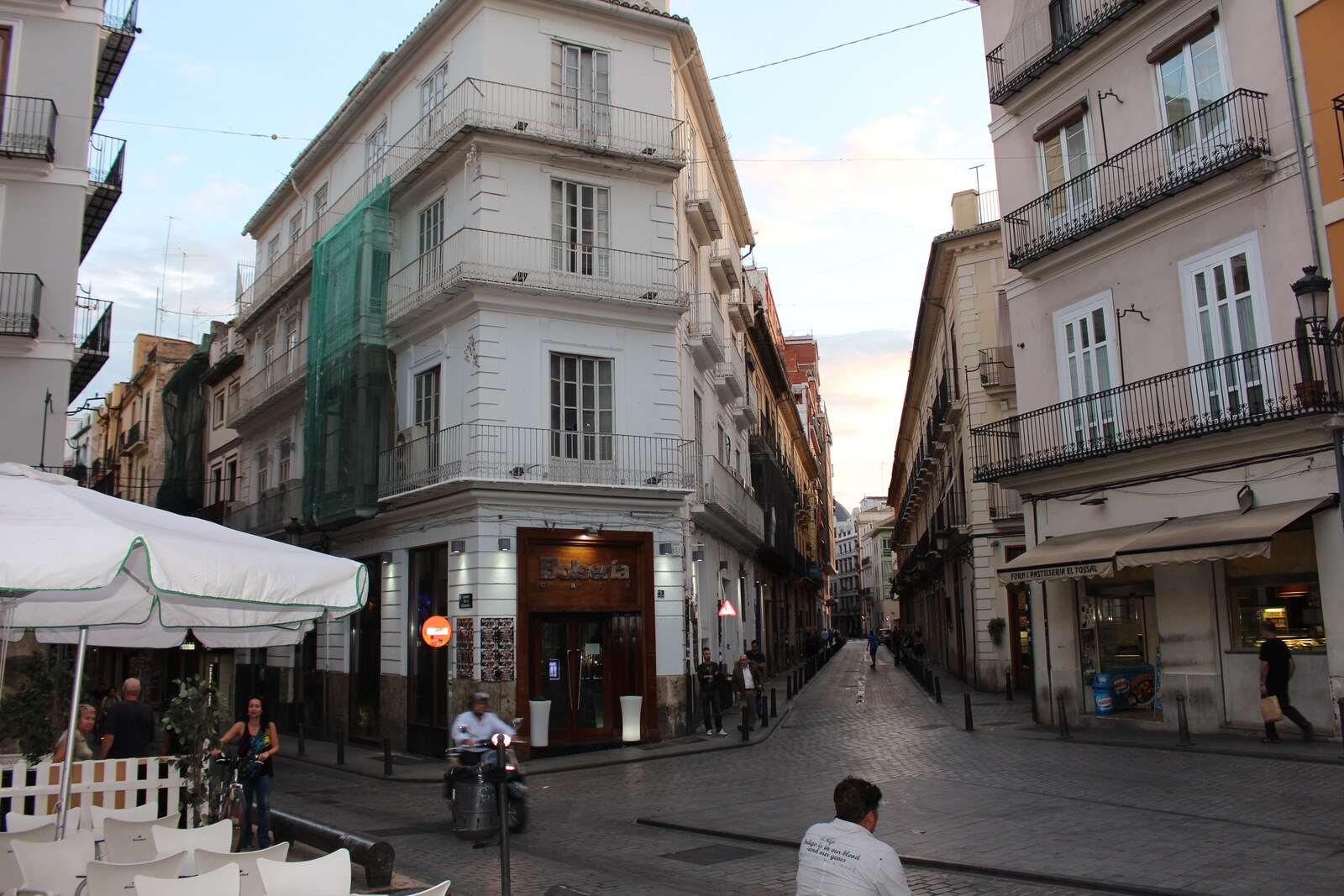
Look around first
What to notice
- The square tower of the Islamic wall
- A section of old masonry
- Brick arches above the former moat
- The entrance to the underground gallery
The story of the place
Beneath Plaça del Tossal, twenty meters of wall and a square tower from Muslim Valencia, then called Balansiya, have survived. The wall enclosed the western entrance to the city. The gates were called Bab al-Hanash—the Snake Gate. Today's Quart Street, Carrer dels Cavallers, Carrer de la Bosseria, and Alta Street converge here because roads once led toward a single passage through the fortifications.
In ten ninety-four, this passage nearly destroyed Rodrigo Díaz de Vivar (El Cid). He was an exiled Castilian military commander who had assembled his own army. His men lived on military service, tribute, and plunder; capturing wealthy Valencia was supposed to give them land and sustenance. But the city resisted, and Rodrigo feared that Almoravids from North Africa would come to the defenders' aid.
Valencia was governed by Ibn Jahhaf—a qadi, or judge, who had become the city's ruler after a coup. He hoped to hold out until his allies arrived. During the siege, several noble Valencian townsmen came to Rodrigo and assured him that few armed defenders remained: one strong blow would be enough.
Rodrigo believed them and led his men to Bab al-Hanash. The defenders met the attackers with stones and arrows from the wall. Ibn Jahhaf's men then threw open the gates and went on the attack themselves. Rodrigo and part of his detachment took shelter in baths near the fortifications, but the Valencians occupied the only exit. To get out, Rodrigo ordered a hole punched through the wall of the baths.
Later, Rodrigo decided that the noble advisers had lured him into a trap. There is no evidence of collusion—this was his explanation for his own defeat. After the failure at the gates, he abandoned further assaults and tightened the starvation blockade. Fugitives from the city were executed, food ran out inside, and the dead were buried in mass graves. In June, Valencia surrendered. Ibn Jahhaf initially kept his position as judge, but a few months later Rodrigo ordered him arrested and burned alive. Rodrigo himself ruled the conquered city until his death five years later.
The tower that met his detachment no longer exists in its former form. Archaeologists cautiously link the remains in Galería del Tossal with the rebuilt Bab al-Hanash: the visible square tower dates to a later period, the twelfth century. Holes from the wooden formwork remain in its surface, into which builders tamped mortar and stone. In front of the wall stand brick arches above the former moat; later, townspeople routed the Rovella Canal here and turned it into a city drainage collector.
In Valencian, “Tossal” means a small rise. The difference in elevation has almost disappeared beneath the buildings, but the former boundary can still be read in the layout of the square: on the surface, streets fan out in every direction, while beneath them remains the wall through which there was once only one western exit.
Useful on site
The underground fragment can only be seen when Galería del Tossal is accessible, so check its access separately. If the entrance is closed, the relief and layout of the square can still be read from outside.