 Guide On Map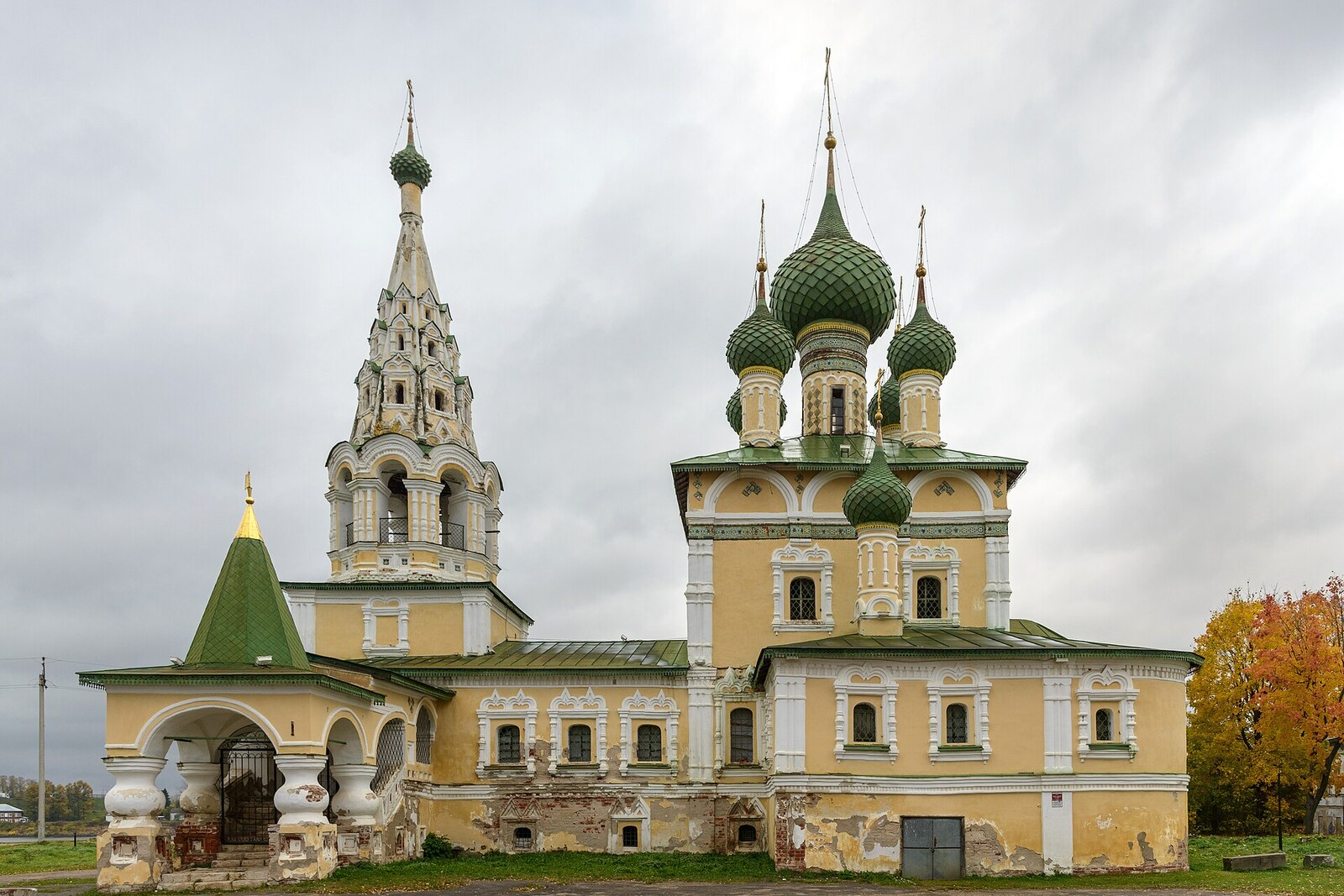
Look around first
What to notice
- Empty arched niche
- Northern side chapel
- Stone walls of the church
- The Volga by the church
The story of the place
The church's official name does not refer to the boy who died. John the Forerunner was a biblical prophet who announced Christ's coming and baptized him in the Jordan River. An earlier wooden parish church that stood here was also dedicated to the feast of the Forerunner's birth. Six-year-old Ivan Chepolosov shared his name and was buried beside the church of his heavenly patron.
The boy's father, Nikifor Chepolosov, was a wealthy merchant of the posad: documents mention goods on which he paid duties, while the vita mentions enterprises that belonged to him. He entrusted part of these affairs to Fyodor Rudak, a steward who harbored hatred for his master and decided to take revenge through his master's son.
In the summer of sixteen sixty-three, Ivan was on his way to his literacy teacher. According to the vita, Rudak lured the boy into his house and kept him locked up for fifteen days. He demanded that Ivan renounce his parents and call Rudak his father. The boy refused. Rudak then killed him and hid the body in a swampy place outside the town. The parents searched for their son in the forests, on the roads, and in the Volga; shepherds found the body and brought it here, to the wooden Church of John the Forerunner.
These details are known from a vita written in an Old Believer milieu almost a century after the events. It is not an investigation record. Researchers believe the account is based on a real murder, but it is church tradition that preserves the miraculous resolution. According to it, Rudak was sentenced to be burned, but Ivan appeared to his parents in a dream and asked them to spare his killer's life. The execution was canceled; the vita describes Rudak's later death as heavenly punishment.
Twenty-six years later, Nikifor Chepolosov began building a stone church over his son's grave. During the work, the burial was opened and the remains were recognized as incorrupt. People began coming to them, and stories of healings appeared. The Metropolitan of Rostov ordered that the remains be concealed again—they were placed in an arched niche in the wall of the warm side chapel of John the Forerunner. Thus the grave of a merchant's child came to be inside the church paid for by his father.
During the restoration completed in nineteen seventy, the niche was opened. The remains were transferred to the Uglich Museum and, in nineteen ninety-six, moved to Korsun Church. Here, in the northern side chapel, the burial site itself remains. The name above the church belongs to John the Forerunner, while the empty arched niche belongs to his six-year-old namesake from Uglich.
Useful on site
No stable official entry schedule has been published; as of the date checked, plan only for an exterior visit.
Checked: June 24, 2026. Check the official source before visiting.Plan a full exterior visit; do not consider access inside guaranteed without separate confirmation.