 Guide On Map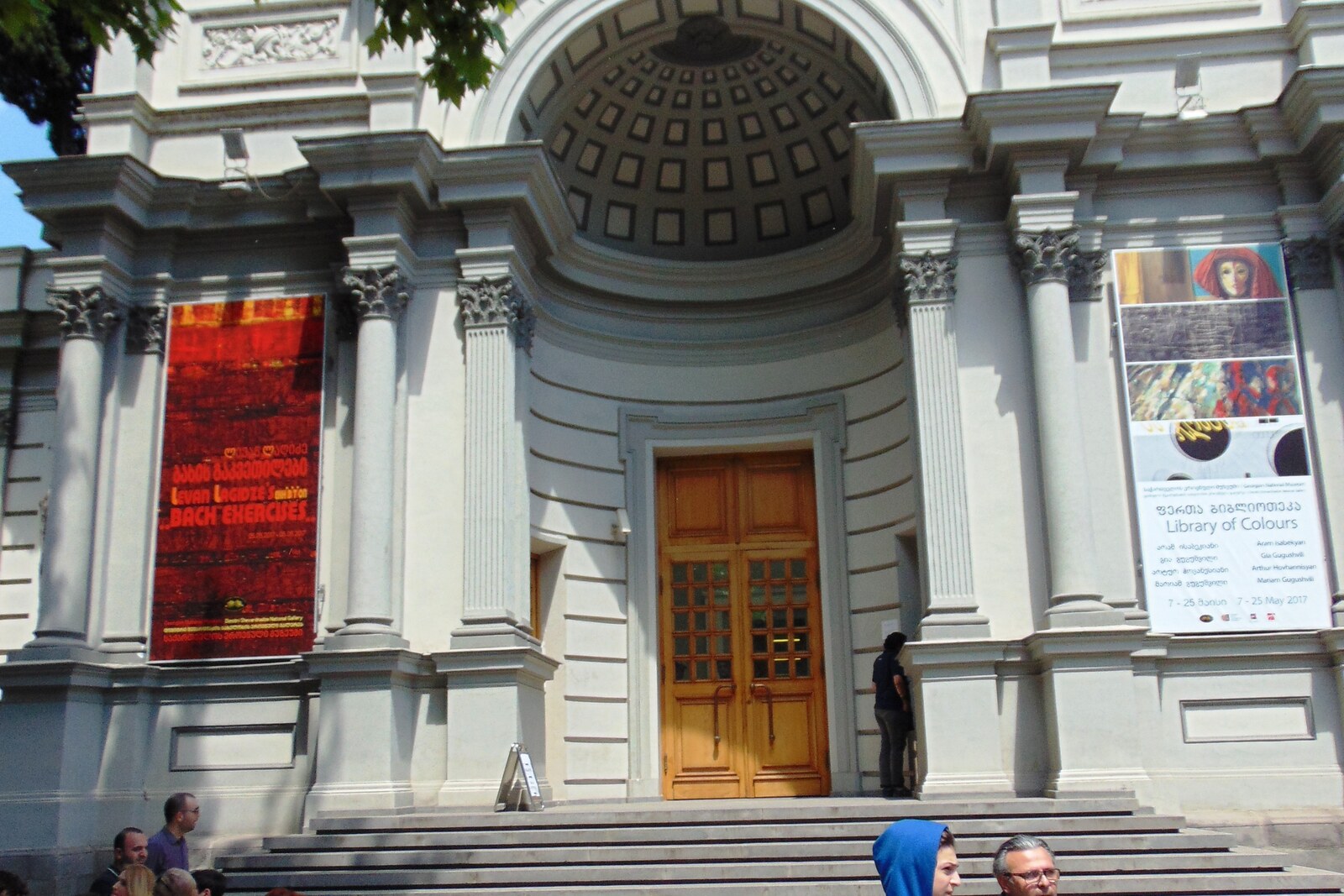
Look around first
What to notice
- Central facade
- Exhibition hall
- Glazed ceiling
- The name of Dimitri Shevardnadze
The story of the place
The large hall beneath the glazed ceiling was designed to give paintings light from above. The central facade dates from the time when the Russian military housed a military-history collection here. Inside hung trophy banners, weapons lay on display, and paintings about the Caucasian War were shown, while outside metal plaques marked the dates of Russian army victories. Now these halls display paintings by Pirosmani.
In nineteen seventeen, the artist Dimitri Shevardnadze organized an exhibition here of copies of old Georgian frescoes. After the exhibition closed, he remained in the building. According to the recollections of his associate Giorgi Eristavi, Shevardnadze gave up his apartment, moved into the semi-basement, and guarded the vacant halls: he feared they would be occupied, and Georgian artists had no other space for their future gallery.
The building had been intended for an entirely different collection. At the end of the nineteenth century, the Russian military opened the military-history museum Temple of Glory here. Captured banners, weapons, and paintings of battles from the Caucasian War hung in its halls, while metal plaques bearing the dates of Russian army victories were mounted on the facade. During the First World War, the exhibits were taken to Russia. What remained was a ready-made museum with a large hall and a glazed ceiling that gave light from above—exactly the kind of space Shevardnadze was looking for.
A year earlier, he had founded the Society of Georgian Artists. Its members intended to study and preserve old art, organize exhibitions of contemporary artists, open a library, and establish a permanent gallery. First, they brought into the former military museum copies of medieval frescoes made during expeditions. Then Shevardnadze secured the building itself for the Society—first through his presence in the semi-basement, then through letters. In the summer of nineteen eighteen, the artists asked the minister of education to officially transfer the vacant Temple of Glory to them.
In the spring of nineteen nineteen, Shevardnadze announced a large exhibition of contemporary painting and sculpture here. Works were accepted in this very building; artists from other cities could send them by mail. Niko Pirosmani was already dead, so his paintings had to be sought out separately. Shevardnadze went through basements, shops, and dukhans where they remained with their former owners. With donated money, they managed to acquire about twenty works. Some owners refused to sell familiar paintings even when museum workers came for them.
On the opening day, more than one thousand people entered the halls. Side by side were Pirosmani, Lado Gudiashvili, David Kakabadze, and other artists who had never before been brought together into a single history of Georgian art. After this exhibition, the government of the republic established the National Gallery of Georgia, and Shevardnadze was appointed its first director. The first state exhibition opened here in the autumn of nineteen twenty; from the works gathered then grew the museum collection that later became the basis of a separate Museum of Art.
In two thousand twelve, the National Gallery of Georgia was named after Dimitri Shevardnadze. The central facade of the former Temple of Glory and the old exhibition space have been preserved. Inside, there is a permanent exhibition of Pirosmani, and outside the building that the artist once guarded from the semi-basement, his name now stands.
Useful on site
Tue–Sun 10:00–18:00, last entry 30 minutes before closing; Monday and public holidays closed; check the ticket price before visiting
Checked: June 29, 2026. Check the official source before visiting.The exhibition of Pirosmani and other artists can only be seen on a separate visit; check access inside in advance.