 Guide On Map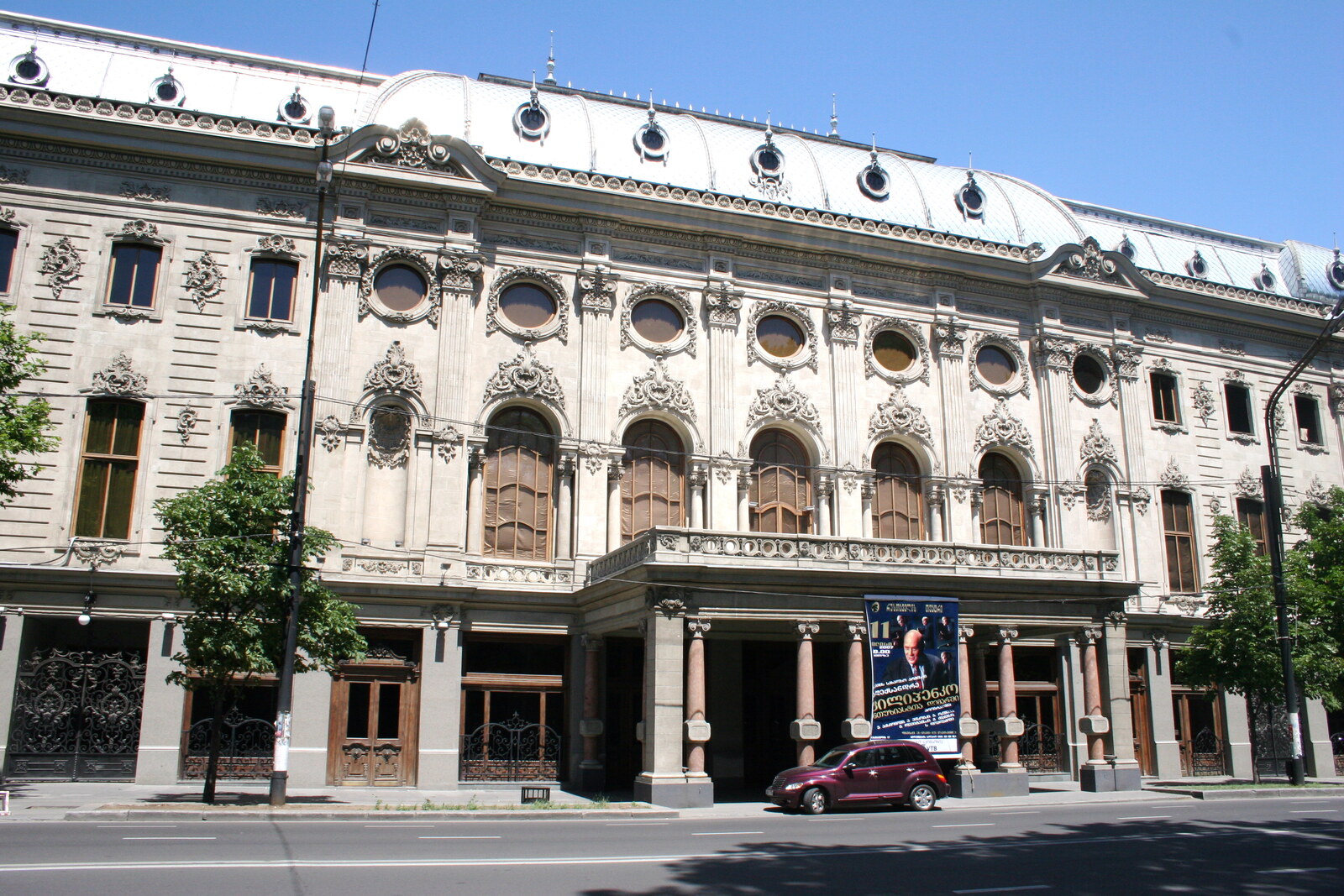
Look around first
What to notice
- Main facade
- Theatre posters
- Courtyard entrance
- Top-floor windows
The story of the place
Dramatic productions have been staged behind the main facade for more than a century. The theatre bears the name of Shota Rustaveli, a medieval poet from whom one poem has survived—The Knight in the Panther's Skin. There were once living quarters on the top floor, and inside, a museum was assembled with posters, manuscripts, and rehearsal records.
A demonstrative bonfire was once lit in this theatre's courtyard. Estate Beriashvili, the head of the theatre museum, received an order to destroy everything connected with the director Sandro Akhmeteli. Beriashvili threw old newspapers and magazines into the fire. He hid Akhmeteli's documents in the basement.
Dramatic productions had been staged in this building since nineteen oh one. On November twenty-fifth, nineteen twenty-one, the Shota Rustaveli State Academic Theatre was named after Shota Rustaveli. Rustaveli was a medieval Georgian poet and the author of The Knight in the Panther's Skin. Of his works, only this poem has survived, but it was enough for the principal Georgian dramatic stage to be named after its author.
In nineteen twenty-two, Sandro Akhmeteli came here—a director who demanded precise ensemble acting from performers and built productions around rhythm, movement, and crowd scenes. In nineteen twenty-six, he became the theatre's sole director. Here Akhmeteli staged Anzor, Lamara, and Schiller's The Robbers. At an all-Union theatre review in Moscow, his troupe received invitations to tour abroad.
The theatre was both work and home for the director. Akhmeteli lived on the building's top floor with his wife, the actress Tamara Tsulukidze-Akhmeteli. With his support, a museum opened inside in nineteen thirty-two, collecting posters, manuscripts, and rehearsal records.
The political police had already been watching the troupe for several years. Its Georgian head was Lavrentiy Beria. On his orders, the theatre's foreign trip was canceled. Beria then used Akhmeteli's quarrel with two leading actors: he demanded that they be restored to their former positions in the troupe, but the director refused. At a meeting, the actors criticized Akhmeteli, but they did not propose dismissing him. The decision was nevertheless made.
On September thirteenth, nineteen thirty-five, Akhmeteli was removed from his post. On the poster dated September fourteenth, his surname still appeared beside the theatre's name; on the September sixteenth poster, the surname was already gone. The director had to leave both his office and his apartment on the top floor. He went to Moscow and began working at another theatre.
A year later, Akhmeteli was arrested and brought to Tbilisi. After months of physical and psychological torture, he signed confessions to espionage and preparing the murder of party leaders. The charges were fabricated. In the summer of nineteen thirty-seven, Akhmeteli and four employees of the Shota Rustaveli State Academic Theatre were shot. Tamara Tsulukidze-Akhmeteli was sentenced to ten years in prison. In nineteen fifty-six, the case was closed for lack of a crime.
After the director's arrest, museum staff were ordered to destroy his archive. That is why Estate Beriashvili arranged the bonfire in the courtyard. Little by little, he took the hidden papers out of the theatre and kept them at his home. Twenty years later, the archive returned here.
The theatre museum's collection includes Akhmeteli's rehearsal records, sketches, letters, and books. It also holds a photograph of the troupe from which the faces of the director and the executed actors have been cut out, and a doll made by Tamara Tsulukidze while in prison.
Useful on site
the facade is accessible from the street; inside—according to the current program and with a ticket
Checked: June 29, 2026. Check the official source before visiting.The facade is accessible without a ticket. View the interiors and stage only as part of a performance or an official visit.