 Guide On Map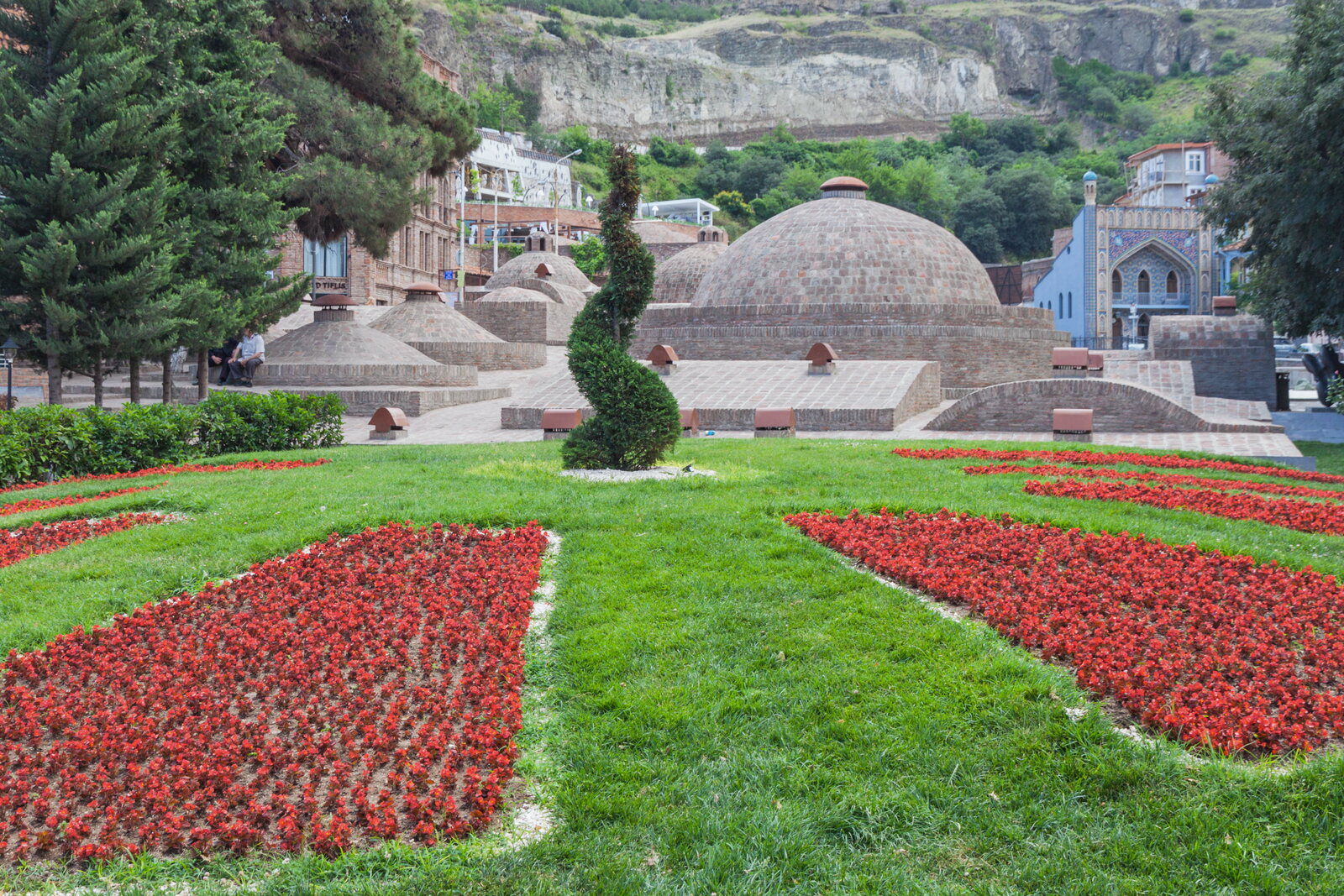
Look around first
What to notice
- Brick domes
- Small openings at the tops of the domes
- Roofs below street level
The story of the place
Brick hemispheres conceal bath halls set so deeply into the ground that the street runs above their roofs. Daylight enters through small openings at their tops, while hot steam escapes outside. Naturally warm sulfurous water flows into the pools; here, people take it together with a scrub using a stiff mitt and a traditional massage. In Georgian, Abanotubani is called the bath district.
In the city legend, the future capital first acquired prey—a wounded pheasant. Vakhtang Gorgasali, who was hunting here in the fifth century, was king of Kartli, an eastern Georgian kingdom. His falcon chased the bird; both disappeared and were found in a hot spring. In some versions the pheasant was boiled; in others, both birds were. This is a legend, not an eyewitness account.
According to the same story, Vakhtang ordered a city to be built near the springs and planned to move the royal court here from Mtskheta. For the ruler, this meant leaving an established capital with ancient shrines for a new fortified center at a river crossing. Vakhtang did not have time to complete the move. His son and heir, Dachi, completed the city wall begun under his father and, carrying out his will, made Tbilisi the royal residence. Mtskheta retained its role as a religious center, while the court and administration moved here.
Archaeologists, however, found in Abanotubani a Roman-style bathhouse built as early as the second century—about three centuries before Vakhtang. The king did not arrive in an uninhabited forest first discovered by his falcon. People had already settled by the warm water and built bathhouses here. Vakhtang's achievement in the historical tradition lies elsewhere: he began turning the existing settlement by the springs into the future capital, and Dachi brought his decision to fruition.
The brick domes appeared much later than those events. They are the roofs of halls sunk below street level. Small openings at the top let light in and release hot, humid air outside. Underground are pools supplied with naturally heated sulfurous water; there, too, a bath attendant scrubs a visitor with a stiff mitt and gives a traditional massage.
In Georgian, Abanotubani means “bath district.” The name Tbilisi comes from the word “tbili”—“warm.” Beneath today's domes, they still take in water from the very thermal springs because of which Dachi moved the royal court here and left Mtskheta its former shrines.
Useful on site
The district may be viewed freely from the street; each bathhouse operates according to its own schedule and booking system.
Checked: June 27, 2026. Check the official source before visiting.Do not climb onto the domes or step on their light openings; visits to the bath halls are arranged separately.