 Guide On Map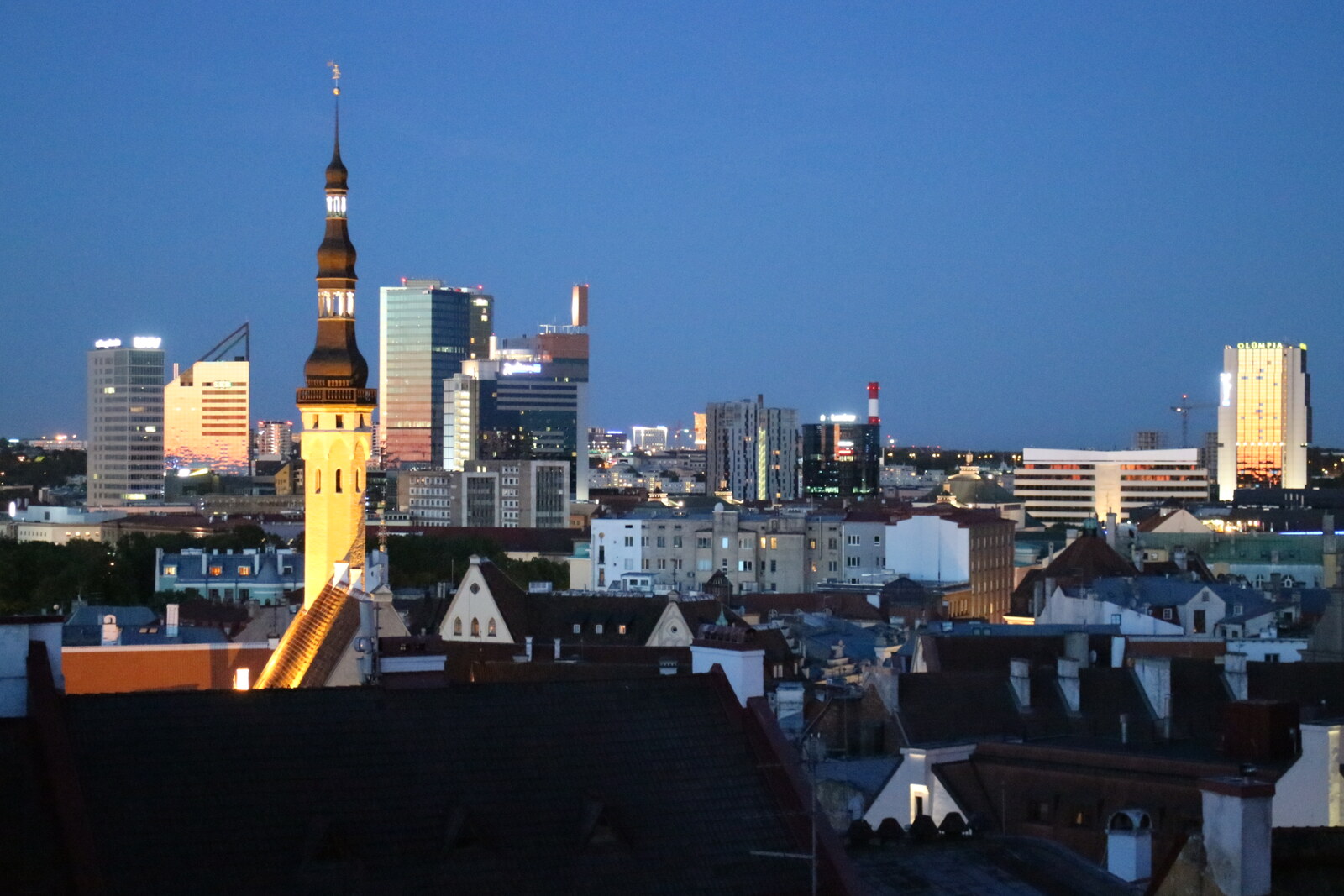
Look around first
What to notice
- The tiled roofs of Tallinn Old Town
- Steep slopes
- Attic hatches
- Old maples and elms
The story of the place
At the edge of Toompea, a former garden was turned into a public terrace, and several old maples and elms survived from it. From here, spires rise above the dense development of Tallinn Old Town, while tiled roofs meet at different angles and steep slopes conceal attics. Kohtuotsa means the end of Kohtu Street, but there was never a court at the very edge of the hill. Court cases were heard in the House of the Estonian Knighthood at the other end of the street, and the name of the vanished institution remained in the city's address.
In the mid-nineteen sixties, architects Illar Kannelmäe, Rein Zobel, and Tiina Linna recorded Tallinn's roofs in inventories. They measured pitches and noted attic hatches, stairs, and doors—this was the restorers' everyday work, on which it depended whether Tallinn Old Town would be preserved as a whole or repaired house by house without an overall plan.
Kohtuotsa already made it possible to see the result of this approach at a glance. The medieval city can be read here from its roofs: a steep slope conceals an attic, narrow sections meet at different angles, and church spires rise above the dense development. In nineteen sixty-six, the Council of Ministers of the Estonian SSR approved a protected zone for Tallinn Old Town—the first such zone in the Soviet Union. The architects' research became the basis for rules that protected not individual monuments but the entire established panorama.
The consequence of their work applies directly at this platform. When homeowners want to cut in a new attic dormer, add a balcony, or raise part of a roof, designers must check whether the alteration will be visible from public elevated viewpoints. Kohtuotsa is one of these control points. Tourists photograph the old roofs from here; architects use the same angle to decide which new roof could spoil the overall view.
The terrace itself is not medieval. A garden probably once stood at the edge of Toompea; its original layout has been lost. In Soviet times, municipal landscapers redesigned this space as a public viewing platform. Several old maples and elms remain from the former garden.
The name also appeared late. “Kohtuotsa” means “the end of Kohtu Street.” In eighteen eighty-two, the street was named after the Estonian Supreme Land Court, which sat in the House of the Estonian Knighthood at its opposite end. Noble judges handled inheritances, approved estate documents, appointed lawyers, and supervised lower courts. The court disappeared after the reform of eighteen eighty-nine, but its name traveled along the street to the former garden. There was never a court at the platform: this is precisely the end of the street named after the court.
Useful on site
An open viewing platform on the northern side of Toompea; tourist sources indicate free round-the-clock access. The exact schedule may change during municipal works or events.
Checked: July 1, 2026. Check the official source before visiting.Do not occupy the edge for long, and stay away from the railing in wind or icy conditions. The supporting structure is below and is almost invisible from here.