 Guide On Map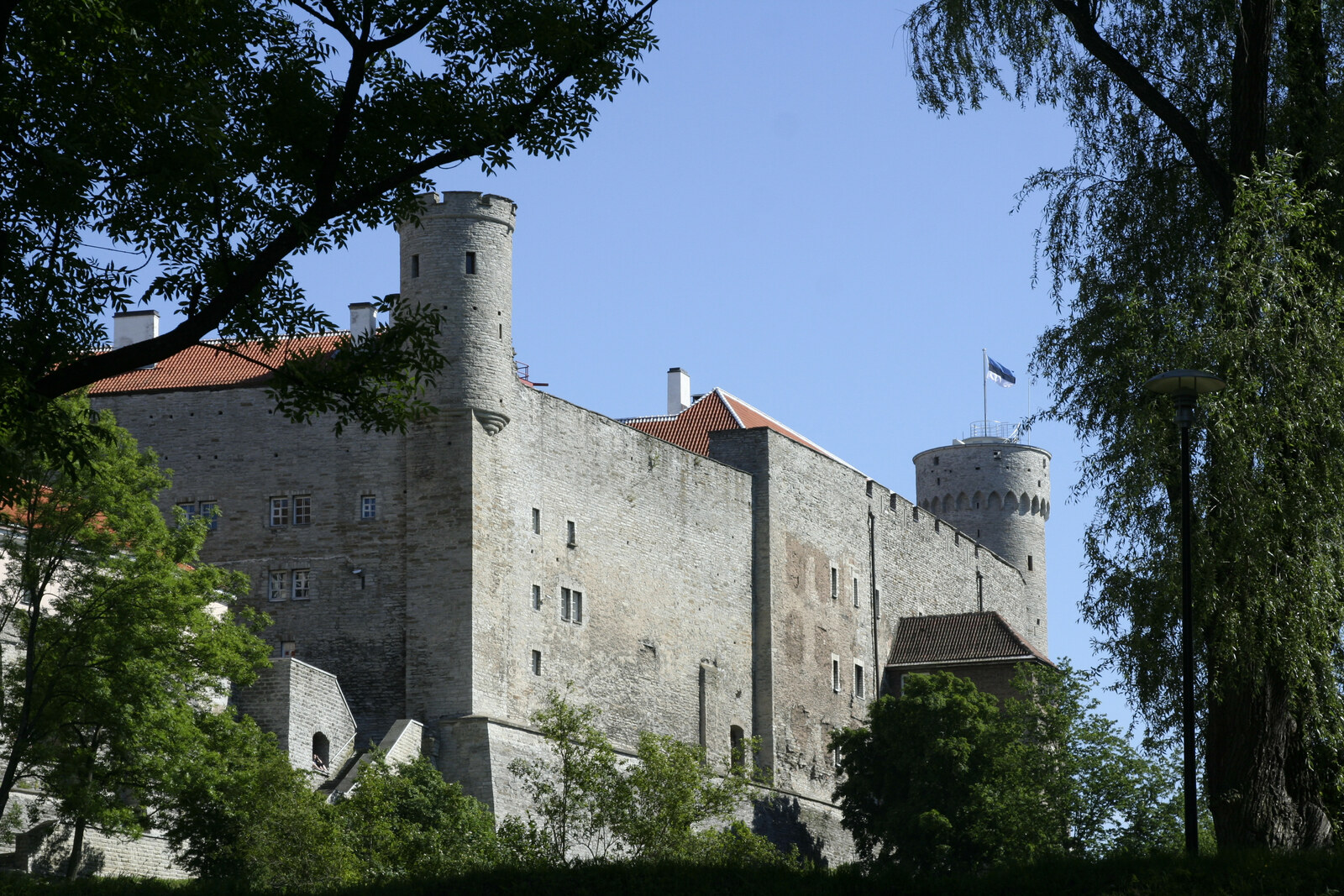
Look around first
What to notice
- Pink Baroque façade
- Stone walls of the castle
The story of the place
The pink Baroque façade of Toompea Castle appeared between seventeen sixty-seven and seventeen seventy-three. Ekaterina II ordered a provincial government building to be constructed here. Today, the Riigikogu—the Parliament of Estonia—sits behind this façade. Its chamber, however, stands farther in, in the inner courtyard, on the site of a former prison.
In eighteen forty-three, a medieval building in the center of the fortress was converted into a prison. Sixty years later, Jaan Poska was brought here—an attorney and chairman of Reval's city council who sought Estonian participation in city government. Poska made his living from a lucrative legal practice, but used his knowledge of electoral rules to get Estonian candidates elected to the council. Together with Russian deputies, they gained the majority that had previously belonged to the Baltic Germans.
During the revolution of nineteen oh five, the imperial administration imposed martial law in the city, banned public gatherings, and arrested most Estonian council members. Poska ended up in Toompea Prison. He was brought into the courtyard through a service entrance and locked in a building hidden behind the ceremonial palace.
Twelve years later, the monarchy fell. The Russian Provisional Government appointed Poska commissioner of the Governorate of Estonia—effectively its leader. The same Toompea Castle became the former prisoner's office. In his farewell speech before the city council, he summed up his two appearances here in one sentence: then he had been brought through the back door “to rest”; now he entered through the front door to work.
Poska sought to unite the Estonian-inhabited lands into one governorate and convened the Maapäev—an assembly of representatives from towns and rural municipalities. Its meetings took place in the White Hall behind the pink façade. In the autumn of nineteen seventeen, the Bolsheviks removed Poska from office, but the assembly he had convened continued on the path toward an independent state.
By then, the prison in the courtyard no longer existed. During the February Revolution, a crowd broke into the castle, released the prisoners, and set fire to the prison building. After the declaration of independence, the Estonian Constituent Assembly took its place in the White Hall, adopted the first constitution, and faced a shortage of space. In nineteen twenty, the deputies decided to build a new parliamentary chamber on the foundations of the burned-down prison.
Poska died that same year and did not see the completed building. It opened in the autumn of nineteen twenty-two. Many of the deputies who took their seats there had themselves been held in Toompea Prison after the revolution of nineteen oh five. Now, through the doors of the pink palace, they entered a chamber built exactly on the foundation where they had once been brought under arrest.
Useful on site
Exterior viewing is unrestricted. Tours of the castle and the Riigikogu building are free, but require advance registration; regular group tours run on working days, while in summer 2026 separate English-language tours for individual visitors require registration and identification. Tall Hermann Tower is not included in regular tours.
Checked: July 1, 2026. Check the official source before visiting.Viewing from the square is unrestricted, but entry to the Riigikogu requires separate advance registration. Tall Hermann Tower is not included in a regular self-guided visit.