 Guide On Map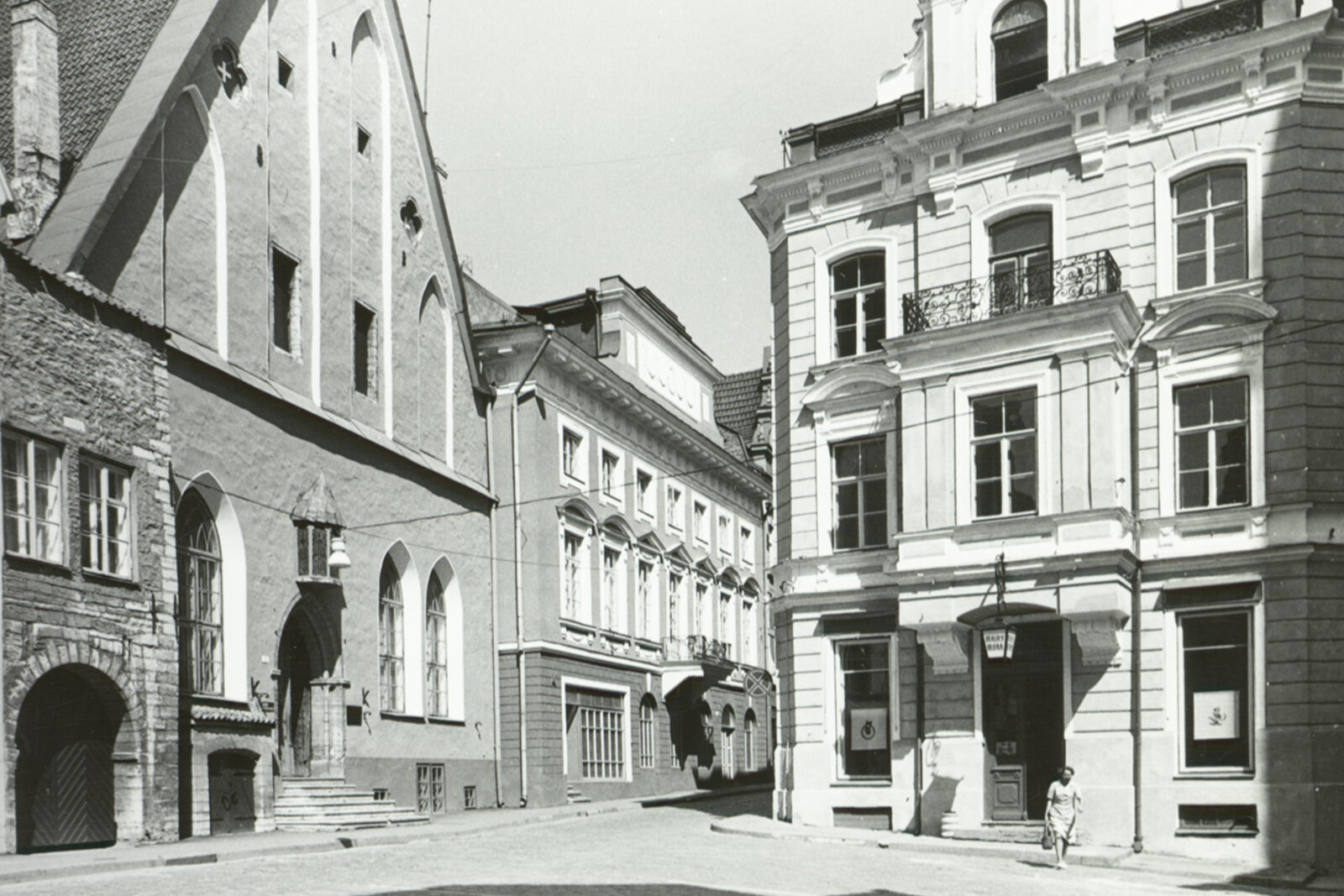
Look around first
What to notice
- Oak leaves of the main entrance
- Bronze lions’ heads
- The blessing on the doors
The story of the place
Pikk means “Long” in Estonian. In the Middle Ages, goods were carried along this street from the harbor to the market and merchants’ warehouses. That is why the members of the Great Guild bought a plot beside Tallinn Town Hall and, by fourteen seventeen, had completed their own hall here. They did not trade there at retail: this was where they admitted new members, settled cases, held weddings, and staged feasts lasting several days.
It was called Great because of its standing among the city’s associations. The guild was built around prosperous merchants who made their living through long-distance trade. Craftsmen belonged to other guilds, while a young unmarried trader usually began in the Brotherhood of the Blackheads. It included merchants’ employees and newcomers who had not yet established an independent business in the city. On average, a person spent about five years among the Blackheads. After marrying and taking the civic oath, he could move to the Great Guild.
The transfer took place in this very hall. At the general meeting, new brothers were admitted during the final days of a two-week festive feast. A newcomer paid an admission fee and separately paid for participation in the feast. In return, he received the support of fellow professionals, help for his family in times of trouble, and the opportunity to advance from merchant to guild elder and then to a member of the city council.
In the first half of the sixteenth century, the two merchants’ corporations began competing for people. The Blackheads wanted to keep prosperous fellow members even after they had obtained city citizenship. Around fifteen forty, members of the Great Guild ruled that an unmarried Blackhead could not be admitted to their guild. The Brotherhood responded with its own rule: a merchant who became a citizen could still remain a Blackhead.
Members of the Great Guild increased the pressure. Two years later, they allowed both citizens and merchants’ employees to apply for admission, if they presented a birth certificate showing that they were born to free parents in lawful wedlock. At the same time, merchants who remained with the Blackheads were barred from the brewing company. For a trader, this meant a quite measurable loss: he lost the right to brew beer for sale. Marriage, the oath, and the admission fee opened the way into this hall; loyalty to the former brotherhood cut off part of one’s earnings.
The oak leaves of the main entrance have survived from the fifteenth century. The bronze lions’ heads, cast in fourteen thirty, bear a blessing for all who are already in the hall and for those still to enter. The Estonian History Museum is now located behind these doors.
Useful on site
Tallinn and Estonian tourist portals list the museum’s seasonal schedule: 01.04–30.09 Tuesday–Sunday 10:00–18:00, 01.10–31.03 Wednesday–Sunday 10:00–18:00; the official museum website also publishes holiday exceptions. The adult ticket price on the date checked was 14 euros.
Checked: July 1, 2026. Check the official source before visiting.The story is easy to follow from the portal on the street. The museum galleries require a separate visit; keep the narrow sidewalk clear in front of the entrance.