 Guide On Map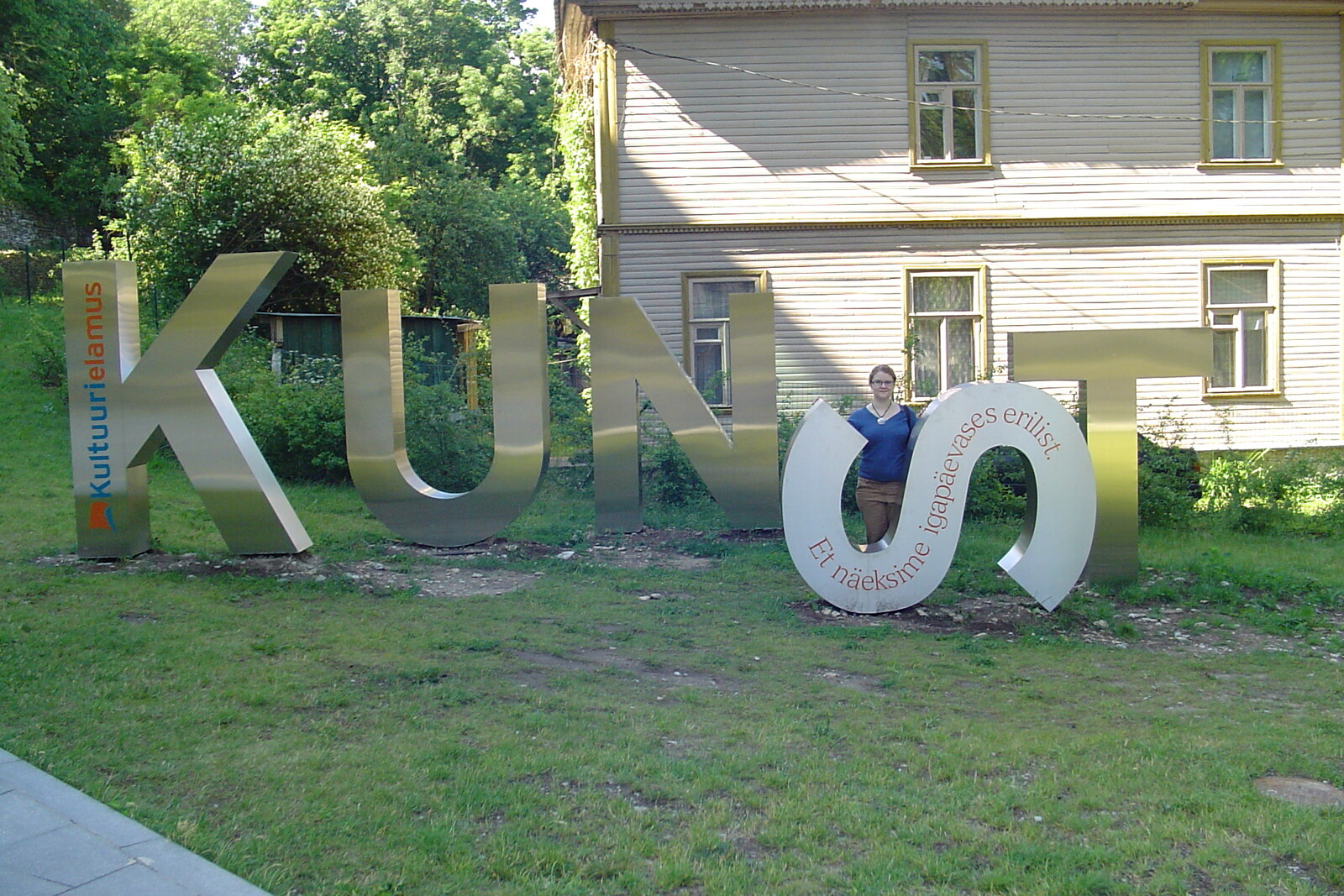
Look around first
What to notice
- Arched façade
- Tall atrium
- Limestone slope
- Inner courtyard
The story of the place
A broad arc of the light-colored building emerges from the limestone slope; the building's true volume is revealed only by the entrance and in the courtyard, while from the palace side the slope conceals most of it. Inside, a tall atrium connects the galleries of the Art Museum of Estonia with storage rooms and restoration workshops, where the collection lives on after visitors have left. Thick walls hold the paintings and conceal air ducts, wires, cameras, and projectors, so exhibitions can be rearranged without tearing down the gallery. The name “Kumu Art Museum” is formed from the Estonian words for “art” and “museum”; in Estonian itself, it also means response or rumor.
Finnish architect Pekka Vapaavuori submitted his design to the competition for a new building for the Art Museum of Estonia almost immediately after graduating from university. Finland was in an economic downturn, about half of its architects were out of work, and Vapaavuori was already preparing to look for a position in Germany. The Tallinn competition gave him a chance to win his first major commission.
The site demanded an unusual solution. The country's main museum had to fit into a limestone slope between Kadriorg and Lasnamäe, and from the palace side, the building was not to appear larger than Kadriorg Palace itself. Inside, it needed exhibition galleries, storage rooms, restoration workshops, an auditorium, and staff facilities. A substantial part of its volume had to be concealed in the rock.
At first, Vapaavuori envisioned a rectangular building. The curve appeared when the architect began arranging the rooms across the tight site and laying out routes between them. A teacher had once advised him never to build round buildings: such designs look good in student work and rarely succeed in real life. Yet Vapaavuori curved the museum into an arc around a tall atrium and named the project “Circulos”—“circles.”
Two hundred thirty-three designs from ten countries were submitted to the competition. The jury unanimously chose the work of the recent graduate. After the victory, Vapaavuori opened his own practice and remained in Finland. But instead of construction beginning quickly, there was a wait. Nothing happened on the site for five years; the architect had time to decide that the museum would never appear at all.
The Art Museum of Estonia could not wait calmly. Its director, Marika Valk, needed to return a permanent home to the national collection. In the autumn of nineteen ninety-one, the old Kadriorg Palace had to close: the building's condition was already threatening the paintings and sculptures. The collections were distributed among several locations, and for the next fifteen years the public had no permanent access to the classics of Estonian art. Without a new building, it was impossible to accommodate a separate permanent exhibition of art from the Soviet period at all.
While the project was not being built, Valk and Vapaavuori traveled to museums across Europe and worked out how to handle works after visitors had left the gallery: where to restore them, how to transport them, and what to conceal behind an exhibition wall. The original rooms had to be enlarged to accommodate ventilation and other equipment. This is how walls about eighty centimeters thick appeared: paintings can be mounted almost anywhere on their outside surfaces, while wires and air ducts run inside them, along with concealed cameras and spaces for projectors. The visitor sees an even surface; staff gain the ability to change the exhibition without rebuilding the gallery.
Construction began in nineteen hundred two. On February eighteenth, nineteen hundred six, the first visitors entered here. For Vapaavuori, work begun immediately after graduation stretched over twelve years; he called it his second university. For the museum, the result was permanent galleries of Estonian art from the eighteenth century to the present day, storage rooms, restoration workshops, and a separate venue for new exhibitions. Two years later, Kumu Art Museum was chosen as the European Museum of the Year Award winner from among one hundred forty candidates.
From the palace side, most of the building is still concealed by the limestone slope. The full size of the arc is visible only in front of the main entrance and in the inner courtyard. The name was chosen in an open competition while construction was still underway: “Kumu Art Museum” was formed from the Estonian words “kunst” and “muuseum”—“art” and “museum.” In Estonian, the same word also means rumor or response.
Useful on site
Tuesday–Wednesday and Friday–Sunday 10:00–18:00, Thursday 10:00–20:00, Monday closed. A temporary exhibition may have a separate summer schedule on Mondays. Adult ticket — 16 euros.
Checked: June 28, 2026. Check the official source before visiting.You can appreciate the architecture and the building's connection to the terrain from outside. Set aside separate time for the collection and temporary exhibitions: the museum is large and not designed for a quick visit.