 Guide On Map
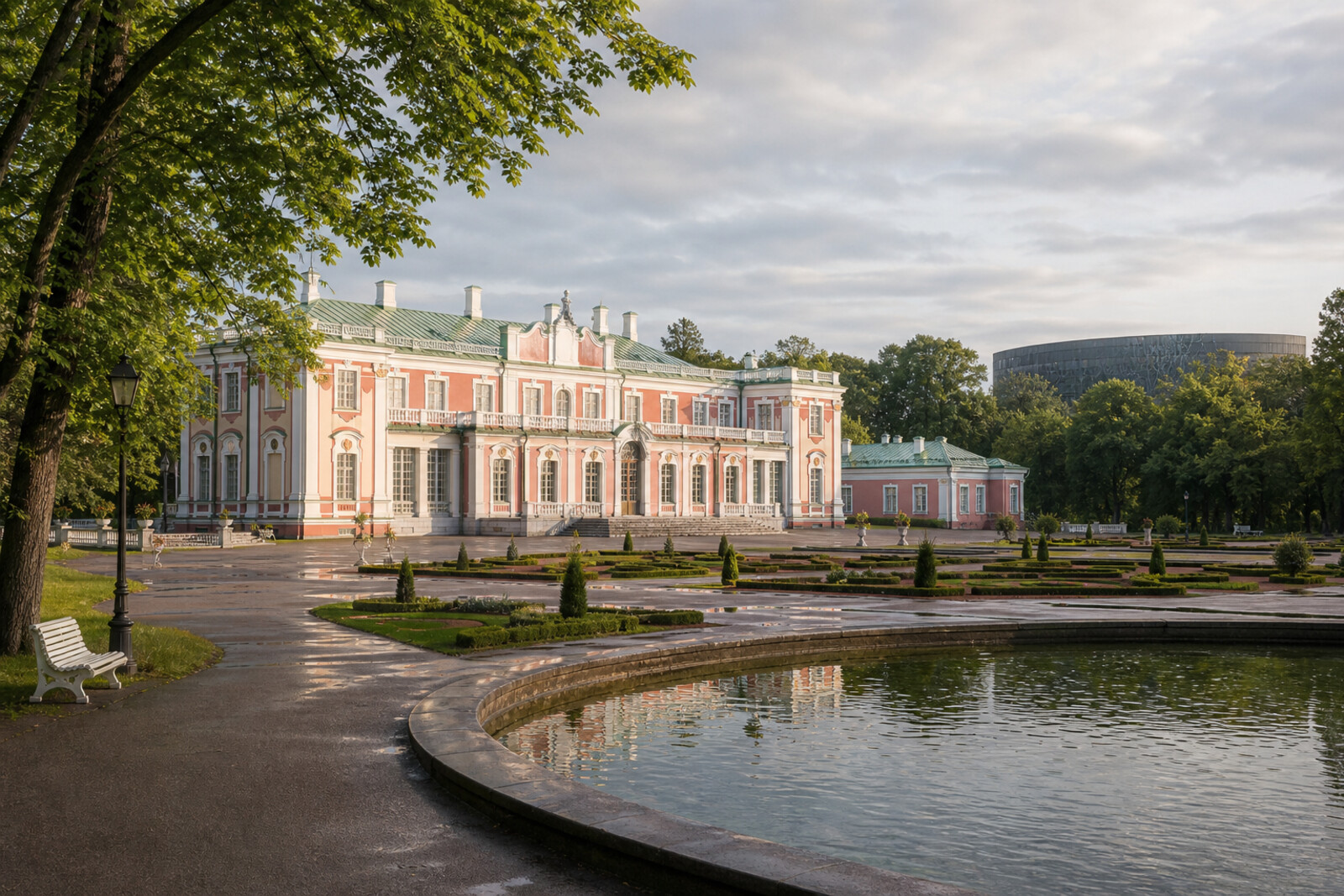
Kadriorg: Palaces, Gardens, and Art
From Swan Pond through the palace park to Kumu Art Museum
Guide On Map on your phone
Open the walk like a regular app
It takes about 10 seconds to install. No app store needed.
The whole path
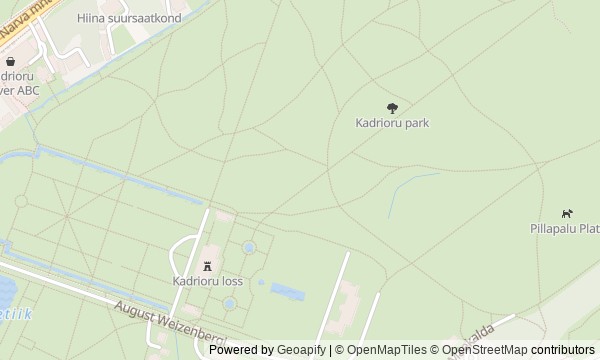
Route map
About the walk
You will begin at Swan Pond and move from the water toward Kadriorg Palace, its upper terraces, and the Presidential Palace. Then the route will lead to the small House of Peter the Great, carry you into the Japanese Garden, and finish at the large museum curve tucked into a limestone slope.
Kadriorg will change as you walk. The formal park will turn out to be, all at once, a summer residence, a setting for state ceremonies, a museum quarter, and a garden that had to adapt to Tallinn’s winters.
Questions will come up along the way. Why would they chop firewood in a palace hall? What will prove wrong with the imperial dining room? Why will a Japanese master arrange stones to resemble Tallinn rooftops?
The story will separate the original idea from later restorations, and ceremonial gestures from their consequences. By the end of the walk, you will be able to tell apart the palace of Peter the Great, the state park of the thirties, and the museum ensemble assembled in independent Estonia.
Why this order
Swan Pond provides an entrance through the public part of the park, while the palace above explains where all of Kadriorg got its name and formal scale. Behind the palace, Upper Garden continues the architecture in terraces and shows how courtly space was used for state ceremony. From its upper side, the neighboring working building shifts the story from a gesture of diplomacy to an actual change of power. Farther on, the small House of Peter the Great lets you compare an official residence with the tsar’s first home and see how restoration itself changes a monument. After rooms and museum furnishings, the Japanese Garden turns attention to living material—water, stones, and plants that had to be tested against the local climate. Kumu Art Museum concludes the route by the limestone slope: after palaces adapted into museums comes a building designed from the start for a national collection.
Those who want to see Tallinn beyond Tallinn Old Town Lovers of palace parks and museum history Those interested in architecture and the fate of objects Those who prefer a quiet route without historical set dressing
Those looking for a walk only through medieval Tallinn Those who want a route exclusively through a natural park Those who do not want to enter museum buildings Those expecting light palace anecdotes without complicated consequences
Before you go
Decide in advance which museums you want to enter: Kadriorg Palace, the House of Peter the Great, and Kumu Art Museum are three separate visits, and trying to explore all of them in detail during a short walk is tiring. Check each place’s current opening hours for the day of your route rather than assuming they open at the same time. Comfortable shoes will help in the park: the route includes gravel, terraces, stairs, and changes in elevation. The Japanese Garden is best visited in daylight; in winter and after bad weather, follow notices and check the condition of the paths.
When to go
About 90 minutes without entering museums; 3–4 hours if you visit Kadriorg Palace, the House of Peter the Great, and Kumu Art Museum.
Backup plan
If the museum doors are closed, keep the full route order: Swan Pond, the palace facade, Upper Garden, the Presidential Palace, the House of Peter the Great, and Kumu Art Museum can all be meaningfully explored from outside. In heavy rain, keep the short link from the palace to Kumu Art Museum and save the gardens for a dry day. If the Japanese Garden paths are inaccessible, do not try to go around the barriers: head directly from the House of Peter the Great to Kumu Art Museum. If time is short, choose one museum to enter and treat the remaining stops as an architectural walk.
Route conditions
Elevation. Ascent — 30 m; descent — 11 m
OpenStreetMap extract of June 18, 2026: database data, not a check on the ground. Data © OpenStreetMap contributors, ODbL licence
Walk plan
Open in maps ↗- 1
Swan Pond
Here you will see how visitors’ habits changed the birds’ fate, and how a gifted pair gave the body of water its new name. - 2
Kadriorg Palace
This stop traces how a summer imperial residence stood empty, lost its furnishings, and acquired a museum life. - 3
Upper Garden
The restored parterres will set the scene for a conversation about a state visit that left more behind in the ground than in politics. - 4
Presidential Palace
One working building links the first presidential term, the Soviet change of power, and the return of the Office of the President of the Republic. - 5
House of Peter the Great
Here, restoration will save the tsar's house, but will add a room that did not exist under its previous owner. - 6
Japanese Garden
The garden will show that a foreign tradition is preserved not by copying plants, but by working precisely with the local terrain and climate. - 7
Kumu Art Museum
The final stop will explain how the national collection, after a long wait, received permanent galleries, storage rooms, and workshops.
Route features
Everything you need stays in the browser
Progress, saves and your trip plan are stored on this device.
Add Guide On Map to your home screen so the walk opens outside the browser.
How we handle sources, maps and corrections: our editorial standards