 Guide On Map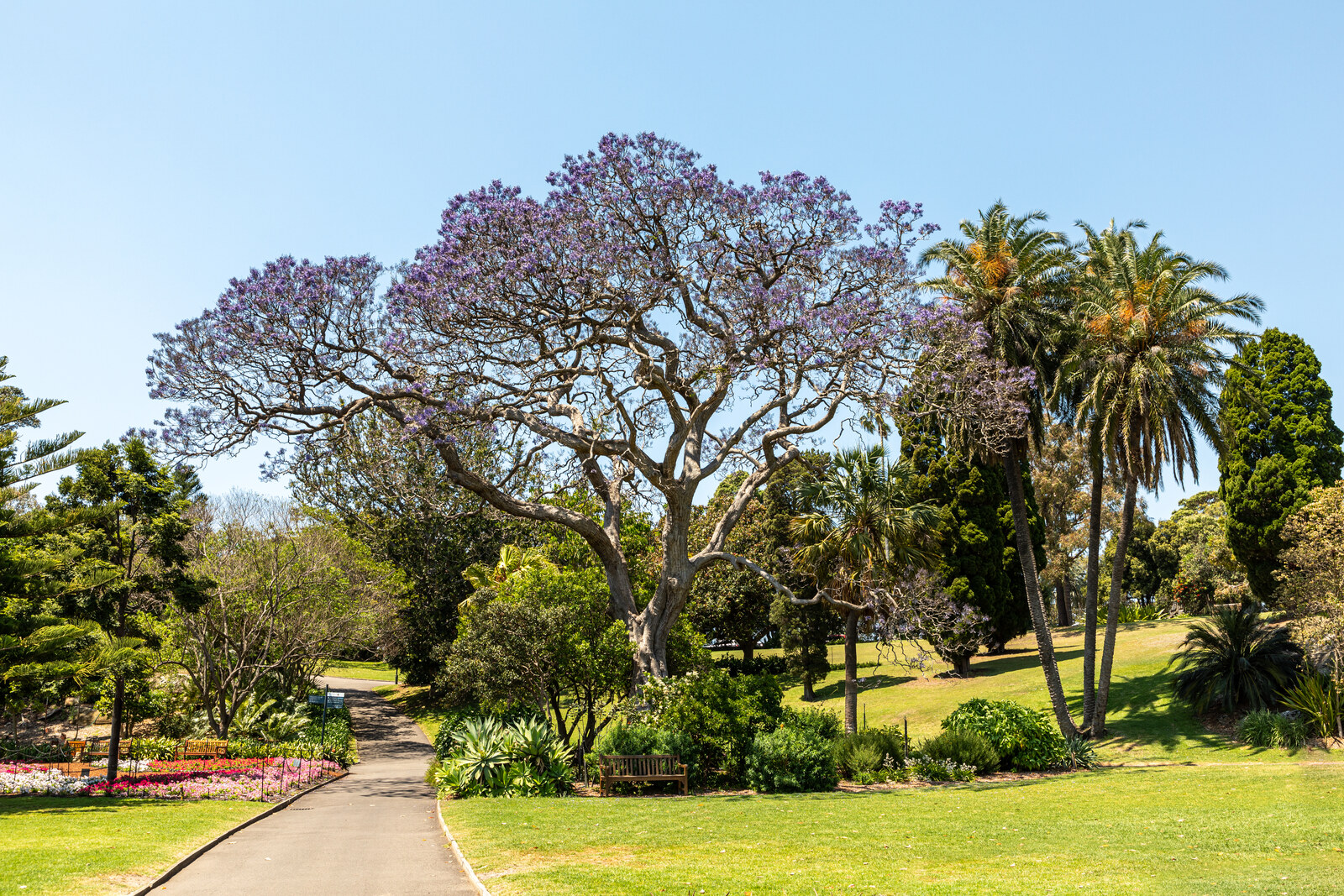
Look around first
What to notice
- Farm Cove
- The long beds of the Middle Garden
- The paths of the Middle Garden
- The open lawns of The Domain
The story of the place
Royal Botanic Garden Sydney stretches along Farm Cove, and beyond its collections and experimental plantings begin the open lawns of The Domain. These neighboring spaces have different purposes: the garden received seeds from expeditions, cultivated plants, and compiled catalogs, while The Domain became a place for walks, sports, gatherings, and civic celebrations. In the Middle Garden, the long beds and paths still run in the direction of the old furrows. The very name The Domain preserves the memory of estate grounds connected with the governor's residence.
Farm Cove acquired its name after a failure. Before the British arrived, the Gadigal called it Woccanmagully. They gathered food here and held ceremonies. When the First Fleet landed nearby in January seventeen eighty-eight, Governor Arthur Phillip needed to feed the settlement, made up mainly of convicts, soldiers, and officials. He ordered land to be cleared beside the freshwater stream that flowed into this cove.
The work was directed by Henry Edward Dodd, an experienced farm laborer and Phillip's personal servant. The governor considered him the only free man in the colony who could be entrusted with a government operation. Dodd had no farm of his own here: his position depended on his ability to grow grain for the government stores. Under his supervision, convicts felled trees, dug out stumps, and loosened the soil with hoes. They too worked for what those stores held—the food was issued from the common supplies.
By June, Dodd had sown nine acres; by September, the colonists had already cleared twenty. Even so, the harvest could not feed the settlement. Some of the seeds had spoiled during the long sea voyage, the season had been chosen badly, the soil proved poor, and rats destroyed the seedlings. Amid the greenery of today's garden, it is hard to guess that the lack of fertility nearly destroyed the first British colony on the continent.
Phillip sent people to look for better land farther up the harbor. In March seventeen eighty-nine, Dodd was transferred to Rose Hill—the original name of present-day Parramatta. There he established the colony's first successful government farm and ran it until his death. The farm by this cove was abandoned, but the water acquired the name Farm Cove—Farmer's Bay.
The vacant land lay beside the governor's residence. In eighteen oh seven, Governor William Bligh, wishing to bring the area around the house back under unified management, cancelled the private leases and recorded the plot as part of the governor's residence domain. A domain meant an estate or estate grounds. The word survives in the name of the open park surrounding the garden.
Governor Lachlan Macquarie chose the old government beds for a different experiment. In eighteen sixteen, he set aside a botanical garden here and entrusted it to Private Charles Fraser of the Forty-sixth Regiment. Fraser was officially a soldier, but he was valued as a gardener; for botanical work, he received five shillings a day. He received seeds and specimens brought back from expeditions, grew native and introduced plants, and compiled catalogs. By eighteen twenty-five, the gardeners were successfully cultivating almost three thousand varieties of trees, fruit crops, grapes, and other plants here. Thus, the plot where it had been impossible to grow enough bread became a place for testing, describing, and exchanging plants.
In eighteen thirty-one, the administration allowed the public to use The Domain. The garden was retained for collections and research, while the surrounding lawns were given over to walks, sports, gatherings, and civic celebrations. This is the origin of the present-day neighboring spaces: the cultivated botanical garden and the open The Domain.
The word “Royal” appeared much later. On February third, nineteen fifty-four, Queen Elizabeth II arrived at the steps by Farm Cove. She became the first reigning British monarch to set foot on Australian soil. Five years later, the Queen permitted the word “Royal” to be added to the garden's name—in memory of this landing and in recognition of the institution's botanical work.
In the Middle Garden, the directions of the long beds and paths still align with the first furrows made by Dodd's workers. The failed farm remains here in the garden's layout and in the cove's name.
Useful on site
The site is large and in places exposed to sun and wind; keep water handy and check the site map. Follow the garden rules and do not leave the permitted paths to shorten your route.