 Guide On Map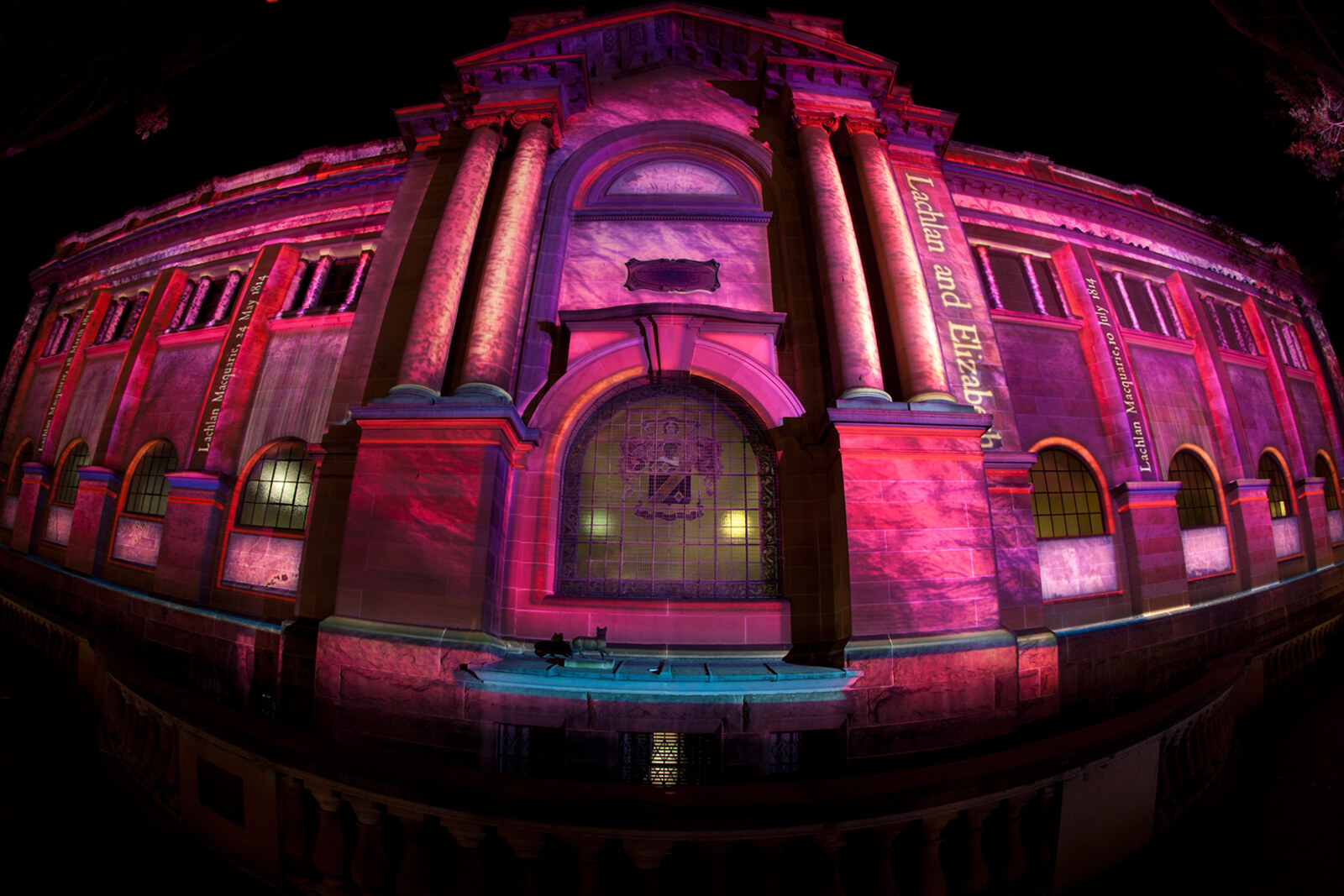
Look around first
What to notice
- Mitchell Library wing
- Mitchell Library entrance
- Reading room
- Old volumes with the owner's signature
The story of the place
At the end of the nineteenth century, the librarian Henry Charles Lennox Anderson was constantly losing out to a single reader. Anderson ran the Public Library of New South Wales—what the present-day State Library was then called—and collected books and manuscripts on the history of Australia. But David Scott Mitchell bought the best finds before Anderson could.
Mitchell trained in law, but never worked in the profession. He lived on income from inherited coal lands and spent it on books, maps, paintings, and documents. His ambition was immense: to collect everything relating to Australia and neighboring lands, down to an incidental pamphlet or an old letter.
The library lacked the money to compete with him. In eighteen ninety-five, Anderson chose another strategy: he made Mitchell's acquaintance and began visiting him every week. He tracked down rarities for the collector, ordered them through government representatives in London, and corresponded with dealers. Anderson received his salary from the library, while serving as Mitchell's agent for free.
This put his position at risk. Booksellers accused the librarian of using his official opportunities in the interests of a private buyer and favoring selected sellers. A parliamentary commission began an investigation. Anderson was cleared, but his calculation had already produced results.
On October seventeenth, eighteen ninety-eight, Mitchell promised to give his collection to the library. He set conditions: a separate wing would be built for it, it would be called the Mitchell Library, and its materials would be opened for readers to use freely. He added seventy thousand pounds to the books, so that the collection would continue to grow after his death. To confirm his promise, Mitchell immediately gave more than ten thousand volumes. They would not fit in the old library, so Anderson cleared out his own adjacent official residence for them.
The government accepted the conditions, but delayed construction for six years. The ailing Mitchell warned that, unless something changed, the University of Sydney would receive the collection or it would be sold off. The bookseller George Robertson, who knew the value of this collection and sought to preserve it for the public, spoke before a parliamentary commission. After his testimony, Premier Joseph Carruthers ordered work to begin.
The new building was erected here, across the intersection from the cramped old library at the corner of Bent Street and Macquarie Street. On September eleventh, nineteen oh six, Carruthers laid the foundation stone. Mitchell was seventy years old; he could barely get up any longer and did not come to the ceremony. He saw the walls of his library only from a distance. In July of the following year, Mitchell died without ever entering it.
In his damp house, books filled the corridors, rooms, and attic. The librarians hurriedly packed them into metal cases protected from moisture, took them first to a bank vault, and then brought them here. In March nineteen ten, the Mitchell Library opened to readers. Later additions connected it with the Public Library of New South Wales; since nineteen seventy-five, the whole complex has borne its present name—the State Library of New South Wales.
No one compiled a complete inventory of Mitchell's belongings during the urgent move. New acquisitions became mixed with his books, and the boundary of the original collection disappeared. Today, manuscripts, maps, photographs, and rare editions here are issued for use in the reading room, while on old volumes librarians look for the only reliable proof of their former owner: a clear signature of David Scott Mitchell in the upper-right corner of the title page.
Useful on site
Keep quiet in public areas, and do not occupy workspaces simply for viewing. Access to special collections and individual rooms may be regulated separately.