 Guide On Map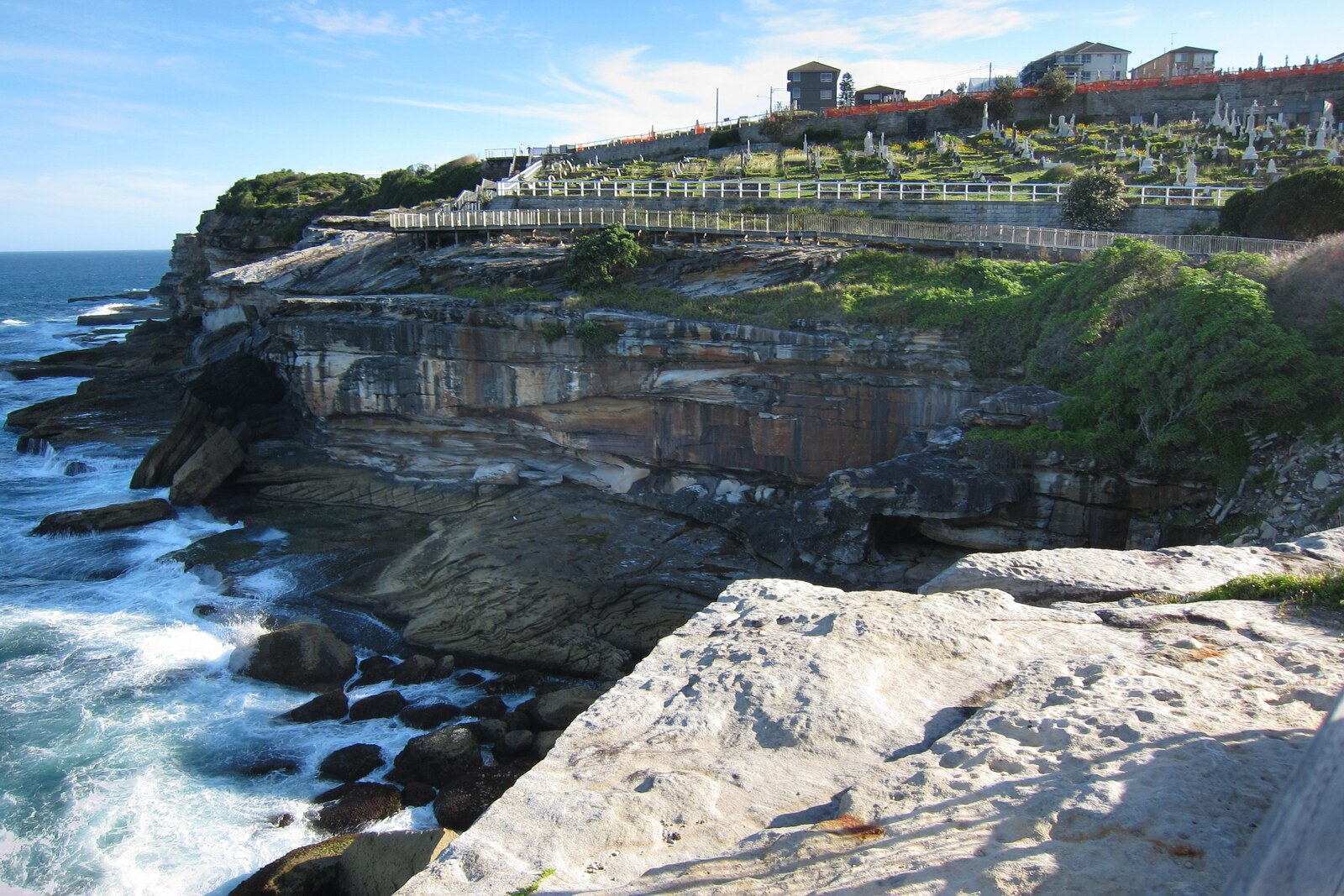
Look around first
What to notice
- The small gravestone of “little Davy”
- The inscription “Here lies one who was dear to someone”
- Rows of gravestones in the Catholic section
The story of the place
Waverley was divided into three sections for Anglican, Catholic, and general burials. When the cemetery was still very new, the first grave appeared in the Catholic section. Among the rows of gravestones remains the plot that the father of the person buried there bought.
On a small gravestone, the affectionate words “little Davy” are carved, with a line below: “Here lies one who was dear to someone.” It sounds as though no one knew the child’s name.
His name was David Herbert Ford. On January thirteenth, eighteen seventy-eight, he died of complications from diphtheria at his parents’ home in Glebe Point. He was four years and five months old. The next day, the boy was buried here. Waverley Cemetery had opened only a few months earlier and was divided into Anglican, Catholic, and general sections. David was the first person buried in the Catholic section.
His grave was paid for by his father, the Irish emigrant Joseph Michael Ford. He supported his family through earnings as an innkeeper, travelling salesman, and book agent; later, he became a newspaper columnist. For the gravestone, Ford chose a line from a favorite poem about an unknown young soldier who died far from his loved ones. In it, a passerby is asked to bury the dead man with the thought that somewhere he is loved and awaited.
The father knew whose beloved Davy was. Everyone else read the inscription literally. A story appeared about an orphan run over by a butcher’s cart: before dying, the boy supposedly managed to whisper only “Davy,” and the remorseful driver paid for the funeral. In another retelling, the cart became a tram. An affectionate family nickname became the only name of an unknown child, and the line about love became proof of his loneliness.
In nineteen seventeen, Joseph Ford wrote to The Bulletin to correct the story. He reported that Davy was his son, that he had died at home of illness, and that he had been buried in a plot bought by his father. The correction did not stop the legend: even in a cemetery conservation plan drawn up in two thousand eighteen, Davy is called an unidentified boy killed beneath a tram. The city council now gives the Ford family’s story and the true cause of death.
The nickname and the line without a surname can still be read on the gravestone. Here, aloud, his full name must be given back to him: David Herbert Ford.
Useful on site
Stay on permitted paths, do not touch the monuments, and speak quietly: this is an active place of remembrance, not scenery for views. If access is closed, listen from the public coastal path.