 Guide On Map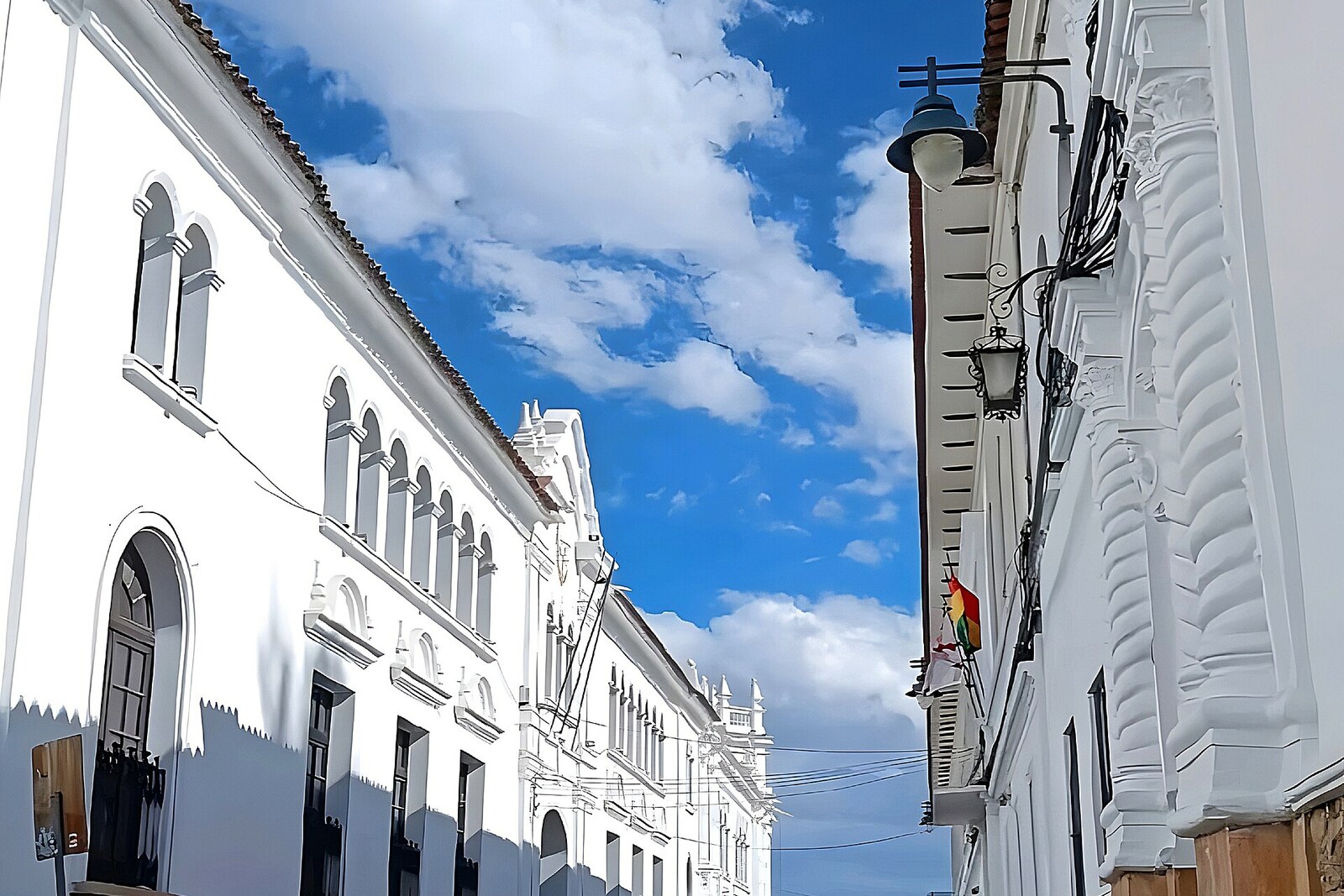
Look around first
What to notice
- Street-name sign
- Light facades
- Window and door openings
- Signs on walls
The story of the place
The white facades on Pantaleón Dalence Street appeared as a result of decisions that homeowners are required to follow. This street runs along the southern boundary of the historic center's strict protection zone. The boundary was not drawn approximately: the municipal regulations specifically name Pantaleón Dalence Street, and the protected area includes entire house plots along the marked line.
It was not always this way. Restorers found ocher, green, blue, and yellow layers beneath Sucre's whitewash, and red pigment on the facade of San Francisco. In eighteen twenty-six, the newspaper El Cóndor de Bolivia even advised residents to give up white walls: its author warned that brightly reflected light could harm the eyes and printed recipes for gray, blue, and orange paint. There is no evidence that townspeople followed this particular newspaper recommendation. The surviving layers confirm the main point: old Sucre was far more colorful.
In the nineteen sixties, city planners began to establish a light palette for facades. They sought to protect the historic center from development that disrupted the established heights and pattern of its streets. On November twenty-seventh, nineteen sixty-nine, the council of ministers under President Alfredo Ovando Candia declared the old part of Sucre a historic monumental city and ran part of its boundary along Pantaleón Dalence Street. Later municipal rules made the control permanent.
For a homeowner, this means a very tangible procedure. Painting, repairs, a new sign, a window, or a change to the roof must be approved by the heritage administration. A commission reviews the project; it includes municipal specialists, architects, engineers, and representatives of monument-protection organizations. They may authorize the work, require alterations, or refuse it. After the decision, plasterers and painters arrive; the former color is again hidden beneath a light coating. This is how individual houses from different centuries acquire the same street-facing facade.
The street's full name preserves another layer of this editing: Pantaleón Dalence Street. Pantaleón Dalence Jiménez was a judge who sought the independence of the courts from other state institutions. He served on the Supreme Court of Justice in Sucre for thirty-four years and headed it three times. After his death, Bolivian jurists called Dalence the father of national justice, and in nineteen fifty-one his birthday was declared Judges' Day. It was for this judicial service that his name became fixed in the city's nomenclature.
Now the judge's surname is written on a white wall and in Sucre's protection rules. Pantaleón Dalence Street remains both an ordinary residential street and a precisely drawn line on a map: on one side of it, municipal regulations consider entire house plots protected, including the facades that must be whitewashed again.
Useful on site
An ordinary city street; access is free, though traffic and facade repairs may change the stop location.
Checked: June 24, 2026. Check the official source before visiting.Examine the surfaces from the street, without entering private courtyards or touching crumbling areas. An open interior is not needed for this stop.