 Guide On Map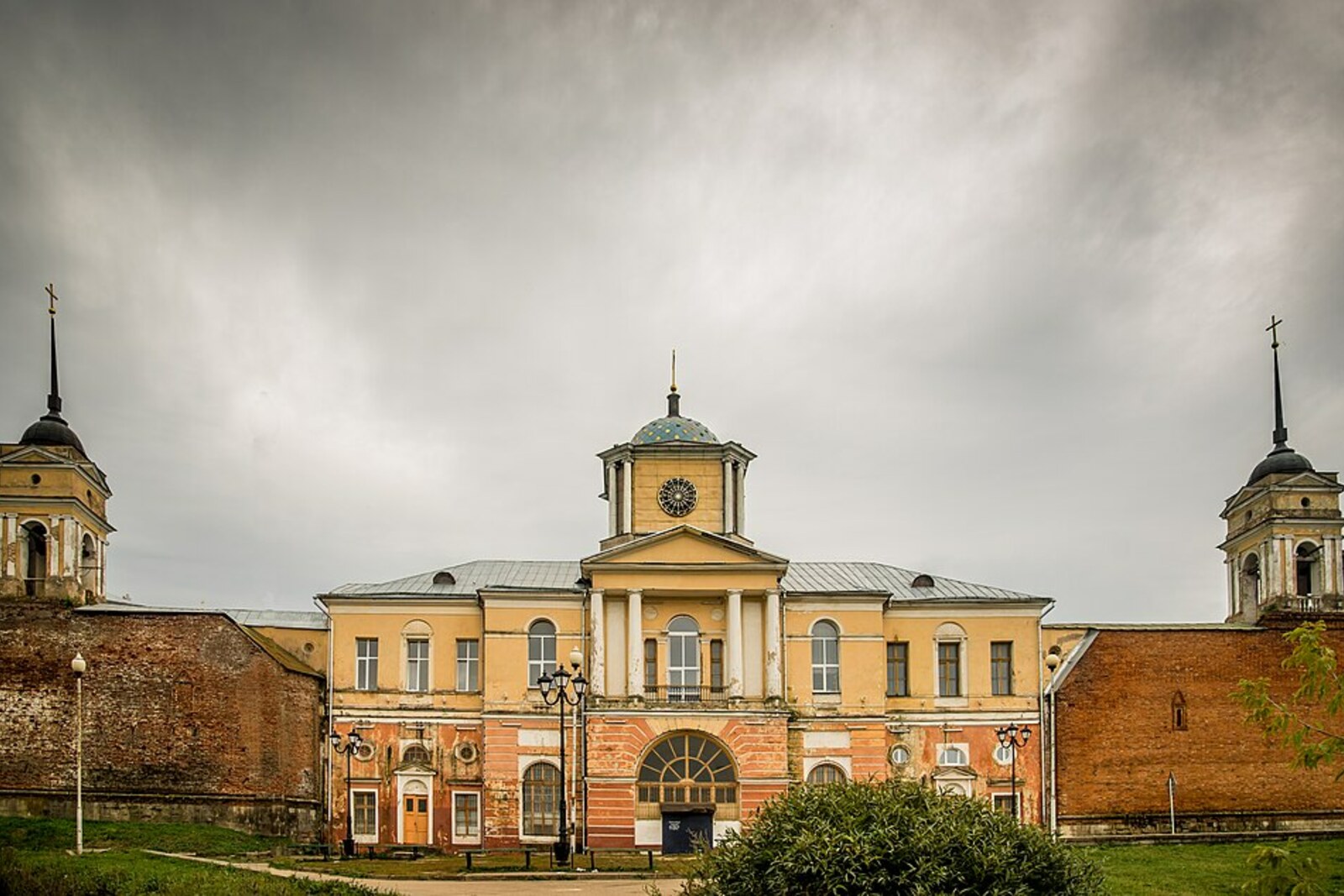
Look around first
What to notice
- Entry arch
- Gate church
- Stone abutments of the old bridge
- Raised street level behind the gate
The story of the place
Beneath the vaulted entry arch by the Dnieper, the lower tier of the Frolovskaya Tower and Gate has survived. It was named after the nearby Church of Flor and Lavr. The tower later became known as the Dnieper Tower because the bridge by the gate led out of Smolensk, across the river, and onto the Moscow Road. Above the old stone foundation rises the early nineteenth-century Hodegetria Gate Church, which now houses the Smolensk Orthodox Gymnasium. The passage was bricked up long ago, the street was raised, and the abutments of the crossing can still be seen on the Dnieper Embankment.
On the night leading into August sixth, eighteen twelve, according to the Russian calendar then in use, Russian sappers blew up the bridge that led directly out of this gate. The army was abandoning Smolensk and retreating along the Moscow Road. Adjutant General Fyodor Korf commanded the rear guard—the last detachment covering the retreat. His regiments remained across the river in the Petersburg Suburb, the historical name for present-day Zadneprovye.
At dawn, French patrols discovered that the city had been abandoned. Emperor Napoleon soon arrived at the Dnieper Gate. He needed to drive Korf's detachment from the opposite bank and get his troops across the Dnieper before the Russian army moved farther away.
The building above the gate was brand-new at the time. The old fortress tower had already been dismantled, and the Hodegetria Gate Church, dedicated to the Smolensk Hodegetria, had been built in its place. The builders finished enlarging the church in the summer of that same year, but did not manage to consecrate it before the fighting began. The balcony on the river facade proved to be a ready-made artillery position.
Napoleon surveyed the opposite bank through the windows and ordered two cannons hauled onto the balcony. Artillerymen positioned another four guns on the fortress rampart. Smolensk tradition claims that the emperor personally aimed one of the cannons; his order to open fire from here is more reliably documented.
Part of the Petersburg Suburb caught fire, and Korf's men retreated. French advance units forded the river near the destroyed bridge, pushed back the Russian jägers—light infantry—and reached the plain just three versts from the positions of the First Army.
The task of stopping them was given to Lieutenant General Pyotr Konovnitsyn, commander of the Third Infantry Division. He had just withdrawn his soldiers after their overnight service in the rear guard, but turned them around again. Together with a jäger brigade and Korf's retreating detachment, Konovnitsyn attacked the French and drove them back across the Dnieper. Korf reoccupied the suburb, while Russian riflemen held the riverbank until evening. French engineers were able to put bridges across the river only at night, when the rear guard was ordered to catch up with the main forces.
The first tower on this site was the Frolovskaya Tower and Gate, named after the nearby Church of Flor and Lavr. The gate later became known as the Dnieper Gate: the bridge in front of it led out of the city, across the river, and onto the road to Moscow. Only the lower tier of the old tower, with its entry arch, has survived. Above it stands the early nineteenth-century church, now occupied by the Smolensk Orthodox Gymnasium.
After the bridge was destroyed in nineteen forty-one, the passage was bricked up and the street behind the gate was raised above its former level. The stone bridge abutments remain on the embankment in front of the arch, near the place where Korf's and Konovnitsyn's soldiers prevented the French from establishing themselves beyond the Dnieper.
Useful on site
Exterior viewing. The building houses an Orthodox gymnasium; regular tourist entry is not available.
Checked: June 24, 2026. Check the official source before visiting.A school operates in the building, so limit your visit to viewing the exterior and do not enter administrative or classroom areas. For an overall view, proceed to the accessible section of the embankment.