 Guide On Map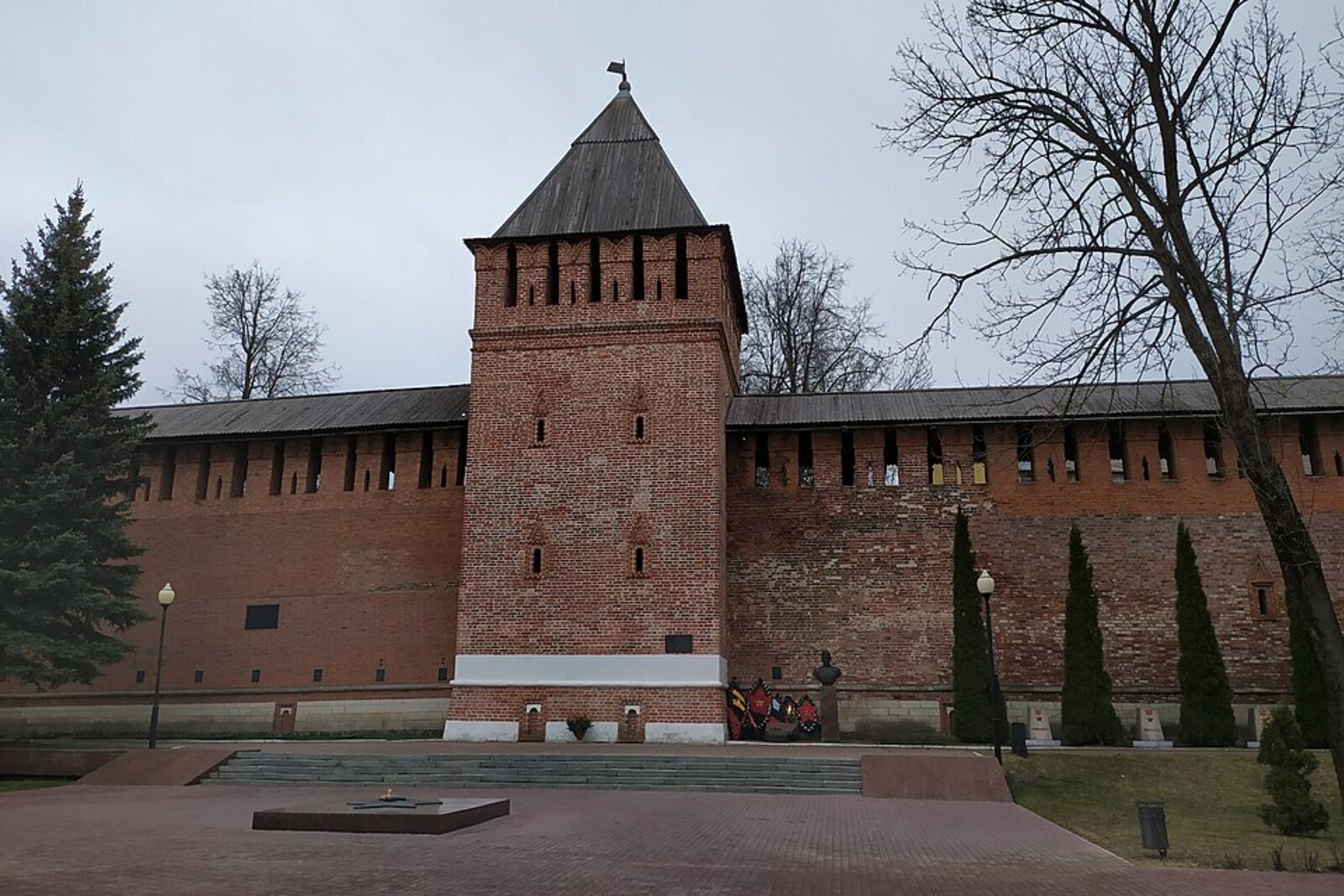
Look around first
What to notice
- Donets Tower
- Eternal Flame
- Granite burial slabs
- Tomb of Mikhail Yegorov
The story of the place
Beside the Smolensk Fortress Wall is a square with forty-one military burials marked by granite slabs. The memorial avenue arose on the site of the old moat: the moat was filled in, and cast-iron plaques commemorating the regiments that fought for Smolensk were mounted on the wall’s brickwork. Commanders and political officers who died later in battles west of the liberated city were buried here. Nearby stands Donets Tower, whose name is associated with servicemen from the Don, although no definitive explanation of the name has survived.
This Eternal Flame was brought here from Moscow on an armored personnel carrier on September twenty-eighth, nineteen sixty-eight. The torch was lit at the Tomb of the Unknown Soldier, and in Smolensk it was received by Mikhail Yegorov, a reconnaissance soldier in the 150th Idritsa Rifle Division who, in the spring of nineteen forty-five, was assigned to plant an assault banner on the Reichstag.
About forty such banners appeared above the building. Yegorov and fellow reconnaissance soldier Meliton Kantaria carried the banner numbered five, which was later recognized as the Victory Banner. They climbed onto the roof while fighting was still underway on the lower floors. Bullets pierced the flagstaff, one bullet passed through Yegorov’s trouser leg, and broken glass cut both men’s palms. After the war, Yegorov returned to Smolensk Oblast and worked as a machine operator at a condensed-milk factory in Rudnya. It was Yegorov who was assigned to light Smolensk’s Eternal Flame.
At first, the flame burned in the middle of the avenue. By then, the Smolensk Fortress Wall was already serving as a military necropolis. Before the centenary of the War of eighteen twelve, the city council had ordered the water-filled moat by the wall to be filled in and a memorial boulevard laid out here. The fire brigade filled in the moat, and cast-iron plaques bearing the names of the regiments that had fought for Smolensk were mounted on the brickwork.
After the city’s liberation, the military councils of the Western Front began burying fallen commanders and army political officers by the same wall. The first burial took place on October eighteenth, nineteen forty-three. Most of those buried here died farther west of liberated Smolensk, in eleven unsuccessful offensives along the Orsha and Vitebsk axes. Their surnames were the ones inscribed on the granite slabs. There are forty-one burials in the square in all.
Several years later, the Eternal Flame was moved to Donets Tower. This name became attached to the tower only in the nineteenth century. Its origin has not been established with certainty; the name is generally associated with town Cossacks and streltsy from the Don who served on this section of the wall.
On June twentieth, nineteen seventy-five, the Volga driven by Mikhail Yegorov collided with a refrigerated truck near Rudnya. All three people in the passenger car were killed. Three days later, Yegorov was buried with military honors by the Smolensk Fortress Wall. He was the last person buried in Heroes’ Memory Square. Now, beside the tower, are the flame that Yegorov lit and his own grave.
Useful on site
An open-air urban memorial space; access may be restricted during ceremonies and restoration work.
Checked: June 24, 2026. Check the official source before visiting.This is an active memorial: speak quietly, do not step on the burial sites, and do not use the area by the flame as a place to rest or take staged photographs.