 Guide On Map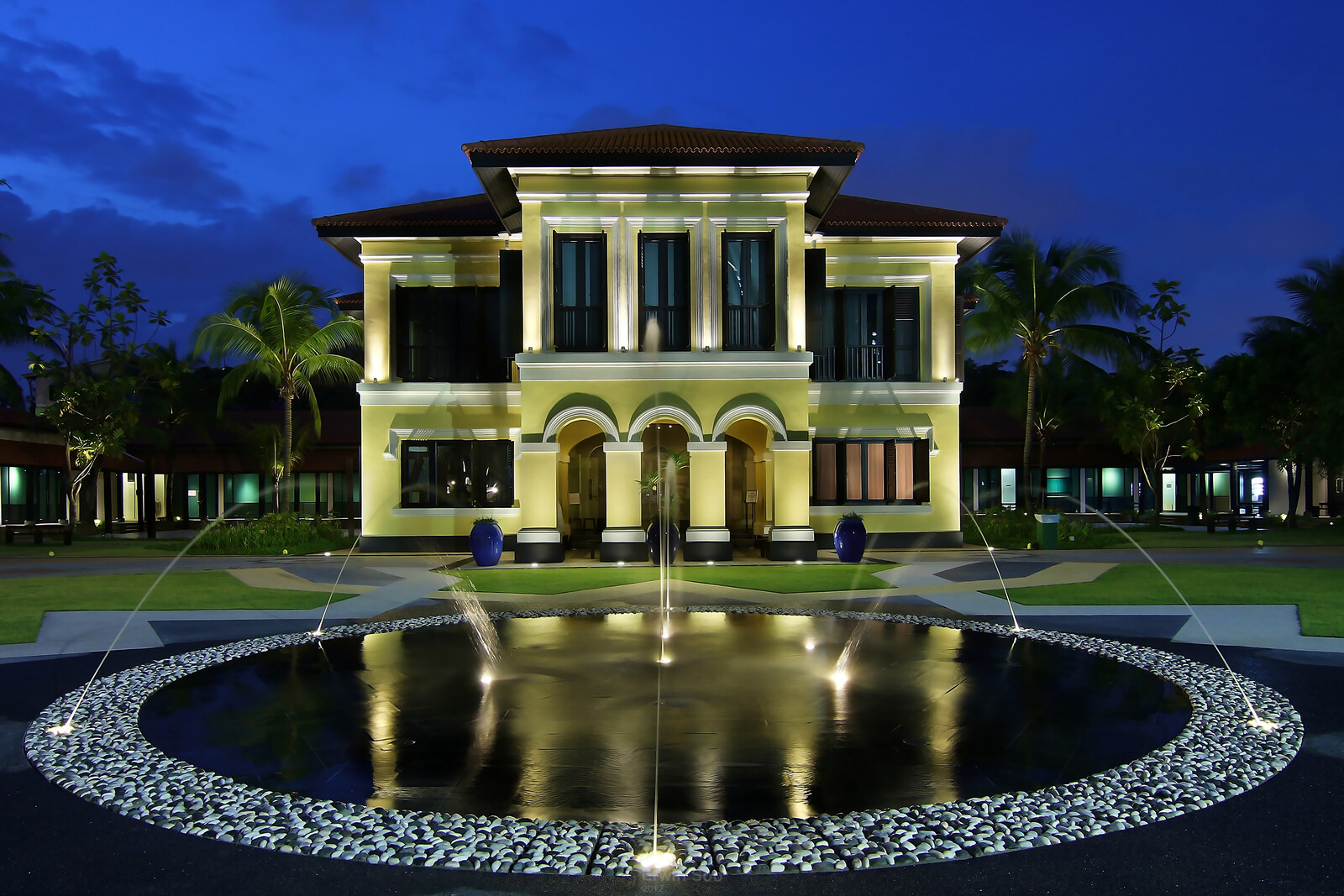
Look around first
What to notice
- The facade of the former palace
- The enclosure around the palace plot
- The stenciled inscription “Property of Crown Lands”
The story of the place
Behind the high enclosure, the outline remains of the plot allotted to the Malay sultan's family when a British trading port appeared on the island. At first, the palace grounds were occupied by a spacious house with a palm-leaf roof, while the present building preserves a different order of life: the owners' and reception rooms were upstairs, and the kitchen, storerooms, and servants worked downstairs. Behind an English-looking facade were the habits of a Malay house, and European things stood alongside this arrangement. Today, the galleries of the Malay Heritage Centre inside tell of families, crafts, and Singapore's links with the islands of the archipelago.
During a recent restoration, staff at the Malay Heritage Centre found a stenciled inscription by the entrance: “Property of Crown Lands,” dated eighteen ninety-seven. The find prompted a fresh review of the building's age. The palace was long dated to the eighteen forties, but the present brick house was completed only in eighteen ninety—for a man who had already lost the struggle for the sultanate.
Istana means palace in Malay. Sultan Hussein Shah began building the first palace in Kampong Gelam in eighteen nineteen. The British East India Company recognized him as sultan, obtained his signature on a treaty establishing a trading port in Singapore, and allotted him land here. Hussein's residence was a large house with a palm-leaf roof. From that complex, the boundary of the walled plot remains; the building in front of it appeared under his grandson.
That grandson was Tengku Alam (Sultan Alauddin Alam Shah). After his father's death, he led the family and sought recognition of his rights to the region of Kesang, or Muar, and to the title of Sultan of Johor. In January eighteen seventy-nine, during a wedding in Kampong Gelam, several hundred Malay and Bugis supporters proclaimed him Tengku Alam (Sultan Alauddin Alam Shah). He received no recognition from the British administration. Tengku Alam (Sultan Alauddin Alam Shah) tried to retake Muar by force, lost the civil war in Jementah to Abu Bakar, the ruler of Johor, ceded the disputed region, and returned to Singapore.
The present palace did not yet exist then. The family residence stood in the southeastern corner of the enclosure, while receptions were held on the Sultan Gate side, south of Gedung Kuning. Having lost Muar, Tengku Alam (Sultan Alauddin Alam Shah) asked the colonial administration to build him a new house. By then, his family was living on a pension of one thousand two hundred fifty dollars a month.
On August thirteenth, eighteen ninety, Acting Governor Frederick Dickson handed Tengku Alam (Sultan Alauddin Alam Shah) the key. In his speech, he wished the owner many years in the new house and good fortune. Newspapers described European furniture, gas chandeliers, and a facade “of a thoroughly English type.” At the same time, the rooms were arranged according to the layout of a Malay house: the main living and reception rooms were upstairs, while the kitchen, storerooms, and servants' rooms were downstairs.
The wish for a long life did not come true. On August twenty-fourth, eighteen ninety-one, Tengku Alam (Sultan Alauddin Alam Shah) died in this house. After his death, relatives began litigating over the inheritance. On December twenty-third, eighteen ninety-seven, the court of appeal ruled that none of them had inherited the sultan's former rights to the land and declared the plot property of the Crown. Hussein's descendants nevertheless lived here until nineteen ninety-nine and received payments under a special ordinance.
In nineteen ninety-nine, the residential period ended. The Malay Heritage Centre opened here in nineteen ninety-five, and in the spring of two thousand twenty-six, renewed galleries opened on Malay families, migrations, crafts, and Singapore's links with the islands of the archipelago. The inscription found during the restoration is among the exhibits. In August eighteen ninety, Tengku Alam (Sultan Alauddin Alam Shah) received the key to the new house; seven years later, officials had already marked this house as Crown land.
Useful on site
Permanent galleries: Tuesday—Sunday 10:00—18:00, last entry 17:30; courtyard: Tuesday—Sunday 08:00—21:00; closed Monday. Check admission rules and discounts before visiting.
Checked: July 1, 2026. Check the official source before visiting.The facade and courtyard can be explored separately from the exhibition; check gallery access before visiting.