 Guide On Map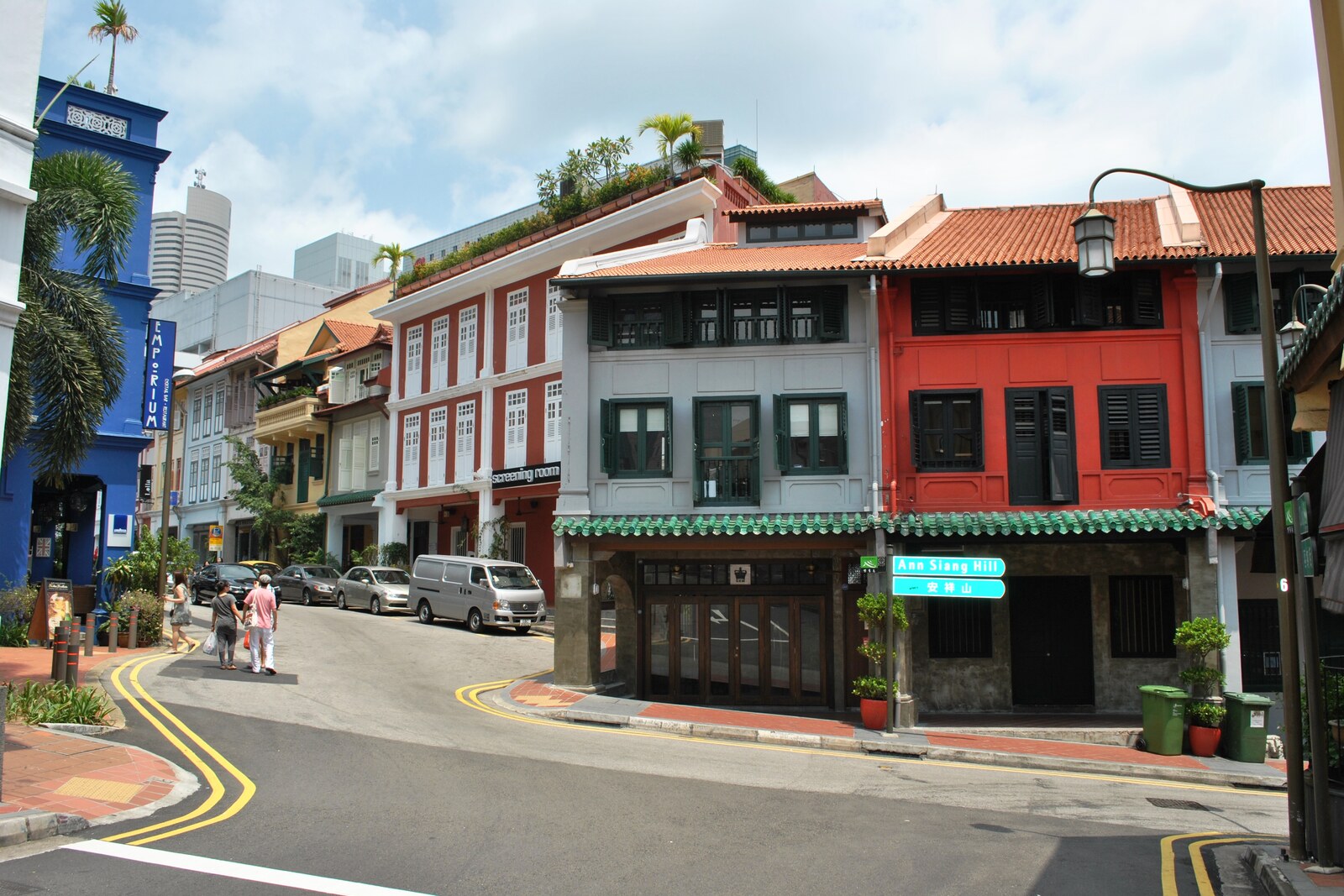
Look around first
What to notice
- House No. 72
- House No. 76
- A row of shophouses
The story of the place
On February twenty-seventh, nineteen forty-two, Japanese soldiers brought twelve influential Chinese community leaders to house seventy-two on Club Street. The Goh Loo Club was based here—its name translates as “My Humble Home.” Of all the clubs on Ann Siang Hill, it alone remained in operation during the occupation.
Among those who soon had to report here every day was the businessman Yeo Chan Boon. Before the war, he collected donations for Chinese people affected by the Japanese invasion of China and paid from his own funds for the work of one of the relief committees. After the capture of Singapore, the Japanese arrested him as a participant in the anti-Japanese campaign. Yeo was released from prison on one condition: he now had to serve in an organization for local Chinese people created by the occupiers.
On March second, about two hundred fifty prominent merchants and community leaders were gathered at the Goh Loo Club. The physician and educator Lim Boon Keng was appointed chairman. Formally, the new association was to mediate between the Chinese community and the Japanese military administration. At its very first meeting, its members were ordered to raise fifty million Straits dollars—the currency then used in Singapore and British Malaya—for the Japanese military fund.
The people, who had already endured arrests and inspections, could not refuse. Information about their property was taken from the land registry, company lists, and tax documents. Representatives of one dialect community were forced to assess the property of another. Owners with assets worth less than three thousand dollars were exempted from the levy; the rest were required to pay eight percent of the value of their property.
The first deadline was set for April twentieth, then postponed twice. By June twenty-fifth, the full amount still had not been collected. The shortfall was covered by a loan from the Yokohama Specie Bank at six percent per year, to be repaid within a year. The association created here continued carrying out the occupation administration’s orders for another three years after that. After the Japanese surrender, Yeo Chan Boon returned to his ruined business, and in nineteen forty-six he joined a committee that collected information about the dead, family losses, and compensation claims.
By then, the name Club Street had already existed for several decades. It is associated above all with the Chui Lan Tien Club, which had opened on the hill before eighteen eighty-five. In eighteen ninety-one, the merchant and landowner Tan Quee Lan re-established it as the Chui Lan Tien Club, the Chinese Weekly Entertainment Club. It admitted mainly wealthy Chinese people born in the colony who spoke English. They met with business acquaintances and, on Saturdays, invited European guests to a ten-course dinner with champagne. The club acquired the everyday nickname “the Millionaires’ Club.” After a forced move, in eighteen ninety-eight it occupied house seventy-six, where it remains registered today. Other associations later appeared nearby, including the Goh Loo Club.
Ann Siang is the name of another person who owned the same hill. Before him, the site was first called Scott's Hill, after the planter Charles Scott, who grew nutmeg and cloves here, and then Gemmill Hill, after the next owner. Chia Ann Siang arrived from Malacca and, at sixteen, joined the trading house Boustead & Co. Eight years later, he managed a goods warehouse, and after more than forty years in trade he became one of Singapore’s wealthiest landowners. Chia bought Gemmill Hill and built a house with an estate here; afterward, his name passed to the hill and the road. Most of the present shophouses were built only between nineteen oh three and nineteen forty-one, after Chia’s death.
The Goh Loo Club and the Chinese Weekly Entertainment Club still occupy houses seventy-two and seventy-six. In the minutes of the first meeting on March second, nineteen forty-two, the place where the order for fifty million was issued is recorded precisely: the Goh Loo Club, Club Street. This is present-day house seventy-two.
Useful on site
The park is open around the clock. The stairs and paths on the slope may be slippery after rain.
Checked: June 28, 2026. Check the official source before visiting.Do not hurry on the wet slope and stairs; approach the well carefully, without climbing over the barriers.