 Guide On Map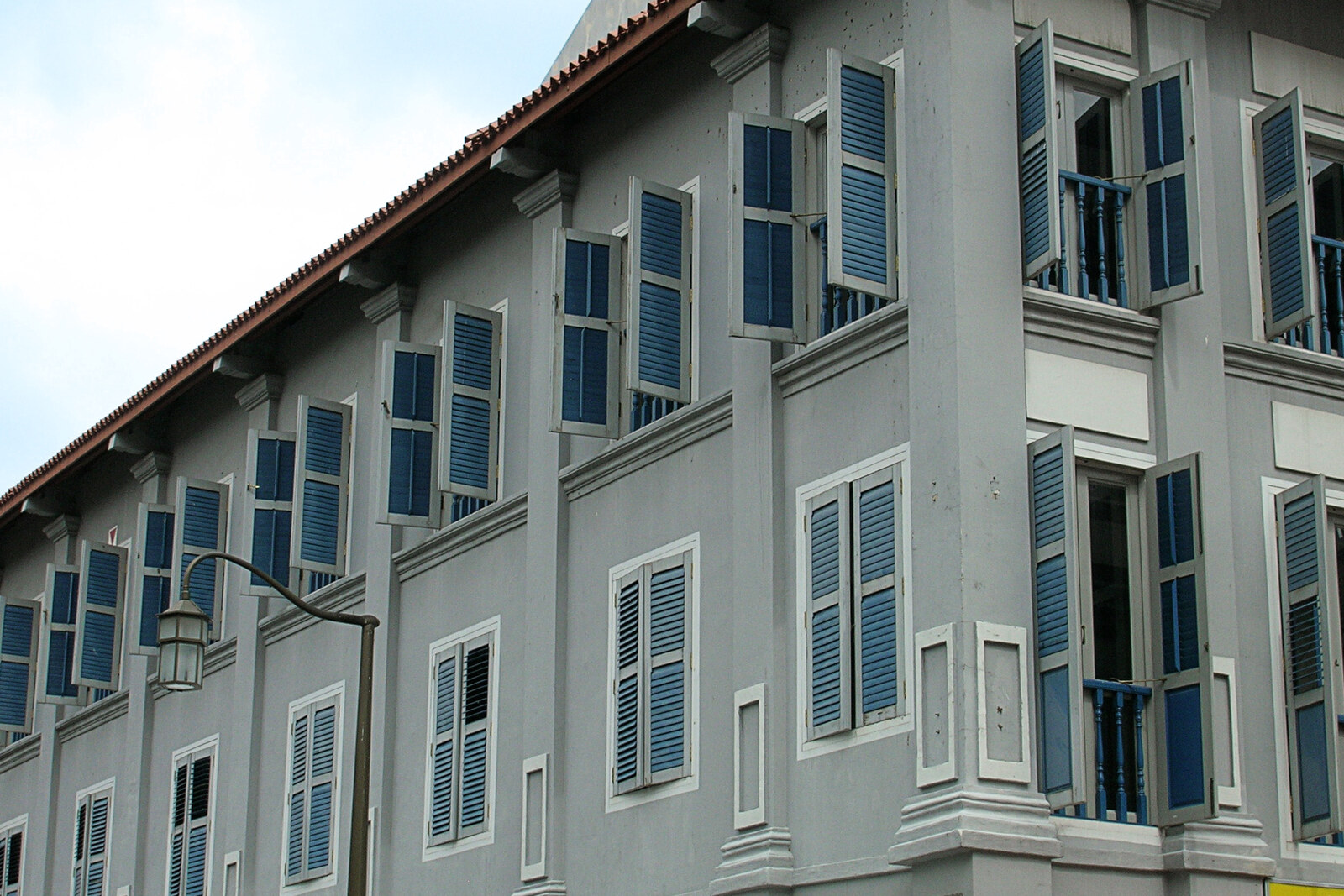
Look around first
What to notice
- The surviving school gates
- The restaurant façade behind the gates
The story of the place
Among the office façades of Amoy Street stand old gates built into a restaurant façade. About one hundred boys once gathered behind them each day, although only two teachers taught them. Chinese newspapers printed their achievements in the annual examinations, while inspectors appointed by the community monitored the work of this place. On an ordinary day, people have lunch here without noticing why the gates were preserved in the middle of a new district.
Amoy on the street sign is the old European name for Xiamen, a port city in China’s Fujian province. The street was laid out in the eighteen thirties. It is believed to have been named after the port from which many Hokkien migrants set out for this place. They settled near what was then the shoreline, traded, and established their associations, but there were almost no formal Chinese schools in Singapore.
In eighteen fifty-four, Tan Kim Seng took this on. A Hokkien community leader who had grown wealthy through trade, he wanted to provide free education for boys from poor families. He donated a site on Amoy Street for the school, worth one thousand seven hundred ten Straits dollars, the colonial currency of the time. Another twelve wealthy Hokkien merchants paid for its construction, and Tan raised money from fellow natives and trading firms to support the teachers.
This is how Chui Eng Free School came about. Families did not have to choose between paying for lessons and everyday expenses: the boys were taught free of charge, in Hokkien, using Chinese classical books. By the eighteen seventies, about one hundred pupils came here every day. Only two teachers taught them, but the results of the annual examinations were printed in Chinese newspapers, and inspectors appointed by the community monitored the school’s work.
The school even changed the street’s name. In colloquial Hokkien, Amoy Street came to be called “gi-o-kau”—“at the entrance to the charitable school.” The official name recalled where the migrants had sailed from; the everyday one pointed to what they had built for their children.
Chui Eng Free School closed in nineteen fifty-four, exactly one hundred years after it opened. The entrance gates of the school building were preserved on the grounds of today’s Far East Square. There are no longer pupils or two teachers’ desks behind them: the former entrance to the free school serves as the façade of a restaurant. The old “gi-o-kau” has disappeared from maps, but the gates that gave rise to the name remain on Amoy Street.
Useful on site
The street is accessible around the clock; the interiors of clan houses, schools, and establishments are not part of the guaranteed route.
Checked: June 28, 2026. Check the official source before visiting.This is a residential and business street: do not block entrances, and do not expect to enter private premises.