 Guide On Map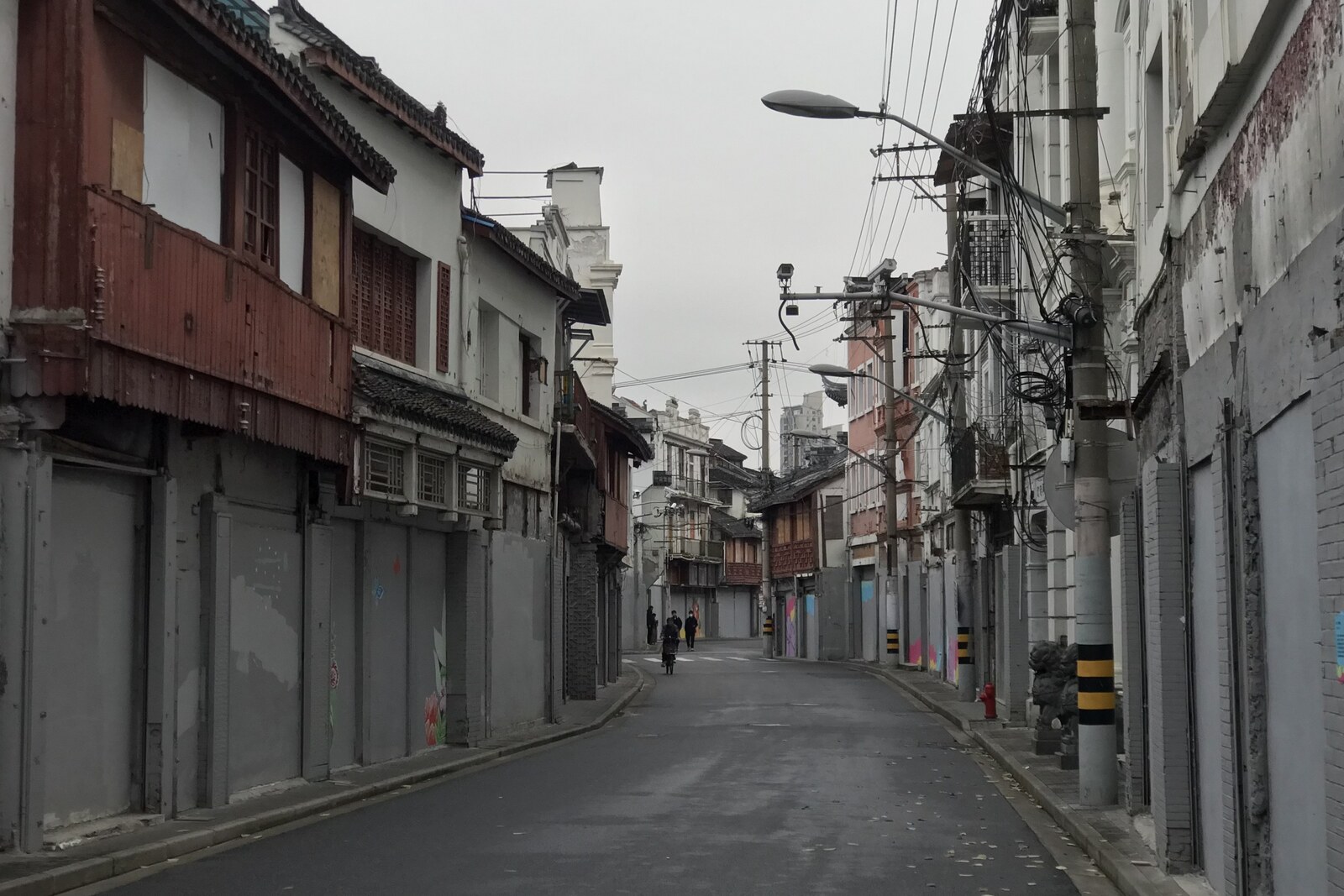
Look around first
What to notice
- The “Shanghai Old Street” sign
- Tiled roofs
- White walls and red columns
- Two-story houses with lattice windows
The story of the place
The most archaic-looking roofs on Fangbang Middle Road appeared in the summer of nineteen ninety-nine. They were commissioned by the organizers of a new tourist street: the Yuyuan Commercial District Development Headquarters and the Nanshi Economic Committee of Nanshi District, then the district of old Shanghai. They wanted to bring shoppers back to a road that was losing commerce along with its former neighborhoods.
The site was not chosen because it was conveniently near Yu Garden. A trading route passed through here long before the street appeared. Fangbang Canal—the “square canal”—flowed here. It entered from the Huangpu through the water gate at Small East Gate, then branched and, together with the channels, formed an almost rectangular outline. Boats brought goods from the direction of the Shiliupu docks, while shoppers came from the market by Shanghai City God Temple. Shopkeepers made money at the intersection of these flows.
By the beginning of the twentieth century, the dead-end canal had become shallow and was poorly flushed by the tide. In nineteen thirteen, city services filled it in and laid out a road. Merchants gained access for carts and automobiles, and the street inherited the bends of the former channel. In nineteen forty-six, the central section was named Fangbang Middle Road. The canal disappeared, but remained in the street’s name and layout.
Eight decades later, the organizers of the reconstruction were deciding how much authentic building fabric to retain. They discussed widening the road and replacing all the houses. In the end, they chose to repair the existing buildings, with selective demolitions and new construction. Twenty-five million yuan was allocated to the project; over several months, builders worked on about thirty-two thousand square meters.
The western section received more than four thousand square meters of new shops beneath tiled roofs, with white walls, red columns, and upturned eaves. They were designed as a version of a city from the Ming and Qing eras. Farther on, restoration workers added lattice windows, removable door panels, and shaped parapets to old two-story houses, depicting a commercial street of the early twentieth century. Farther east, genuine buildings from the late Qing era and the Republic of China were preserved, including Western-style ones. Old pharmacy, jewelry, and craft-shop brands were assembled along the route so that shoppers would pass through several designed periods of Shanghai commerce.
In June nineteen ninety-nine, the shops opened under the new collective name “Shanghai Old Street.” Former mayor Wang Daohan was invited to set this name in a calligraphic inscription. His four characters still hang above the entrance on the Henan South Road side. Immediately behind them begins the western “Ming-Qing” quarter, built in the same year that the signboard itself appeared.
Useful on site
The street is open around the clock; shop hours vary. In the evening, on weekends, and during festivals, heavy crowds and temporary barriers are possible.
Checked: July 1, 2026. Check the official source before visiting.Look at the upper floors and side passages without lingering at shop entrances: commerce here is active, and purchases are not necessary to continue the route.