 Guide On Map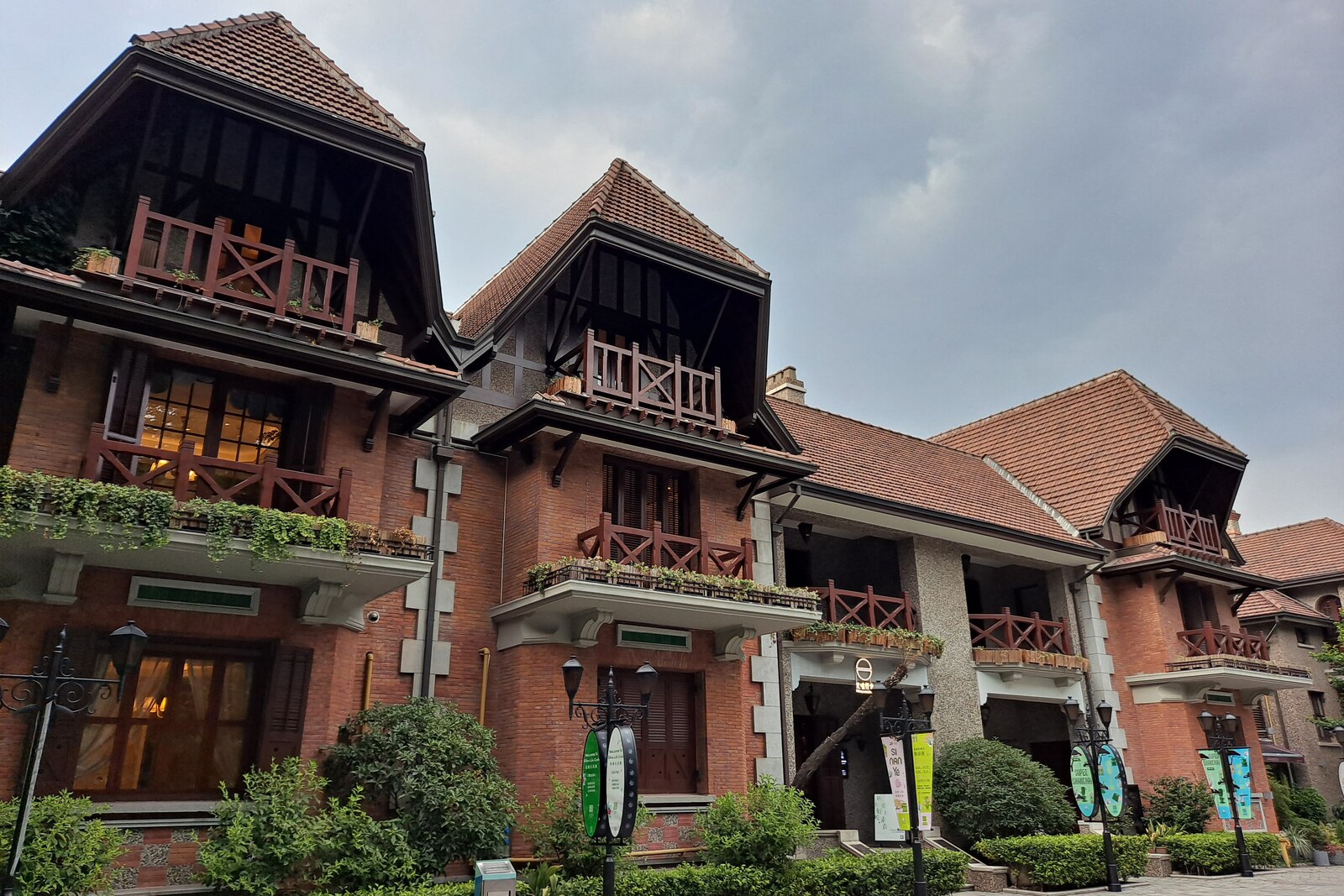
Look around first
What to notice
- House No. 87
- Floor made from old boards
- Rows of garden mansions
The story of the place
Deep inside the quarter, at house number eighty-seven on Sinan Road, Mei Lanfang asked a doctor to give him three typhoid vaccinations in succession. The doctor knew that the patient reacted severely to the vaccine and feared for his life. Mei insisted: he needed a real fever.
Mei Lanfang was a celebrated performer of female roles in Peking opera. He lived on performance fees and was determined to prevent the Japanese command and officials of the collaborationist regime from using his name in a festive performance or on a touring trip.
Mei's family moved into the house on Sinan Road in nineteen thirty-three, after relocating from Beijing during the turbulent years following the seizure of Manchuria. Later, Mei left for Hong Kong. When Japanese troops occupied that city as well, the actor stopped shaving. For a man who played female roles onstage, a moustache meant voluntarily giving up his profession.
In the summer of nineteen forty-two, Mei returned to his family at house number eighty-seven. Envoys from the occupation administration continued to demand a performance. Then the actor resorted to vaccinations. He developed a severe fever. A military doctor sent to check the illness saw his high temperature, and they left Mei alone.
His refusal deprived the family of its main income. Mei sold valuable possessions, then parted with his house in Beijing and spent more and more time drawing. In the study on the second floor, he painted plum blossoms in ink; friends organized exhibitions and helped sell the works. In this way, the actor whose face was known from theater posters supported his household with a brush for several years.
After Japan's capitulation in nineteen forty-five, Mei shaved off his moustache and began restoring his voice and stage form. In the fall, he performed in Shanghai again. Tickets for three evenings sold out, and after the performance, spectators gathered at the edge of the stage to greet the actor, whom they had not seen in his celebrated roles for eight years.
The collective name “Sinan Mansions” came to be used for the quarter later. In Mei's time, these were separate residential houses. Now fifty-one historic buildings have been adapted into hotel villas, apartments, restaurants, shops, and exhibition spaces.
House number eighty-seven has been preserved. During restoration, craftsmen reassembled the floor from old boards. The actor's son, Mei Baojiu, who was born here, walked through the rooms and recognized the floor on which he had run as a child.
Useful on site
The open passages through Sinan Mansions are freely accessible; the hours of individual establishments and museums vary. Check the official schedule for Zhou Enlai's house separately.
Checked: June 28, 2026. Check the official source before visiting.Distinguish between publicly accessible passages and the premises of hotels, offices, or restaurants; a historic facade alone does not mean free entry.