 Guide On Map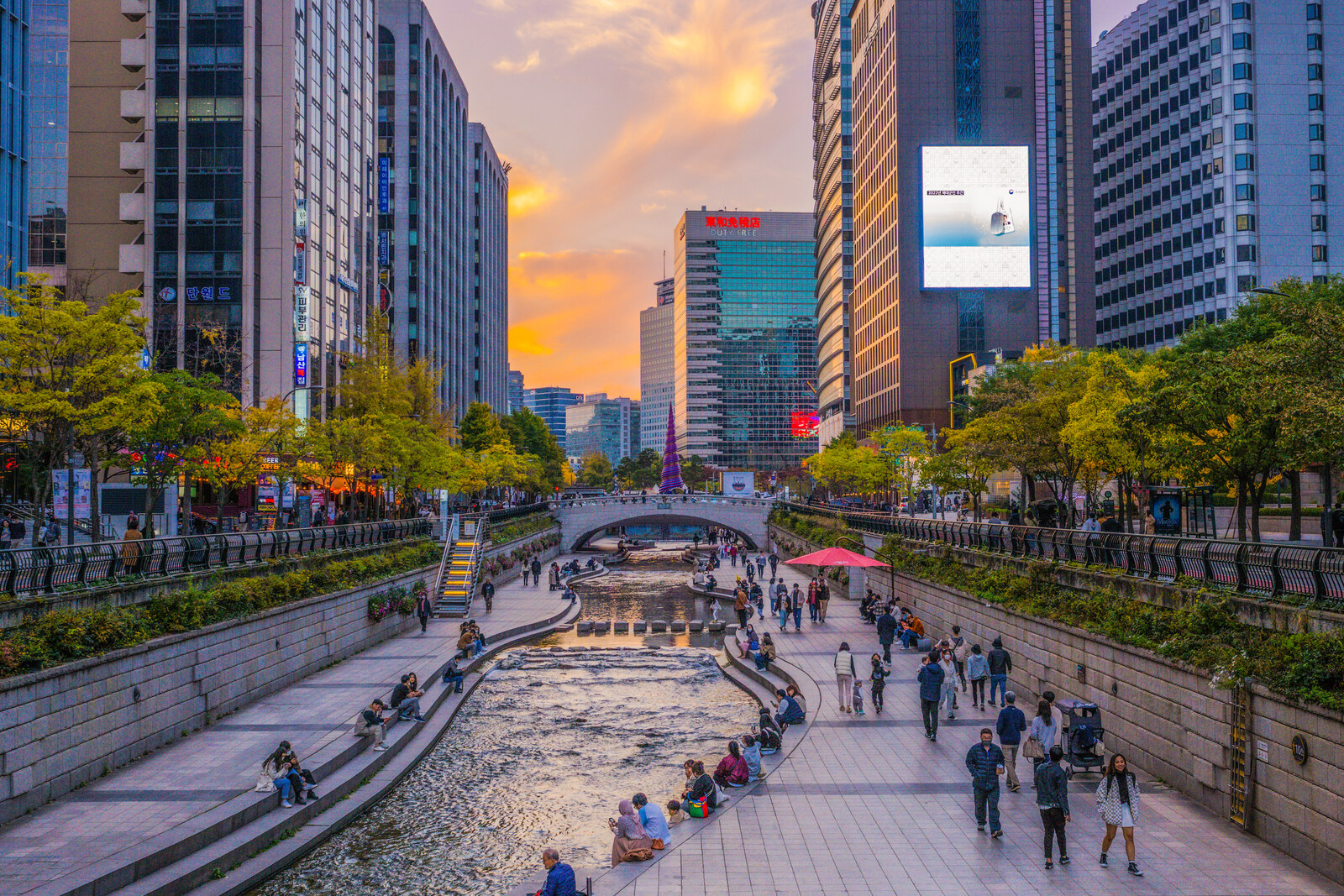
Look around first
What to notice
- Stepped waterfall
- Low cascade
- Walking paths by the water
The story of the place
The open section of Cheonggyecheon Stream begins at the stepped waterfall. Pumps supply treated water from the Han River here and to other points along the channel, while the stream's hidden upper tributaries remain beneath the streets farther west. The low cascade in the plaza marks the place where water enters the channel created for walking; paths branch out along the bank from it.
On October first, two thousand five, around four thousand people gathered in this plaza. Several participants in the ceremony pulled on ropes, and water brought from rivers and lakes in different parts of the country poured into the new channel. This was how Seoul opened Cheonggyecheon Stream—the “clear stream,” which had been hidden beneath a road for almost half a century. The water was brought here in vessels not only for the ceremony. There is no natural source in the plaza.
The chief organizer of the opening was Seoul Mayor Lee Myung-bak. He pushed for the city to dismantle the old overpass, remove the concrete deck, and create public space along the water. For him, this construction project had a personal backstory. Lee worked for almost thirty years at the construction company Hyundai: he joined as a young employee, rose to become a manager, and made his living from major infrastructure projects. Hyundai also took part in building the road above Cheonggyecheon Stream.
The stream began to be covered with concrete slabs in nineteen fifty-eight. An elevated expressway was then built above it. It became one of the main routes for cars into the center: around one hundred sixty-eight thousand vehicles used it every day. By the end of the century, the concrete and supports had aged, and large sums were spent on repairs each year. But removing the road meant taking responsibility for traffic across the entire center.
Lee made the immediate restoration of Cheonggyecheon Stream his main promise in the mayoral election campaign, and he won in two thousand two. On the day he took office, a special project headquarters began work. On July first, two thousand three, traffic on the overpass was closed. Builders dismantled the supports, removed the deck, and cleared almost six kilometers of the channel. Hyundai was also part of the consortium of contractors: the company to which the mayor's entire previous career had been tied now took part in demolishing the road above the stream.
The work took two years and three months. Lee carried his campaign promise through to the opening, and Cheonggyecheon Stream became the main project of his mayoral term. More than six million people came to the water in the first month. The plaza was created right here, in front of the Dong-A Ilbo newspaper building, because the restored section began here. The natural channel continues farther west, toward Inwangsan, but its upper tributaries remain in underground pipes.
The designers had to create a new beginning for the open stream. Cheonggyecheon Stream is filled mainly with treated water from the Han River: the pumps usually supply around forty thousand tons a day and can triple that amount if necessary. Water enters at several points along the channel, and the first is here, by the stepped waterfall. That is why the walking paths begin in the plaza, city celebrations are held here, and people go down to the water from here.
The low cascade in front of the plaza is the water intake for the restored section. Farther west, the old Cheonggyecheon Stream flows beneath the streets, while the visible stream begins at the pumps in the very place where Lee Myung-bak opened it by pouring into the channel water brought from across the country.
Useful on site
The plaza and stream are usually accessible around the clock, except for restrictions due to rain; Digital Canvas operates 19:00‑21:00, in May–September 20:00‑21:30, and the starting fountain operates 12:00‑21:00 from April 1 to November 15.
Checked: June 28, 2026. Check the official source before visiting.First, look over the plaza from above: it is easier that way to imagine the road that once ran here. As you go down to the water, use the designated entrance and do not go beyond the barriers.