 Guide On Map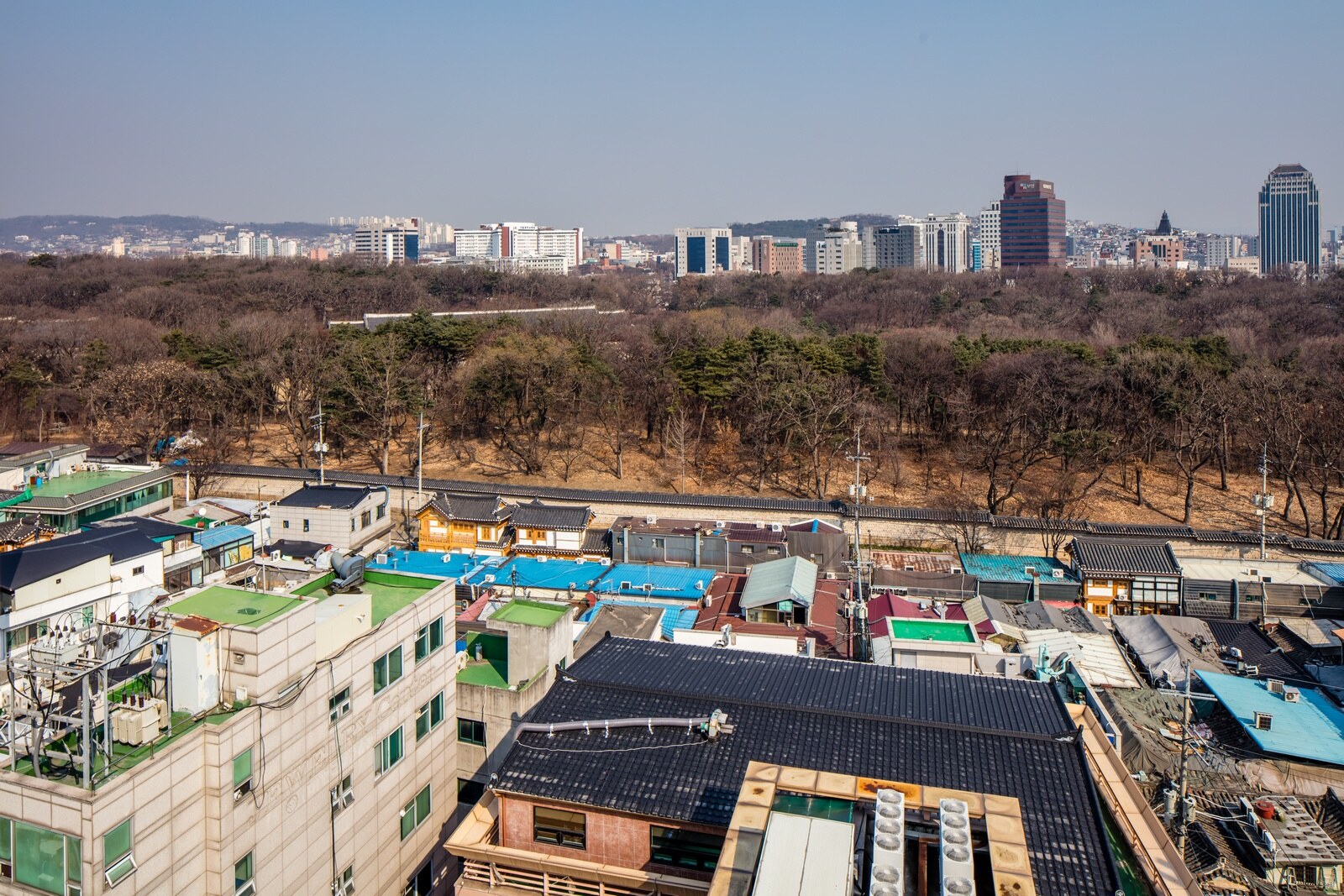
Look around first
What to notice
- The stone wall of Jongmyo Shrine
- Low two-story façades
- The narrow line of the street
- Trees along the wall
The story of the place
Narrow Seosulla-gil runs along the western edge of Jongmyo Shrine, the royal ancestral shrine: on one side are the stone wall and trees, and on the other stand cafés, small restaurants, and jewelry shops. The nearest buildings were deliberately kept no higher than two stories so that no one could look beyond the wall from the windows. The modern street was laid out in the late twentieth century, but its route preserved the shrine’s old boundary.
In the Joseon era, until the end of the nineteenth century, the head of the night watch approached the guards at the western wall of Jongmyo Shrine with half of an identification tally. The sentry kept the other half. They were fitted together, and their matching edges confirmed that the unit before the guards was their own. For the commander of a special watch, losing such a tally could end in beatings with a stick and penal servitude.
He led the Sullagun—soldiers of the night patrol. After the city bell signal at about ten in the evening, the gates of Seoul were closed, and residents were forbidden to go out until the pre-dawn signal. The units received a short password, divided the city into sectors, and patrolled the streets until morning. Here, their route ran along the wall of Jongmyo Shrine: behind it, the memorial tablets of kings and queens were kept, so the guards watched for both a possible intrusion and fire.
Anyone encountered at night was stopped. Illness, childbirth, the death of a relative, or an urgent errand were considered valid reasons, but an explanation alone was not enough. The traveler went to the nearest guard post, received a Gyeongcheom pass, and continued under the escort of an attendant. The next day, the military department checked whether the matter had truly been urgent.
A person without a pass was locked up at the post until morning. Then the person was handed over to the military for punishment; depending on the hour of detention, the penalty was from ten to thirty blows. So the Sullagun guarded Jongmyo Shrine and at the same time decided who had the right to be on this side of the wall after the city was closed.
The street’s present name is formed from the name of their service: “seo” means “western,” “sulla” means “patrol,” and “gil” means “road.” Seosulla-gil is the western patrol road. The present-day street took on its current appearance only in nineteen ninety-five, but its route repeats the western boundary of Jongmyo Shrine.
Now cafés, small restaurants, and jewelry workshops are open opposite the wall. City planners limited the nearest buildings to two stories so that no one could look inside the shrine from the windows. On one side of Seosulla-gil, the wall of Jongmyo Shrine remains; on the other are low façades. Between them runs a street named after the people who performed night service here.
Useful on site
A public street with no entry restrictions; workshops, cafés, and restaurants keep their own schedules.
Checked: June 27, 2026. Check the official source before visiting.This stop is outside: do not look for a separate memorial interior; instead, walk along the wall and consider the street itself the main evidence.