 Guide On Map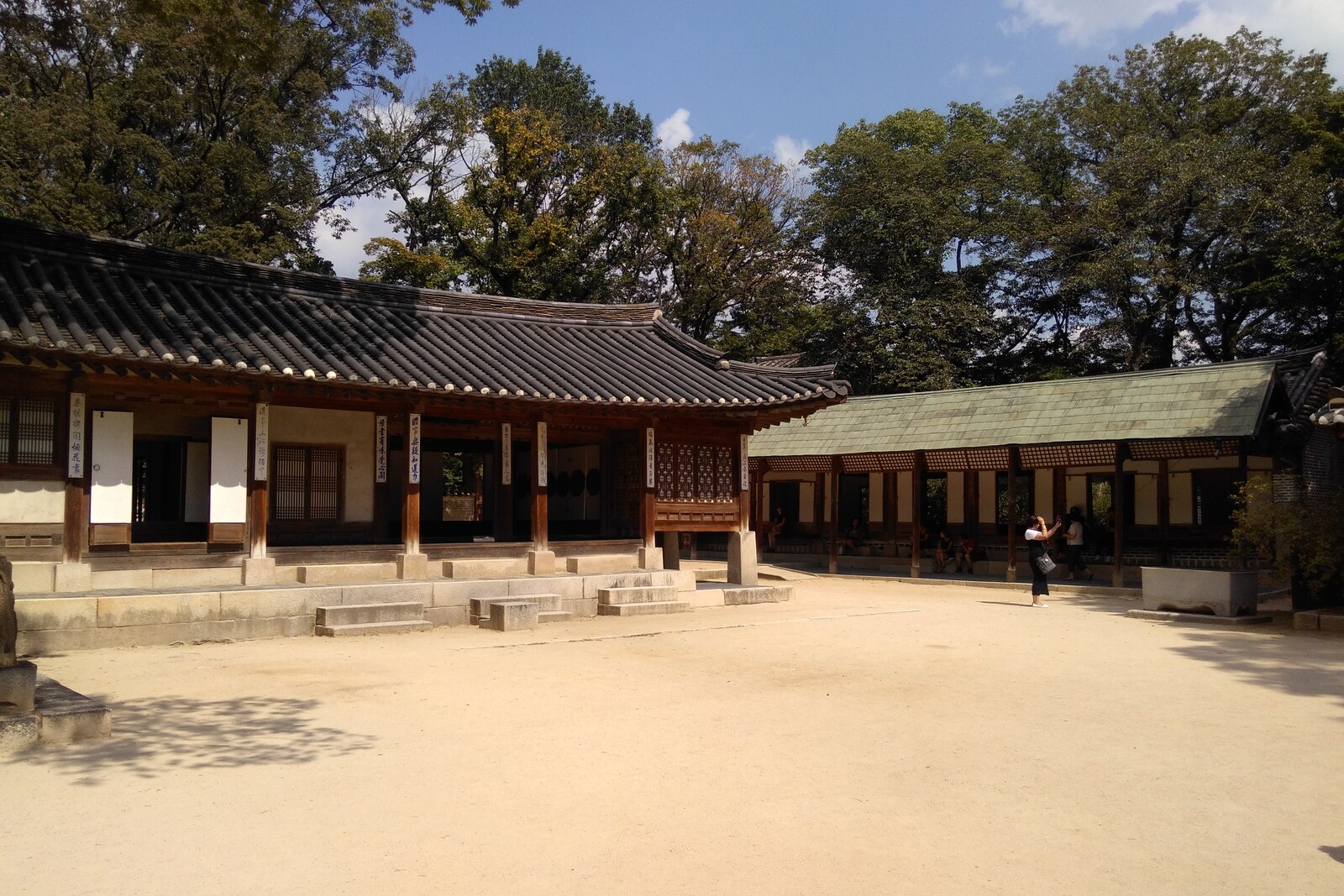
Look around first
What to notice
- Three neighboring buildings
- Unpainted wooden facades
- Tiled roofs
- Separate courtyards and gates
The story of the place
In eighteen forty-eight, King Heonjong ordered his new concubine Gyeongbin to be housed in the middle of the three buildings of the Nakseonjae complex—between his own rooms and his grandmother's quarters. This allowed her to be near the king while also carrying out duties toward the senior woman of the family—the Great Queen Dowager Sunwon, a former regent.
The three buildings still stand in this order. The western Nakseonjae served Heonjong as a study, library, and living quarters. Its name means “rejoicing in goodness” and refers to the story of the ancient Chinese ruler Shun. The middle Seokbokheon was intended for Gyeongbin. The eastern Sugangjae was occupied by Sunwon. The names of the three buildings passed to the entire complex, which is called Nakseonjae.
A romantic legend is often told here: supposedly Heonjong saw Kim during the selection of a queen, preferred her to the other candidates, but the courtiers chose Hyojeong, and several years later the king brought his beloved back to the palace. The surviving lists from that selection disprove this story: Kim's name is not among the candidates.
The documents describe a different reason. Heonjong and Queen Hyojeong had no children, and the dynasty needed an heir. In the summer of eighteen forty-seven, Sunwon ordered that a concubine for her grandson be chosen from among the daughters of noble families. While the selection was under way, unmarried girls from fourteen to nineteen years old were forbidden to marry. Families presented thirty-four candidates. After three rounds, the daughter of the minor official Kim Jae-cheong was chosen. She received the title Gyeongbin—the title given to a royal concubine of high rank. A son was expected from her to continue Heonjong's direct line.
The king was already building Nakseonjae for his own pursuits. The following year, craftsmen added Seokbokheon for Gyeongbin and remodeled Sugangjae for Sunwon. The buildings were left without bright palace painting and laid out after the model of a capital nobleman's house, with separate men's and women's quarters. The name Seokbokheon carried a direct wish: “a house where blessing is bestowed.” The blessing meant the future heir.
Twenty months after the wedding, Heonjong died without ever awaiting a child. The direct line ended. Sunwon had to summon to the throne a distant relative living in exile on Ganghwa Island; he became King Cheoljong. Gyeongbin, not yet twenty years old, left the palace. She lived as a widow for almost six decades in a house near present-day Anguk-dong and died in nineteen oh seven.
The middle house still stands between Nakseonjae and Sugangjae and is still called Seokbokheon—“the house of bestowed blessing.” The heir for whom Gyeongbin was settled here was never born here.
Useful on site
Changdeokgung Palace: 09:00–18:00 in February–May and September–October; 09:00–18:30 in June–August; 09:00–17:30 in November–January. Last entry is 1 hour before closing. Closed on Mondays.
Checked: June 27, 2026. Check the official source before visiting.View the rooms only from permitted areas: the closed doors here matter to the story no less than the accessible interiors.