 Guide On Map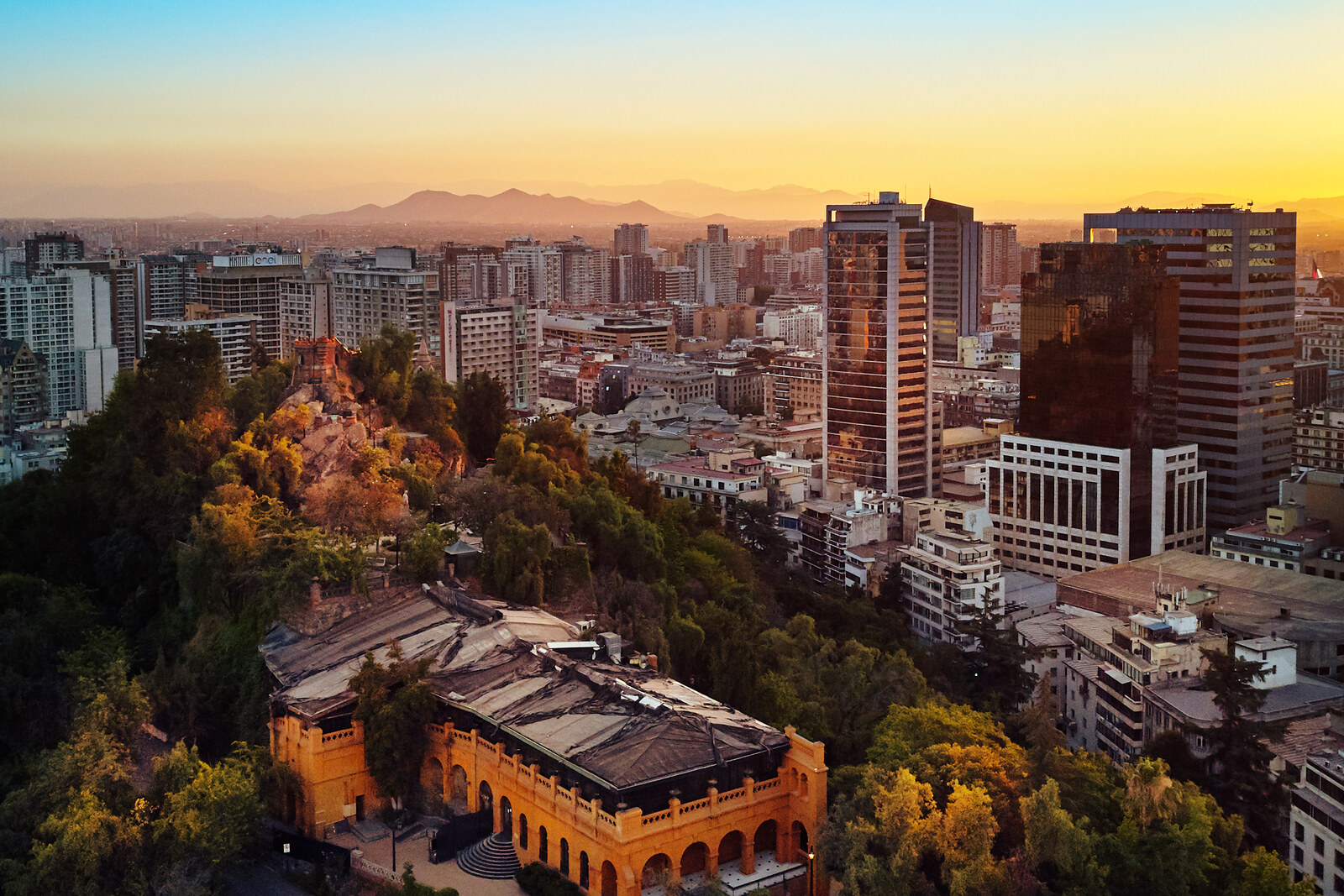
Look around first
What to notice
- Stone walls
- Four eastern windows with iron grilles
The story of the place
Hidalgo Castle occupies the northern of two artillery batteries built on Santa Lucía Hill to defend Santiago. Behind the stone walls, powder was stored, guards kept watch, and detainees were locked up, while guns on carriages were aimed at the city. Four barred cell windows survive in the eastern masonry; the other openings in the walls appeared later.
Hidalgo Castle is now empty inside: the building has been closed since two thousand fifteen. The city is again looking for someone to restore it and open it for cultural and tourist programs. So continues the dispute over the structure's purpose, which began almost as soon as it appeared.
In eighteen sixteen, Chile's last Spanish governor, Casimiro Marcó del Pont, was preparing to defend Santiago against supporters of independence. The military engineer Manuel Olaguer Feliú built two stone artillery batteries on the hill. The northern one was called Santa Lucía Battery. It contained a powder magazine, a guardroom, and cells; its guns were aimed at the city.
A year later, the army of José de San Martín and Bernardo O’Higgins defeated the Spanish troops at Chacabuco. Manuel Hidalgo, a captain of mounted grenadiers who had crossed the Andes to fight for Chilean independence, was killed in that battle. At the height of the attack, his horse bolted and carried its rider straight into the enemy ranks. Hidalgo was pulled from the saddle onto bayonets. After the victory, the new government gave the northern fort his name. The captain himself never served here: the battery was named after him, although the victory at Chacabuco had deprived it of its former purpose.
The main conversion took place half a century later. In eighteen seventy-three, the city intendant and historian Benjamín Vicuña Mackenna organized an exhibition of colonial-era objects. Paintings, weapons, furniture, and documents were lent by private owners, so after the exhibition closed, the collection was supposed to disperse back to their homes. Benjamín Vicuña Mackenna wanted to leave it to the city and published an appeal in the newspapers to donate objects to a future permanent museum.
For the museum, he chose Hidalgo Castle—a former powder magazine and prison. Workers blasted passages through the thick walls, dismantled the stone partitions between the cells, and laid wooden floors. Where cannons had once stood on gun carriages, they planted a garden. In September eighteen seventy-four, the museum and a public library opened. The catalog listed one hundred seventy-five objects and forty-two portraits of colonial governors.
After Benjamín Vicuña Mackenna's death in eighteen eighty-six, the museum closed. The collection was distributed among municipal institutions, and the vacated halls became a city storehouse. Yet the objects did not disappear: in nineteen eleven, part of this collection became part of the National History Museum.
Of the prison that Benjamín Vicuña Mackenna ordered opened up for exhibition halls, four old windows with iron grilles survive on the eastern side. The other openings belong to the museum later arranged inside Santa Lucía Battery.
Useful on site
Access to the external terraces follows the schedule of Santa Lucía Hill. Hidalgo Castle itself is viewed from outside; unrestricted entry inside is not guaranteed.
Checked: June 29, 2026. Check the official source before visiting.The building's history can be read from outside. Access inside may depend on events taking place, so do not plan your route around the interior.