 Guide On Map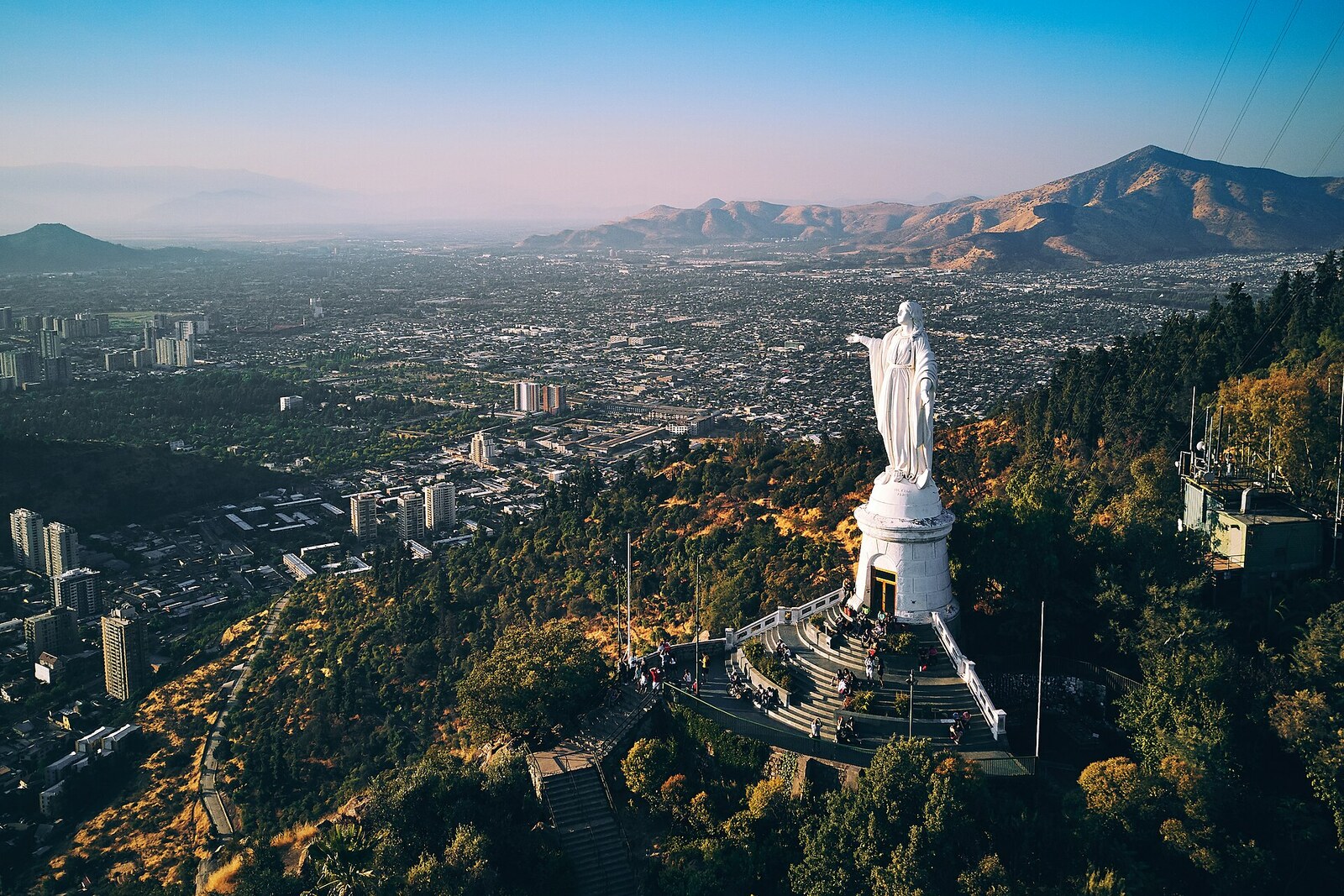
Look around first
What to notice
- Cast-iron figure of the Virgin Mary
- Reinforced-concrete pedestal
- Chapel inside the base
- Open esplanade
The story of the place
Before the sanctuary opened, haulers brought forty-two heavy crates up San Cristóbal Hill. Inside lay a dismantled cast-iron statue weighing nearly forty-seven tons in total. At the time, only a narrow trail led to the summit; the Santiago Funicular did not yet exist. Two hired engineers laid a road about one meter wide and built two concrete bridges across the drainage channels. Ox teams then hauled the crates uphill along this route. The ascent was considered difficult and dangerous even without such a load.
The whole undertaking was started by the Archdiocese of Santiago's vicar general, José Alejo Infante—a priest whom the archbishop entrusted with turning church decisions into workable projects. In nineteen oh three, Mariano Casanova, Archbishop of Santiago, was planning to mark the fiftieth anniversary of the Catholic dogma of the Immaculate Conception. The name refers to Mary's own conception: Catholics believe that from the first moment of her life, she was free from original sin.
In Santiago, the Virgin Mary was venerated in many churches, but there was no large space for a crowded pilgrimage. Infante proposed placing a huge figure on the summit of San Cristóbal Hill. Catholic workshops in several European countries could not offer a suitable new model, so the organizers chose a copy of a Roman statue created after the proclamation of the same dogma. That is why the figure above Santiago repeats the Virgin Mary at Piazza di Spagna in Rome.
Land and money were now needed. Miguel Prado gathered a group of women who undertook to pay for the statue's manufacture and installation through donations. The Dominicans and the Carmelite Sisters transferred the summit to the Archdiocese of Santiago along with a plot with a radius of one hundred meters. The notarial deed stated the land's purpose precisely: a place for the monument and a space where the faithful could gather comfortably.
A fourteen-meter figure was sent from France. After the crates had been hauled up, workers assembled it on a reinforced-concrete pedestal, with a small chapel built inside it. Including its base, the monument rose more than twenty-two meters high. On Sunday, April twenty-sixth, nineteen oh eight, thousands of people made their way toward the summit; some pilgrims remained on the slope, unable to reach the ceremony in time.
Infante took part in the blessing together with the priest Clovis Montero. Archbishop Casanova, who had supported Infante's plan, was already seriously ill by April and could not come up here. He died twenty days after the opening.
The sanctuary still receives pilgrims, and on days of large crowds, Mass is celebrated on the open esplanade—inside the very circle with a radius of one hundred meters that the Dominicans and Carmelite Sisters had set aside for the faithful before the first crate was hauled up.
Useful on site
The summit depends on park and transport schedules. The sanctuary usually has Masses Tuesday through Saturday at 12:00, and on Sunday at 10:30 and 12:00; the sanctuary museum is open Tuesday–Sunday 11:00–17:00. Check before visiting.
Checked: July 1, 2026. Check the official source before visiting.This is an active religious site: speak quietly and do not disturb prayer or ceremonies. Before descending, check the available transport options and open paths.