 Guide On Map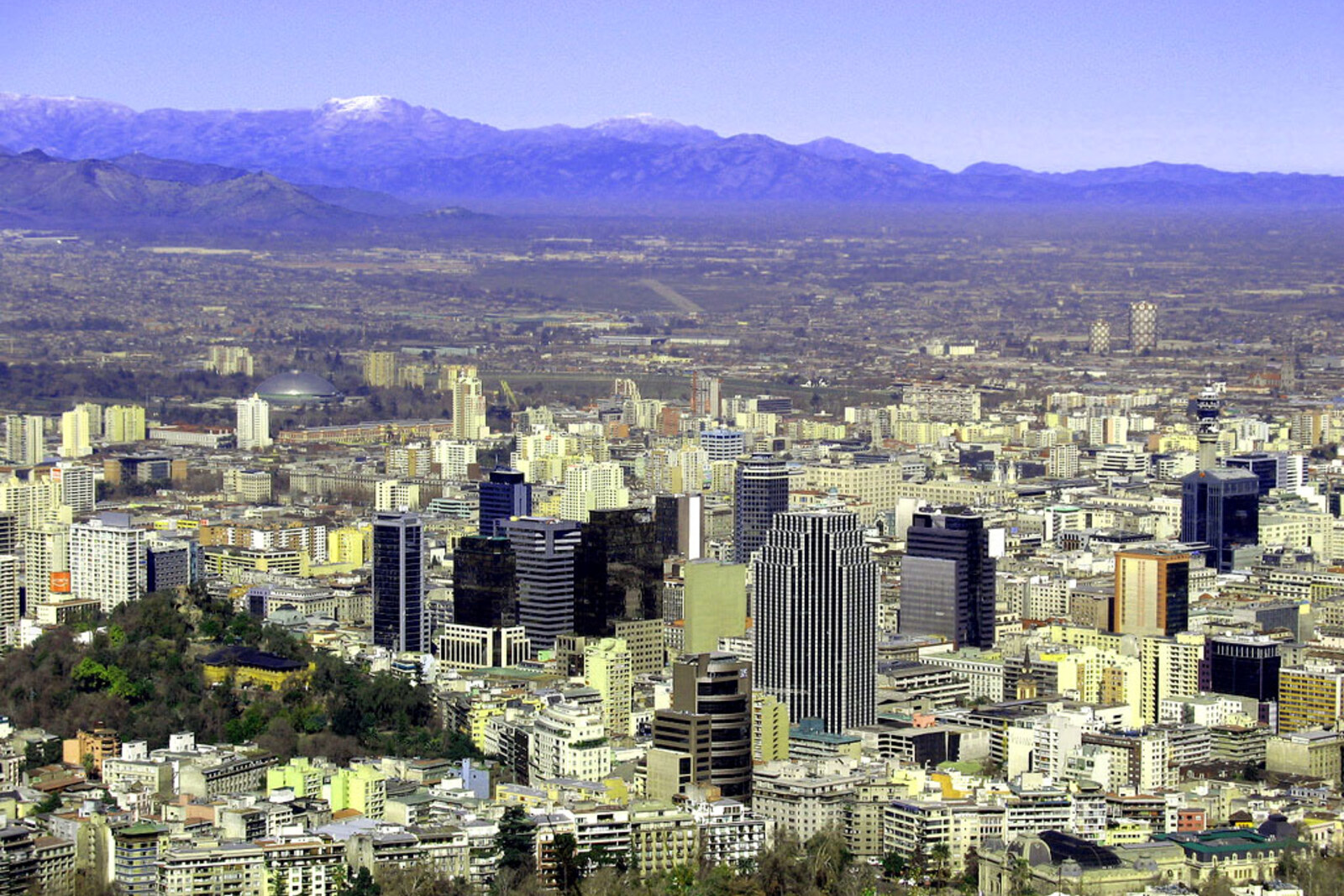
Look around first
What to notice
- Checkerboard tiles
- Parapet
- Kiosks
The story of the place
At the funicular’s upper station, the intention was once to keep passengers there after the ascent: beside it, a semicircular terrace was created with a buffet, tables, a place for an orchestra, and a fountain with colored lighting. From it, gardens and paths spread down the slope to a tower, from which Santiago and the Andes opened out; above the entrance shone a stained-glass window with a peacock. Fragments of the tiled floor remain from the former venue, while the kiosks and tables on the site already belong to today’s Terraza Bellavista.
At the funicular’s upper station, people spread out among the kiosks and along the parapet. Here and there beneath their feet, checkerboard tiles have survived. This is the floor of a dance venue for whose opening a young Cuban musician crossed the sea.
Isidro Benítez was a clarinetist and bandleader trying to make a living through music. In Havana, he earned money as a tailor, while playing at night and on weekends. According to his Cuban biographers, a Black performer was not offered stages worthy of his skill. In the fall of nineteen twenty-six, Benítez formed Los Negros Cubanos—“Black Cubans”—and sailed to Chile on a steamship. The organizers of a new entertainment venue on San Cristóbal Hill hired the ensemble for its opening.
The venue was called the Roof Garden, meaning “garden on the roof.” Architect Luciano Kulczewski was tasked with creating a commercial space near the upper station where passengers could stay after the ascent. He designed a semicircular dance terrace with a buffet, tables, an orchestra pavilion, and a fountain with colored lighting. Above the entrance was a stained-glass window with a peacock. Gardens and paths ran down the slope to a belvedere tower, from which people looked out over Santiago and the Andes.
On December seventeenth, nineteen twenty-six, Benítez and his musicians played here at the opening. The audience was the well-to-do capital crowd, for whom a restaurant and dancing with a live orchestra had been arranged at the summit. For Benítez, that evening became his first major contract in South America. After Santiago, Los Negros Cubanos performed in Argentina, Brazil, Peru, Bolivia, and Uruguay. Benítez himself remained on the continent, led orchestras, and lived most of his life in Chile.
The Roof Garden structures did not last long. After a fire, they began to be dismantled, and the peacock stained-glass window, the fountain, and the orchestra pavilion disappeared. The kiosks and tables now belong to today’s Terraza Bellavista, but the squares of the tiled floor remain from the dance venue. On December seventeenth, nineteen twenty-six, people danced on them to the orchestra of a man who had had to sew other people’s suits in Havana to make a living.
Useful on site
Access depends on the operating schedule of Parque Metropolitano and on the funicular, cable car, or permitted trails being in service. In winter schedule, the park is open to pedestrians from 06:00–19:00.
Checked: July 1, 2026. Check the official source before visiting.Do not expect a perfect shot: haze and treetops may hide part of the panorama. Give your eyes time to make out the neighborhoods, and stay behind the railings.