 Guide On Map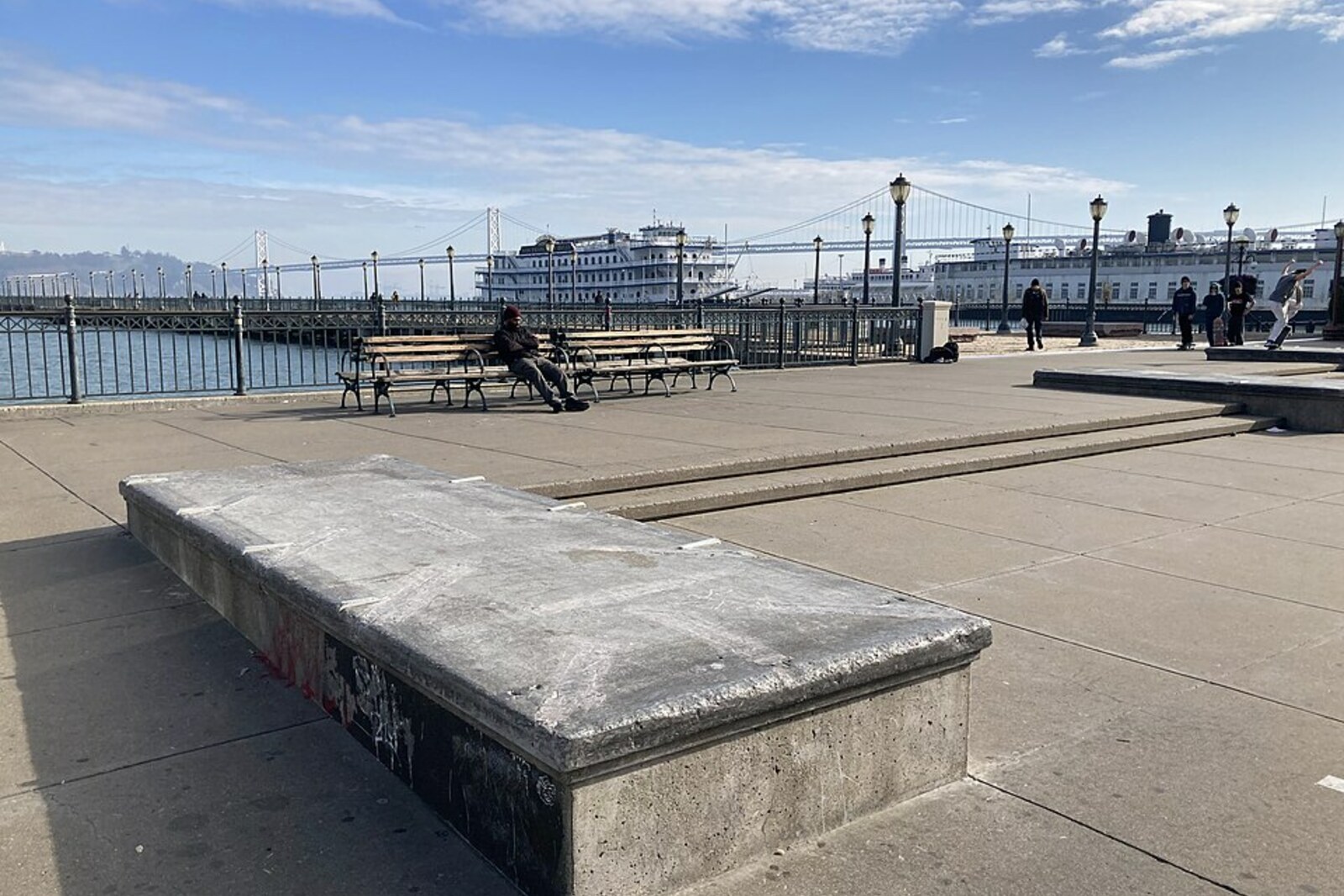
Look around first
What to notice
- Three concrete blocks
- Filled holes in the edges
- Wooden deck
- Rows of lights
The story of the place
A wooden walkway stretches over the bay from the site of the old pier. It once linked the waterfront to passenger ships, and later served as a warehouse for incoming cargo; the structure did not survive the fire and was dismantled. The current access to the water was created for anglers and strolls, so a broad platform, benches, and tables for the catch were left by the shore. Rows of lights lead along the deck, and the concrete edges at the entrance still show filled holes from the removed deterrents.
At the entrance to Pier Seven stand three low rectangular concrete blocks. They were made as benches and platforms, but skateboarders found another use for them: you can ride along the top surface on two wheels, and slide your board or metal truck along the thick edge. It was these blocks, not the long row of lights above the water, that made the pier famous among skateboarders.
The current wooden deck opened on October fifth, nineteen ninety. It inherited its name from the former Pier Seven, which stood a little farther north. Passenger ships called there, then cargo was stored there; after a fire in nineteen seventy-three, damaged sections and a parking lot were all that remained of the structure. The old pier was finally removed, and city and California agencies jointly paid for the new one—specifically for fishing and free access to the water. That is why there are benches, fish-cleaning tables, and a smooth open platform by the shore.
In the mid-nineties, skateboarders took over this platform. The smooth surface made it possible to film long sequences of tricks, while the heavy blocks with rounded edges demanded precision: to stay on the edge, a skater had to shift almost all of their weight onto it. Footage filmed here circulated on videocassettes, and Pier Seven became a place people came to repeat what they had seen.
For Henry Sanchez, a professional street skateboarder trying to reclaim his career, these blocks became a working platform. In the early nineties, he was considered one of San Francisco's most inventive riders, but then he almost disappeared from professional videos. In this sport, such footage served as a portfolio: viewers, teams, and sponsors used it to decide whether someone could still invent and perform what others did not do.
Sanchez practiced and filmed at Pier Seven for a film released in two thousand one. Later, he said that he came here specifically to reclaim his name. At the premiere, the audience greeted his video section with cheers. For Sanchez, this was proof that years of doubt had ended in a real comeback. It proved short-lived: after a brief period on a new team, he left professional skateboarding and became an auto body repair technician in Sacramento. The footage from the pier remained the main episode of his later career.
By the end of the two thousands, metal deterrents had been fixed to the concrete edges, and the blocks themselves were clad in wooden slats. Sliding along them became impossible. In the summer of two thousand twenty-one, several local skateboarders removed the weathered cladding and most of the deterrents, filled the holes with polyester filler, and leveled the edges. Five years later, their work had not been undone.
The three concrete blocks at the entrance still bear filled holes from the metal pins. Behind them begins the wooden fishing pier, open to everyone; in front of them is the platform where Henry Sanchez reclaimed his name.
Useful on site
The pier is exposed to the wind and offers no shelter from bad weather; watch where you are going and do not disturb people who have taken a place by the railings.