 Guide On Map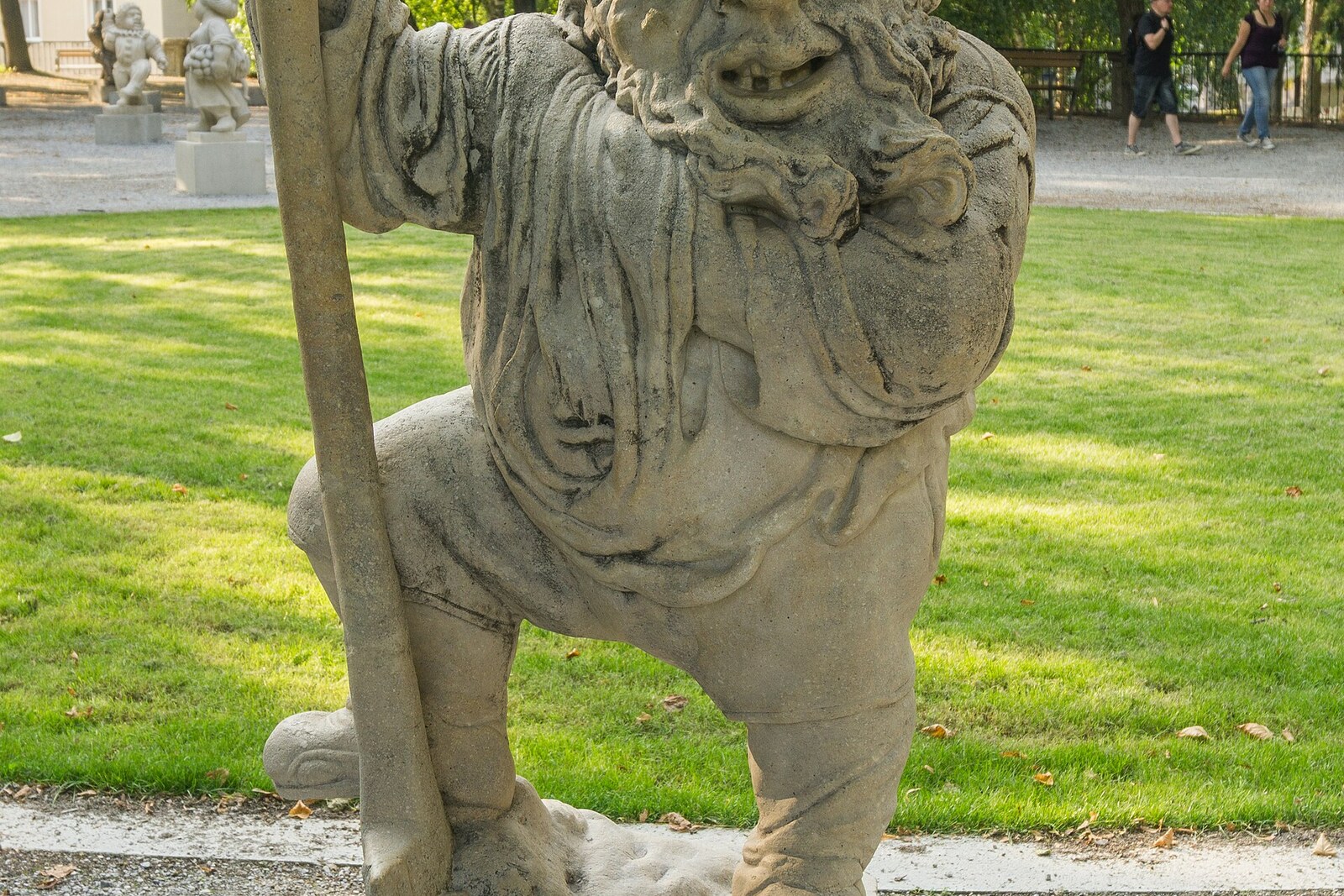
Look around first
What to notice
- Marble dwarfs
- Two fencers
- A shovel and a basket of fruit
- A bunch of onions and a pot of dumplings
The story of the place
On the site of the former Water Bastion, there is a small garden with nineteen figures, separated from Mirabell's large parterre. Another area below the bastion was originally laid out for them: a large fountain was surrounded by small pools, flower beds, and places intended for each sculpture. The Magic Flute Playground now stands there, while this site has become a safer home for the surviving figures. Among them are characters with a shovel, a basket of fruit, a bunch of onions, and a pot of dumplings; two fencers were made by modern stonecutters as reproductions of privately owned originals.
In eighteen eleven, Mirabell's marble dwarfs were sold off one by one. After another redistribution of lands during the Napoleonic Wars, Salzburg passed to Bavaria. Crown Prince Ludwig of Bavaria became the region's governor-general, moved into Mirabell Palace with his family, and received the right to manage the garden. To this admirer of classical art, the grotesque Baroque figures seemed ugly and outdated. Ludwig ordered them removed; many were sold at auction for about two guilders.
Before the sale, this was an ensemble of twenty-eight figures, created around sixteen ninety-five for Prince-Archbishop Johann Ernst von Thun. The sculptors did not depict fairy-tale little people. The courtly audience saw grotesque characters from Baroque theater and caricatures of adults with dwarfism. Some poses and costumes were based on engravings by Jacques Callot. Twelve figures represented the months through garden work and food: hence the shovel, radish, bunch of onions, basket of fruit, and pot of dumplings. Others danced with castanets, fenced with swords, or acted out courtly amusements.
They did not stand on this site. Their garden was below the bastion, where The Magic Flute Playground now stands. A large fountain played in the center, surrounded by four small pools, shaped flower beds, and twenty-eight spaces set aside in advance for the sculptures. At the auction, individual pieces of this composition were sold; without their neighbors and the former layout, the purpose of each figure quickly ceased to be clear.
Josef Rosenegger, a professional gardener and owner of the Bürglstein excursion park, acquired most of the dwarfs. He made his living from gardening, ran an inn there, and attracted visitors with paths, antiquities, and sculptures. The inexpensive marble figures suited him as ready-made decorations. Rosenegger soon resold several of them, while the rest later passed among the owners of private gardens in Salzburg, Upper Austria, and Bavaria. Some disappeared altogether.
Almost a hundred years later, the Salzburg Beautification Society began searching for the scattered figures. In nineteen nineteen, the city council resolved to reassemble the ensemble; at that time, it was possible to buy back the first six dwarfs, and in nineteen twenty-three the society recovered another nine. They were briefly placed in their former location, but playing children damaged the sculptures there. To protect the dwarfs, they were moved here, to the Small Bastion Garden on the former Water Bastion.
There are now nineteen figures here. Two fencers appeared in two thousand twenty-five as copies: the owners of the originals allowed them to be cleaned and three-dimensional laser models to be made, after which stonecutters carved reproductions from Untersberg limestone. The originals themselves remain in a private Salzburg garden.
Useful on site
The Dwarf Garden is open during the season along with Mirabell Gardens; Salzburg.info reports that it is closed during the winter months.
Checked: June 26, 2026. Check the official source before visiting.This part of the garden may be closed; view the figures only from accessible paths, and do not climb over the barriers.