 Guide On Map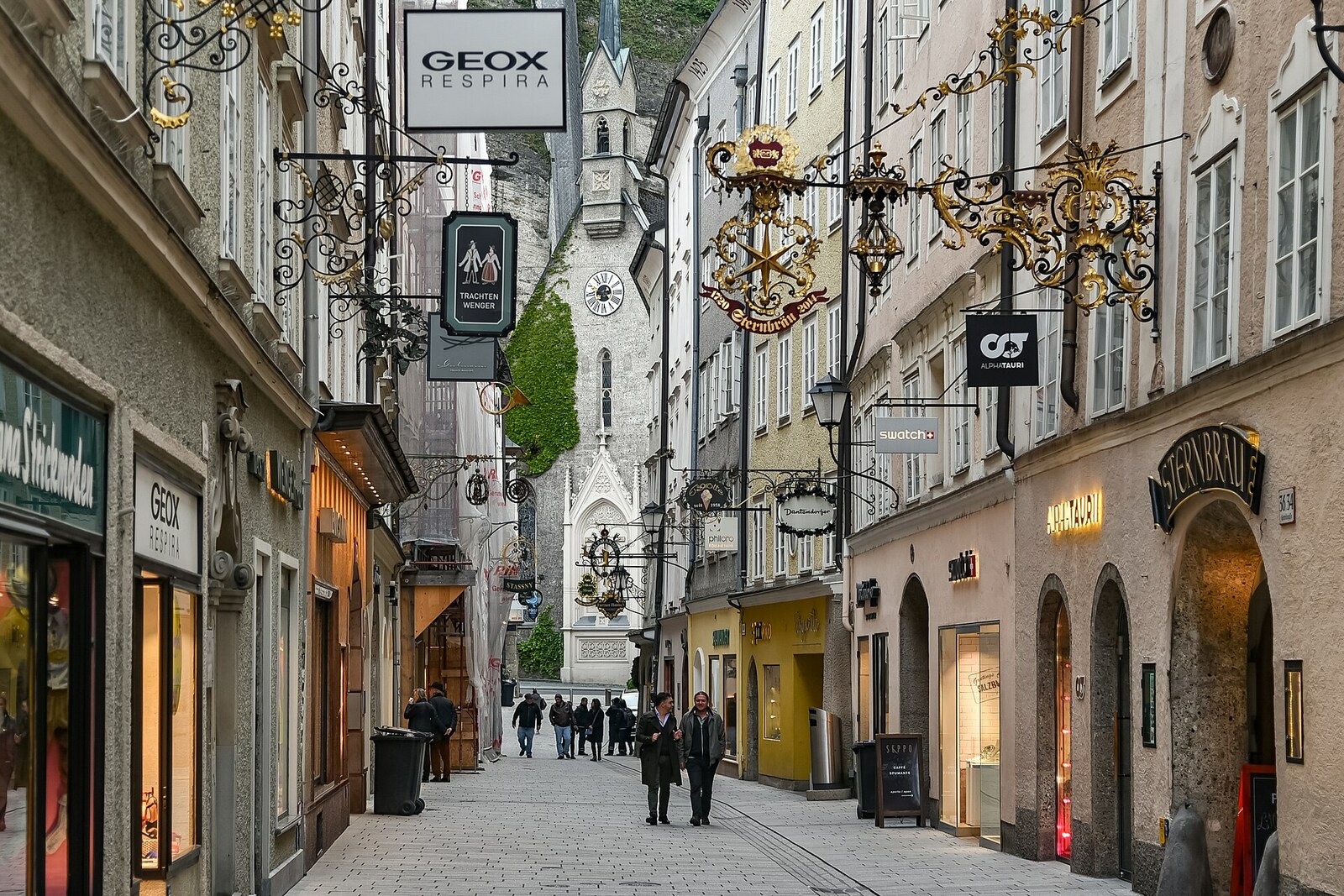
Look around first
What to notice
- Iron signs
- Niederleg Passage
- Niederleg-Hof
- Beams and pulleys beneath the roofs
The story of the place
Getreidegasse developed as a commercial street where commercial houses, workshops, and inns shared tight space. The upper floors were used to store supplies, while beams with pulleys beneath the roofs helped lift bales directly from the street. Iron boots, keys, and apothecary’s bowls above shops conveyed what was being sold in the days when houses had not yet been numbered. The Niederleg Passage between the houses leads through the former unloading courtyard toward the Salzach, although shoppers carrying bags now pass through it.
In the early sixteenth century, a passing merchant who earned money by delivering goods to other markets and wanted to get through Salzburg as quickly as possible could not pass all the way along this street. City officials stopped traders carrying iron, steel, wine, and grain. The goods had to be unloaded, left for a set period, and a fee had to be paid. Some of what was brought in was offered to local buyers. Only then could the merchant continue the journey.
This was how the right of compulsory warehousing, granted to Salzburg as early as the fourteenth century, worked. From fifteen oh eight to eighteen twenty-eight, the city owned a group of buildings on Getreidegasse for this purpose—today’s houses numbered eighteen through twenty-two. Behind them lay a courtyard and warehouses, and a passage led farther on to the river wharf. A merchant’s cargo found itself between the two routes it needed: the overland street and the Salzach. The city received a fee, local traders gained access to imported goods, and the passing merchant paid with time for the right to travel onward.
This explains why commercial houses, workshops, and inns stand side by side here, and why many buildings are cut through by passages. Stocks were kept on the upper floors; in some places, beams and pulleys used to lift bales from the street are still visible beneath the roofs. The iron signs above shops also served a purpose: when houses had not yet been numbered and not everyone could read, a boot, a key, or a snake on an apothecary’s bowl conveyed what was being sold more clearly than an inscription.
The name Getreidegasse can be misleading. In German, it sounds almost like “Grain Lane,” and grain really was unloaded at the city warehouse. However, according to the accepted explanation, the name came from the old word “trabig”—“hurried,” “hasty.” In documents from the middle of the twelfth century, the street was called Traugasse or Trabegasse. Its pronunciation gradually changed until the modern name emerged.
Niederleg Passage between houses eighteen through twenty-two is still open today. It leads through Niederleg-Hof—a courtyard whose name means a place of unloading—toward the river. Now shoppers carrying bags pass through the former warehouse. A passing merchant was once held up here precisely because he, too, was hurrying to go farther on.
Useful on site
The street is always accessible; passages, shops, and cafés operate according to their own schedules.
Checked: June 29, 2026. Check the official source before visiting.Use only open public archways; leave private staircases and closed courtyards to the residents.