 Guide On Map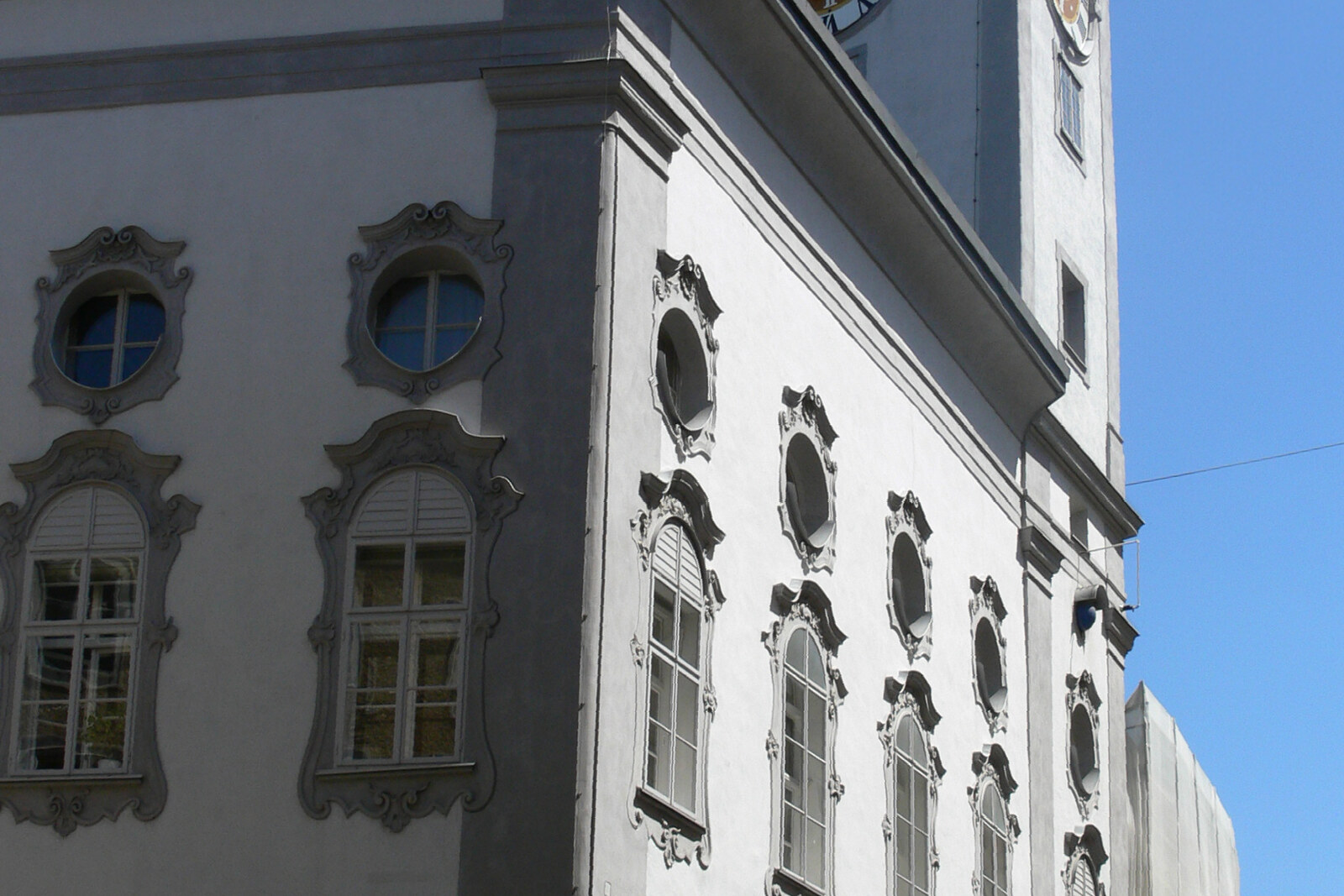
Look around first
What to notice
- Old Town Hall tower
- Clock on the tower
- Bell
- Statue of Justitia above the entrance
The story of the place
The patricians' residential tower passed to the municipal community in fourteen oh seven and became the council's meeting place. The city wall and the water gate stood nearby then, and fish brought from the landing pier was sold on the square by the well. The bell at the top announced the nighttime curfew, the clock on the facade set the common rhythm, and the tower was used to watch the gate, fires, and disturbances. Market and trade matters were decided in its rooms, trade continued below, and the road from the bridge to Getreidegasse ran beside it.
On January eighteenth, fifteen eleven, the city council elected Hans Matzsperger mayor—the head of the city—in this town hall. Matzsperger grew wealthy through trade with Venice and pressed for the townspeople themselves to choose those who administered their money, markets, and trades. Prince-Archbishop Leonhard von Keutschach, the church head and ruler of the Prince-Archbishopric of Salzburg, wanted to bring the appointment of city leaders back under his control.
The council was here long before Matzsperger. In fourteen oh seven, the municipal community bought the Kölzl family's residential tower by the old wall and water gate. The space in front of the tower was then called the Fish Market. Fish was brought to the landing pier outside the gate and sold inside, around the well. The tower made it possible to watch the gate, fires, and disturbances; its bell announced the nighttime curfew, and its clock gave the townspeople a common time.
The right to elect a mayor arose from someone else's quarrel. In fourteen eighty-one, Emperor Frederick III was fighting the then Prince-Archbishop Bernhard von Rohr and tried to win Salzburg to his side. Trade restrictions and war already threatened the city's income. Frederick granted the townspeople the Great Council Charter: from then on, they could freely elect twelve sworn councilors every year, and those councilors could elect the mayor.
The following year, the council resolved to meet in the Kölzl family's tower three times a week and officially called it the town hall. The square later took its name from it. Inside, the councilors adopted market and trade regulations, trade continued below, and beside it ran the route from the bridge to Getreidegasse. It was here that the right of free election became everyday decisions: who was allowed to sell, what fees to pay, and who was responsible for the city treasury.
Thirty years later, Leonhard von Keutschach waited for a suitable pretext. He disliked Matzsperger's latest election. Five days after the vote, the prince-archbishop invited the mayor and councilors to a meal, ordered the guests seized, and sent them under escort to Radstadt. While the elected leaders sat in confinement, representatives of the townspeople signed away free elections. Leonhard took the imperial charter; that is why its original disappeared, and the text survived in a copy from the city's book of privileges.
The prisoners were released about two weeks later. Matzsperger returned to Salzburg already without his office. In his place, two mayors were elected, whom the prince-archbishop approved. The councilors were left mainly with administrative and representative duties, while the city court became increasingly visible in the town hall. Justitia above the entrance, installed in sixteen sixteen, recalls that period.
In the mid-nineteenth century, a freely elected city council once again received a meeting chamber here. Since nineteen forty-seven, the mayor has worked in Mirabell Palace, but the council has remained in the old town hall. Behind the Rathausplatz facade, people still gather who hold offices, for the right to elect whom Hans Matzsperger lost his freedom and his place at the head of the city.
Useful on site
The facade is accessible continuously; the exhibition and municipal halls open on separate schedules.
Checked: June 29, 2026. Check the official source before visiting.There is no need to enter the town hall: the main details and the meaning of this stop can be understood from the square.