 Guide On Map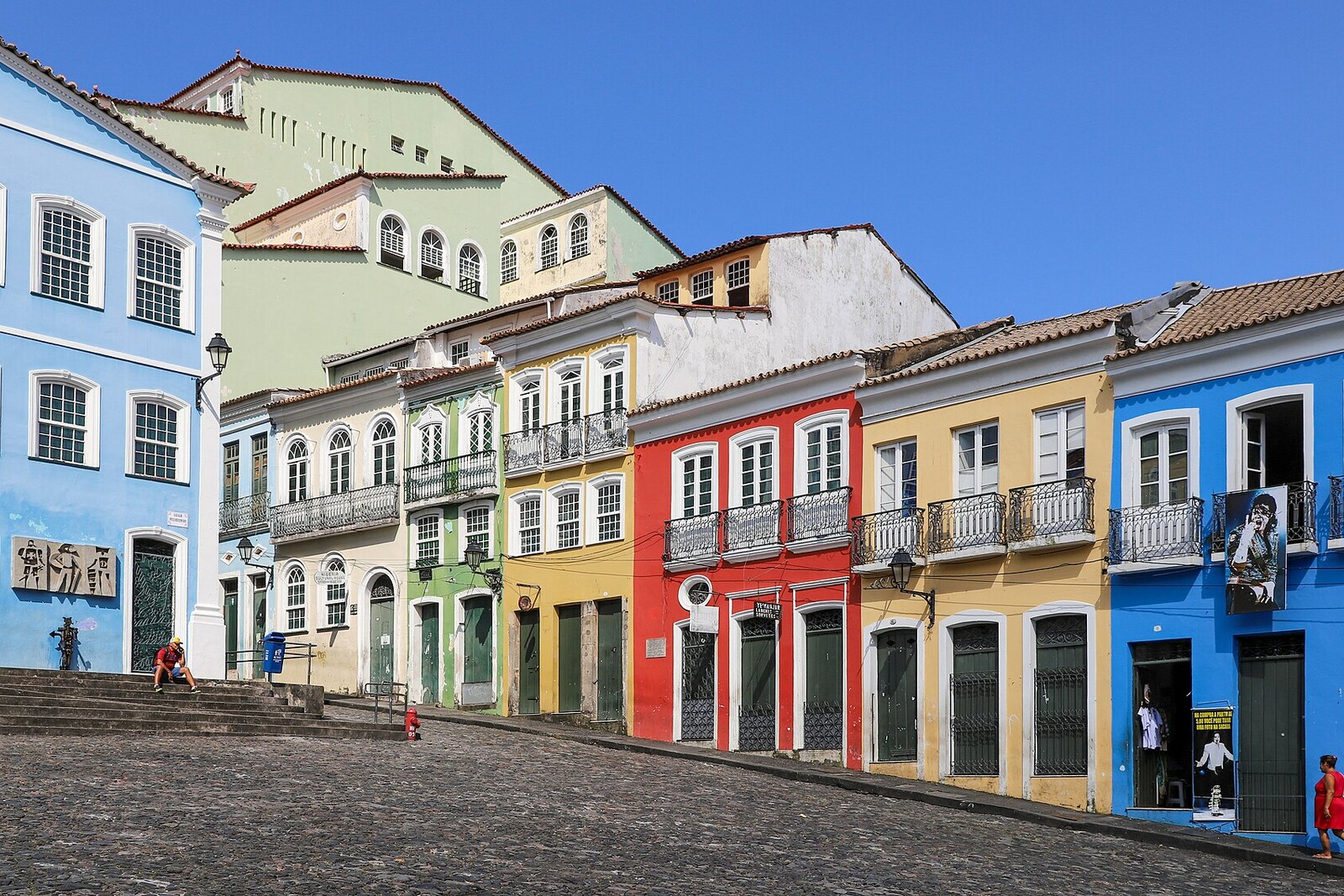
Look around first
What to notice
- Steep triangular slope
- Open performance space
- Ascent toward Cruzeiro de São Francisco
The story of the place
Concerts, carnival performances, and June festivities are held today on the steep triangular slope of Largo do Pelourinho. The stone column that gave the square its name has been gone for a long time. A pelourinho is a pillory with metal rings, to which convicted people were tied for public punishment.
The square appeared after the city authorities dismantled the fortifications by the Carmo Gate at the end of the eighteenth century. The market was moved to the cleared slope, and in eighteen oh seven, so was the city's pillory. The place guaranteed an audience for the punishment: merchants and buyers already gathered here. The sentence was read aloud before the crowd, and then the convicted person was whipped. Free townspeople were among those punished, but more often they were enslaved Africans, including participants in uprisings.
The final months of this pillory are connected with Pacífico Licutan, an elderly enslaved master of Islam whom his students tried to buy and free. Licutan's owner hired him out: he rolled tobacco leaves at Cais Dourado. Near what is now Cruzeiro de São Francisco, Licutan rented a room and taught other Africans prayers and Arabic writing. Twice, his owner refused to grant him freedom; in one case, the money was raised by the Malês themselves—the name used in Bahia for African Muslims.
Then Licutan's owner fell into debt to Carmelite monks. The court ordered the debtor's property disposed of, and Licutan was imprisoned beneath city hall in order to be sold at auction later. On the night of January twenty-fifth, eighteen thirty-five, the Malês rose in rebellion. One of their first goals was to free their teacher. The attackers came under fire from soldiers by the prison and retreated; the uprising was suppressed a few hours later.
Dozens of participants died in the fighting. Four convicted men were shot, while others were sent to hard labor, exiled, or sentenced to the lash. Licutan received one thousand lashes. The court required the punishment to be carried out publicly, but specifically prohibited it from being carried out on the city's streets. The lashes were administered in installments from April through June. Officials were afraid to bring before the city crowd, at the pillory, the man whom others had gone to the prison with weapons to free.
A few months later, the civic club Patriotic Society of 2 July, which organized celebrations of Bahia's independence, demanded that the column be removed from this square. On September seventh, the city council agreed, and the pillory was dismantled. Slavery in Brazil continued for another fifty-three years; lashes and public executions did not disappear along with the column either.
The pillory stood on this slope for twenty-eight years. Townspeople continued to call the square Largo do Pelourinho, and later the same name came to designate the entire district. At today's concerts, the audience occupies the place of the former spectators, but the pillory itself is no longer among the people.
Useful on site
Open urban space, accessible around the clock; choose daylight hours for the route and allow for closures during concerts.
Checked: June 24, 2026. Check the official source before visiting.Watch for uneven pavement, and ask permission before photographing residents, vendors, or customers of street craftspeople.