 Guide On Map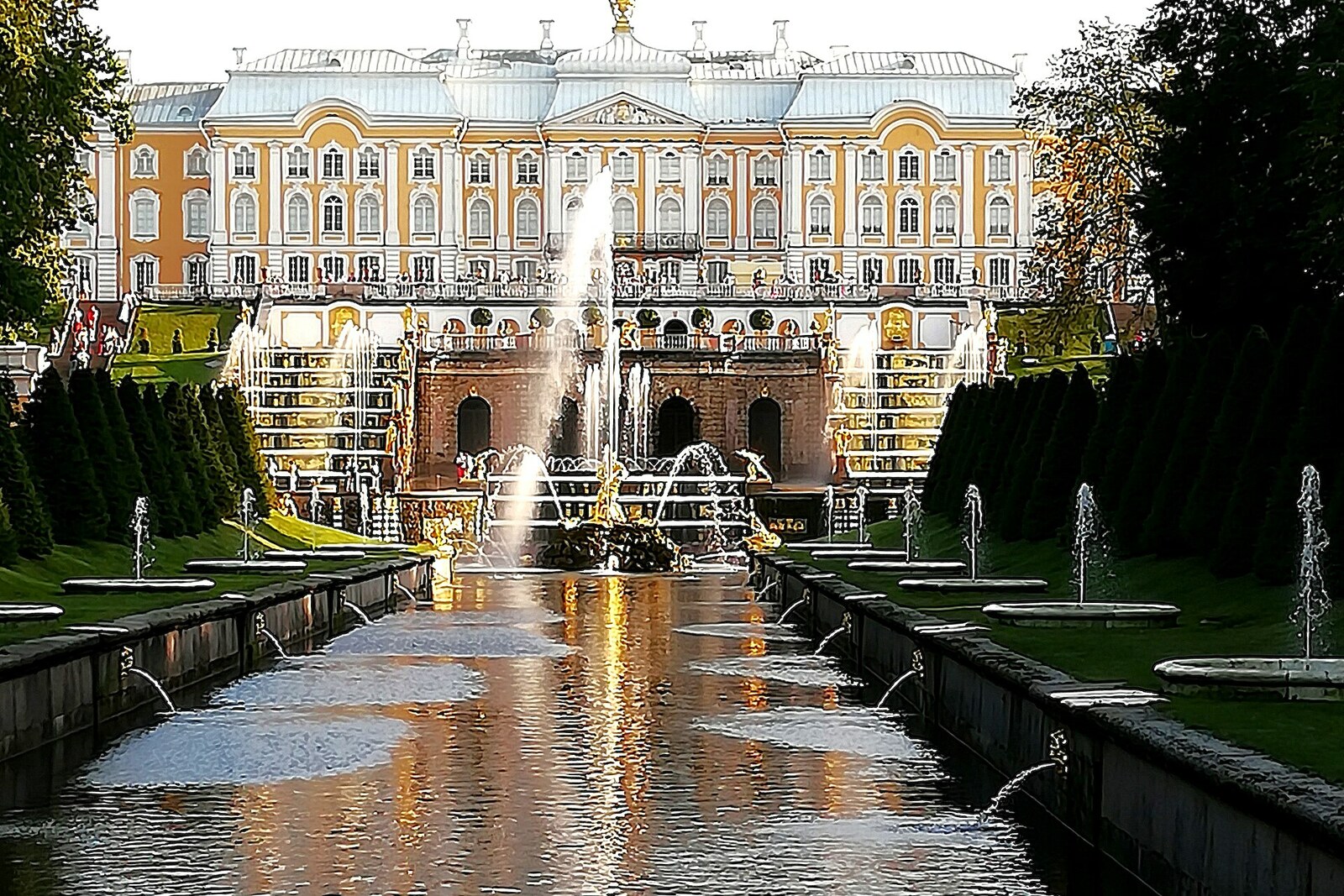
Look around first
What to notice
- The straight line of the Sea Canal
- Stone banks
- Twenty-two separate jets
- The palace above the Grand Cascade
The story of the place
Ships really did reach the palace by way of the Sea Canal. Large vessels remained in the bay, while guests transferred to rowboats, passed through the lock, and moored in the basin by the Grand Cascade. In seventeen fifteen, Pyotr I ordered a canal dug to the sea. The water level near the palace was higher than that of the bay, so the hydraulic engineer Vasily Tuvolkov built a lock: without it, the ceremonial harbor could not receive boats.
Pyotr staged its main test in August seventeen twenty-three. Two years earlier, Russia had ended the Great Northern War, and Pyotr had assumed the title of emperor. Some European courts did not yet recognize this title. Now the emperor wanted to show their representatives both the Baltic Fleet and the new seaside residence.
Foreign ministers arrived in Peterhof on a Prussian yacht. Pyotr met them right by the Sea Canal. Among the guests was Jacques de Campredon, the French plenipotentiary minister at the Russian court. He was seeking an alliance between France and Russia and was to report to King Louis XV what kind of state was claiming a place among the European empires.
Campredon recorded what he saw with businesslike precision: a straight canal one thousand paces long and twenty wide, stone banks, locks for a flotilla's entry and exit, boats along the walls, powerful columns of water by the palace. The next day, Pyotr himself led the diplomats around Peterhof and showed them the palaces, the park, and the water-supply system. The Frenchman sent a detailed report to Versailles. No immediate alliance came of it, and France recognized Pyotr's imperial title only in seventeen forty-five, under his daughter Yelizaveta.
Pyotr also intended to turn the route from the sea into a lesson for arrivals. Twenty-two fountains were installed on either side of the canal, in niches of trellis fences. The emperor chose Aesop's fables for them: animal figurines were to enact moral tales and mock Russia's opponents. The French sculptor Nicolas Pineau managed to make four small painted groups. The rest of the design remained on paper, and the figures that had been made soon disappeared.
In seventeen thirty-five, the fountains, now without fable scenes, were moved from the niches to the water's edge itself. At the same time, Samson Fountain took over the former harbor by the cascade, and boats stopped reaching the palace. This is where the present appearance of Fountain Alley comes from: twenty-two separate jets stand along the canal by which Campredon and other envoys arrived for a diplomatic display of the new residence.
Useful on site
Accessible during Lower Park hours 09:00–20:00; fountains operate 10:00–19:45 during the 2026 season.
Checked: June 24, 2026. Check the official source before visiting.Stop on the central axis and look in both directions. Toward the palace, the vista gathers into a ceremonial entrance; toward the bay, it gradually dissolves into open space.