 Guide On Map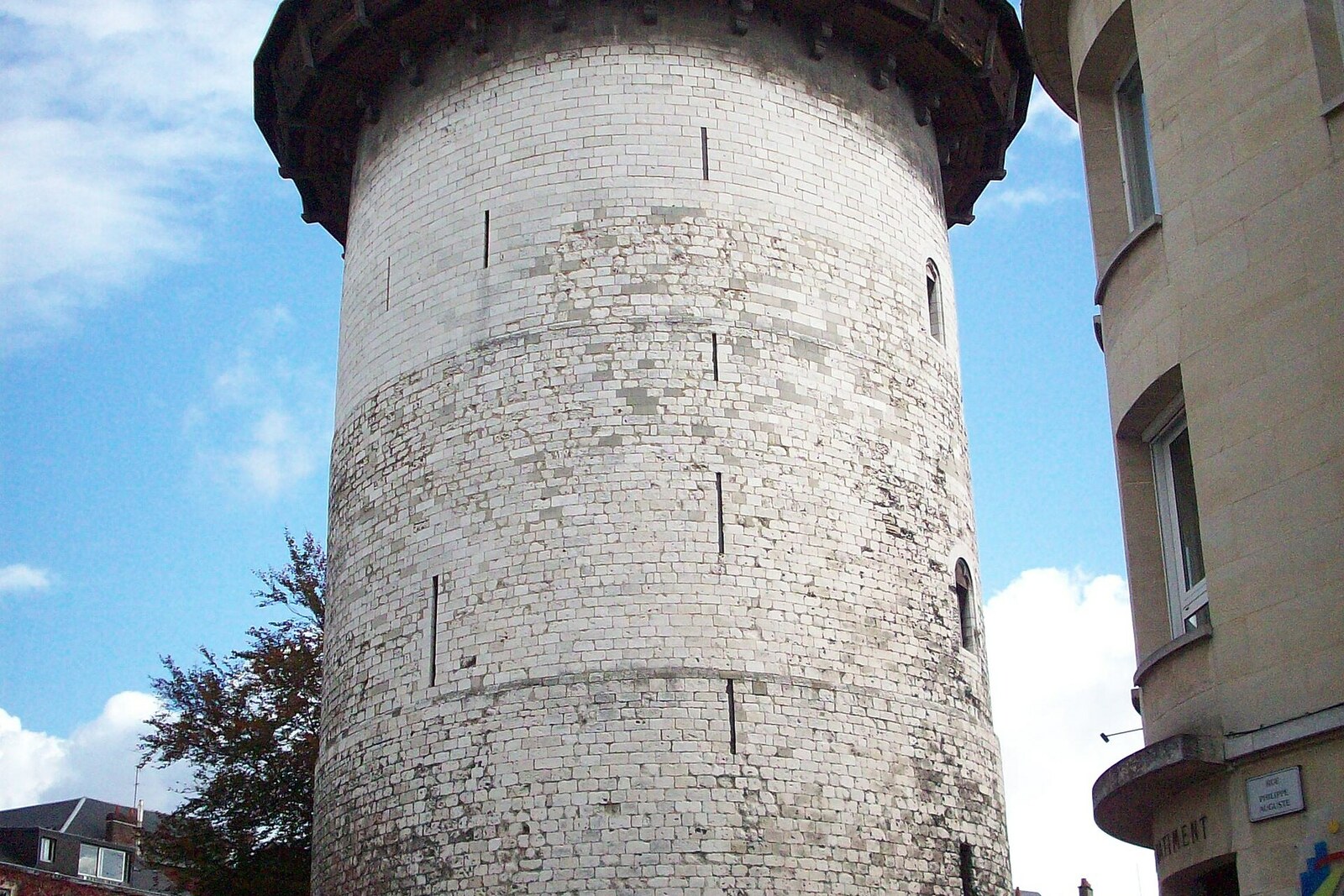
Look around first
What to notice
- The round mass of the donjon
- The tower's stonework
- The inner courtroom
The story of the place
Joan of Arc was never a prisoner in this tower. During her entire imprisonment in Rouen, she entered it only once—because inside was a room for the trial of state prisoners. A winch stood there: the accused could be suspended by their hands tied behind their back, with a weight tied to their feet.
The tower was a donjon—the main fortification of a large castle. The French king Philip II Augustus ordered it built after the conquest of Normandy in twelve oh four. More than two centuries later, the castle was occupied by an English garrison, and Rouen was the chief city of the part of France governed by the English. After Joan was captured at Compiègne, the Burgundians handed her over to the English for a ransom, and they brought the prisoner here. She was held in another castle tower—the Tour de la Pucelle, of which only fragments now remain.
On May ninth, fourteen thirty-one, Joan was brought to the donjon. Pierre Cauchon, Bishop of Beauvais and the chief judge in the heresy case, sought to make her retract her earlier testimony and submit to the church court. For Joan, this meant admitting that the voices of the saints were a deception—voices at whose behest, as she believed, she had helped lift the Siege of Orléans and bring Charles VII to his coronation.
The executioners were already waiting in the room. The instruments were prepared, and Joan was told that the torture would begin immediately if she did not tell the truth demanded by the judges. She replied that even if they tore her body apart and separated her soul from her body, she would say nothing else; and if, under torture, she said anything further, she would still later declare that those words had been forced from her.
Cauchon postponed the torture. Three days later, the advisers discussed using it, but the majority opposed it: a confession declared in advance to have been coerced did not give the judges the result they sought. Joan was not tortured. Cauchon and his assistants continued the trial without such a confession, delivered a guilty verdict, and on May thirtieth, Joan was burned at the Place du Vieux-Marché.
The castle began to be dismantled in fifteen ninety-one; its towers and walls were used as building stone. The donjon survived to its full height. Its present name, “Joan of Arc Tower,” refers to the single day when Joan was brought here to be threatened with torture, not to the place of her imprisonment.
Useful on site
Access inside depends on the Joan of Arc Tower program; the platform closes for a break from 12:30–13:30.
Checked: June 24, 2026. Check the official source before visiting.The story works at the foot of the tower; treat entry inside as a separate visit and check access in advance.