 Guide On Map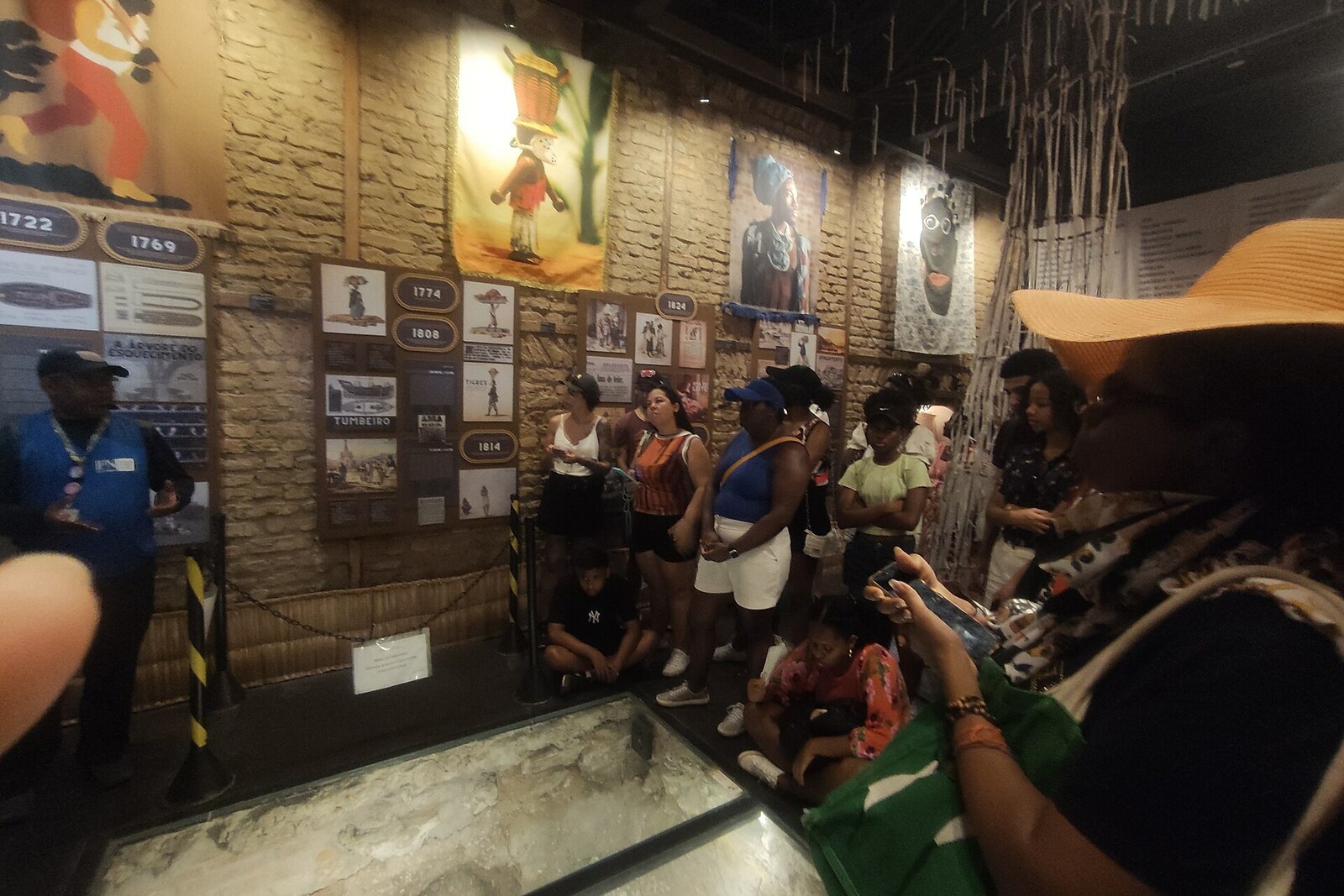
Look around first
What to notice
- Glass window in the floor
- Reddish earth
- Bone fragments
- Garage exhibition
The story of the place
The garage now houses a permanent exhibition, and beneath the glass in the floor lies reddish soil with bone fragments. Captives recently brought from Africa, called pretos novos in Rio at the time, were buried here. When the captive trade was moved to Valongo, officials set aside land for these burials beyond the city boundary, beside the market. The bodies were wrapped in mats, laid down two at a time, and barely covered with earth; when the plot became overcrowded, the remains were burned and crushed.
On January eighth, nineteen ninety-six, Merced Guimarães dos Anjos and Petrúcio Guimarães dos Anjos finally began expanding their first home of their own. The family had previously rented housing, and after buying this building, they saved for another six years for the renovation. The second floor was meant to give the couple and their three daughters more space. Merced earned a living treating homes for insects.
The bricklayers broke through the floor for the supports of the new floor and decided they had found dog bones. Merced sorted through the rubble herself. First she came across an adult human jaw, then a small one, with permanent teeth that were still coming in. She collected the remains in boxes and reported the discovery to the city's cultural-heritage specialists. The renovation intended for the family home stopped on its very first day.
Historians knew from documents that a cemetery had existed in this part of Gamboa, but its exact location had long been lost. Archaeologists confirmed that the house stands on a plot where captives recently brought from Africa were buried. In Rio at the time, they were called pretos novos—newly arrived Black people. Many died in the harbor or soon after disembarkation, before they were sold.
After the captive trade was moved to Valongo, officials set aside land for these burials beside the market and beyond the city boundary at the time. Burials took place here from seventeen sixty-nine to eighteen thirty. The church parish recorded the deaths, but the bodies were handled differently from what the word “cemetery” would suggest. According to an eyewitness from the early nineteenth century, a Black gravedigger, with helpers, wrapped the dead in mats, laid them down in pairs, and barely covered them with earth. When space ran out, the remains were burned and crushed. Archaeologists found precisely such calcined and mixed fragments in the soil, rather than rows of individual graves.
The rescue excavations left large pits right in the rooms. For several years, the family could not live here and stayed in the premises of their pest-control company. When the work dragged on, Merced and one of the daughters collected the fragments that remained in the open areas themselves, handed them to the municipal archaeologist, filled in the pits, and returned home.
Merced began letting researchers and visitors in. Nine years later, the family and their friends created the Pretos Novos Institute of Research and Memory. The garage became a permanent exhibition; in the yard, where the couple had wanted to plant trees and build a swimming pool, a library, shop, and café appeared. Through a glass window in the floor, reddish earth with bone fragments can be seen. Behind the exhibition wall, Merced and Petrúcio still live in the house whose expansion they had once spent six years saving for.
Useful on site
The memorial operates on a schedule; check the current IPN opening hours before entering.
Checked: date not specified. Check the official source before visiting.This is an intimate memorial space, not an ordinary tourist attraction. Check in advance whether a visit is possible; inside, follow staff instructions and ask permission to take photographs.