 Guide On Map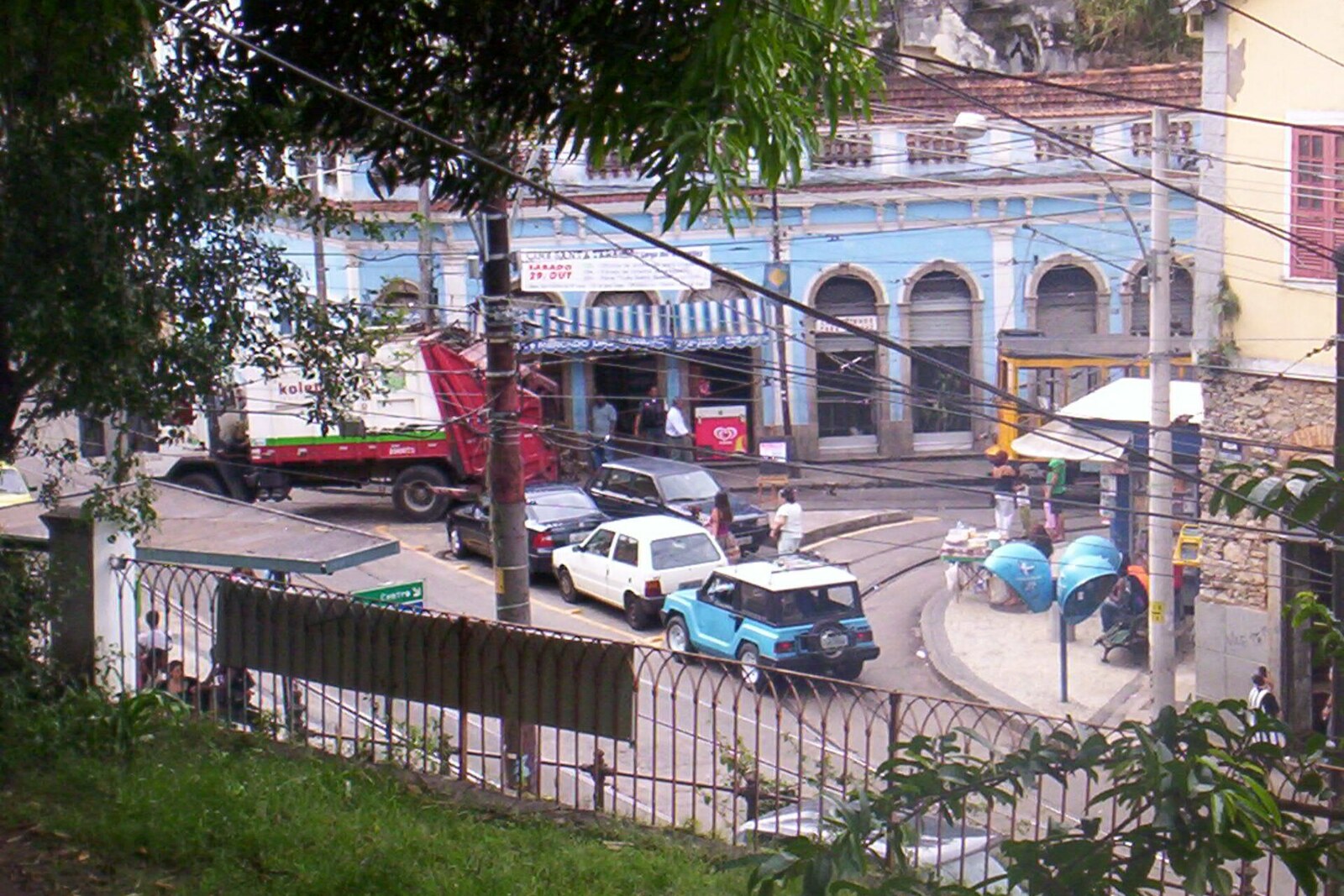
Look around first
What to notice
- Tram tracks
- A fork in the streets
- The descent along Ladeira do Castro
- The hotel building above the square
The story of the place
Where the tracks cross an uneven widening in the street, the descent along Ladeira do Castro and short lanes on the slope converge toward the Santa Teresa ridge. This place has no regular outline: the streets were laid out along property boundaries and the lines the hill allowed. By the end of the nineteenth century, passengers arrived here on a steam-powered inclined lift from the lower city and changed to cars that horses pulled farther along the hill. The main house of the former estate later became the district's first hotel, and higher up the street, a hotel still occupies its site.
Guimarães in the name is one person's surname. In the middle of the nineteenth century, the businessman and landowner Joaquim da Fonseca Guimarães decided to divide his estate at the top of the hill and sell the land for housing. The largo—a name Rio uses for a small square or a widening in a street—appeared at the center of this new development.
Guimarães made money from trade, municipal contracts, and land deals. The main threat to his plan was the slope itself: a buyer could acquire a plot at the top, but not a convenient road to reach it. In eighteen fifty-eight, Guimarães and his partner, the municipal contractor João Carlos Pallares, invested in paving Rua Dona Luísa—today's Rua Cândido Mendes. Workers cut through the slope and built retaining walls. After that, carriages and so-called gondolas could make their way uphill—horse-drawn passenger carriages with nine seats and a luggage compartment.
A year later, Guimarães began dividing the estate into residential plots. Streets were laid out along property boundaries and the lines allowed by the terrain. That is why there is no regular square with even sides here: the present-day widening formed where the road along the ridge, the descent along Ladeira do Castro, and the lanes between the sold plots came together. The owner's surname was given to the junction around which the land was being sold.
By eighteen seventy-seven, Guimarães's former holdings already belonged to the Santa Teresa Tram company. The company ran a steam-powered inclined lift here from Rua Mata-Cavalos—the name then used for today's Rua Riachuelo. Passengers got off at the largo and changed to cars that horses pulled farther along the hill. At the same time, the company was selling off the remaining land. A newspaper advertisement described the plots as opening directly onto Largo dos Guimarães, and plans were issued to buyers here as well, at Café Amorim.
The estate did not disappear at once. Its main house was later turned into the first Santa Teresa Hotel; a little farther up the street, the Santa Teresa Hotel still operates on its site. Santa Teresa Tram tracks still pass through the largo, and streets fan out across the land that Guimarães divided into plots. The estate's former boundaries are gone, but the owner's surname remains at its main intersection.
Useful on site
Watch the cars from a safe edge, and do not treat the tracks as a pedestrian area. The café and a tram ride remain separate options, whose conditions are worth confirming on site.