 Guide On Map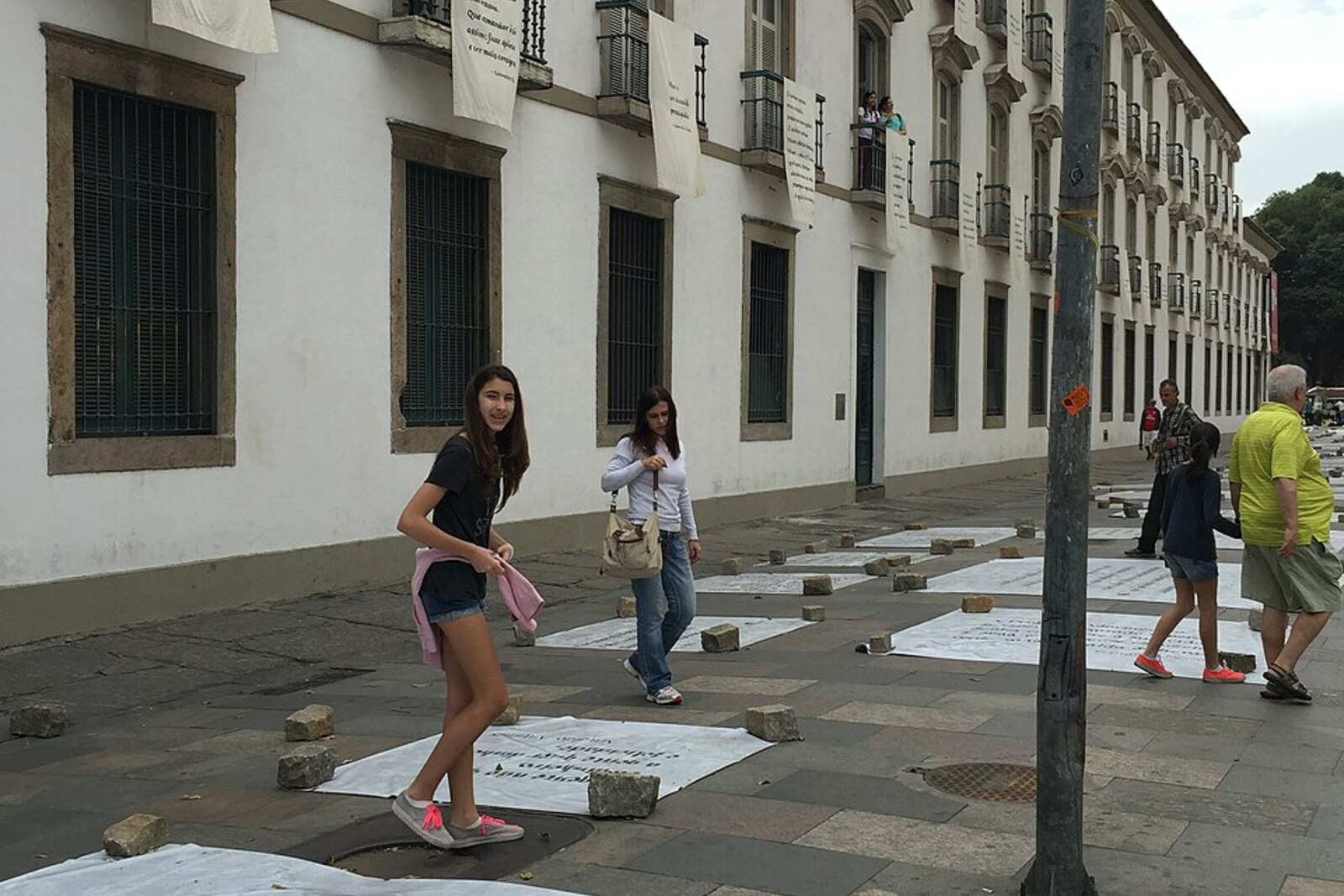
Look around first
What to notice
- Façade of the former palace
- Reception rooms
- Exhibition halls
- Library
The story of the place
The façade marks the entrance to the palace where the royal administration operated. After the ruler changed title, Paço Real received the name Paço Imperial and has retained it to this day. Inside, rooms for administrative business and official receptions are now occupied by exhibitions and the cultural center’s library.
Paço Imperial means the emperor’s palace, although the imperial family did not maintain an everyday domestic life here. In these rooms, petitions were received, orders were signed, and official ceremonies were held. That is why, in January eighteen twenty-two, a delegation of city residents came here—to the desk of Prince Regent Pedro I, who governed Brazil on behalf of his father, King João VI.
The king had already returned to Lisbon. Next, the Portuguese Cortes—the assembly writing a new constitution—ordered twenty-three-year-old Pedro I to go to Europe and continue his education. At the same time, the Cortes placed the Brazilian provinces directly under Lisbon. If the prince left, his office would become meaningless, and Rio would lose its standing as the capital of a large kingdom.
José Clemente Pereira, chairman of the city senate—the name then used for the municipal administration—opposed this. Born in Portugal, he had built a career in Rio as a lawyer for local merchants. Pereira now challenged the decision of the Portuguese parliament, although he owed both his profession and his office to that same monarchy. He gathered signatures, secured the support of São Paulo and Minas Gerais, and brought to the palace a petition bearing more than eight thousand names. The petitioners wanted to keep the prince in Rio and were not yet speaking of separation, but of a unified Portuguese-Brazilian state.
On January ninth, Pedro I received the delegation and agreed to postpone his departure. Later, his response was turned into a short phrase: “Tell the people that I am staying.” But the first report, printed the next day, was more cautious: the prince promised to remain until the Cortes and his father had considered the circumstances. The famous line arose after editorial revision; the decision was real, while the theatrical wording resulted from how it was announced to the city.
Caution did not help avoid a confrontation. Jorge de Avilez, commander of the Portuguese garrison, tried to force the prince to obey Lisbon’s order. Pedro I assembled loyal troops, militia, and armed supporters. There was no battle: Avilez’s soldiers withdrew across the bay, and in February the prince sent them to Portugal. Avilez left, Pedro I remained, and he gained the opportunity to form a new government. In September, he declared Brazil’s independence and was then proclaimed emperor. Pereira joined the leadership of the new state and later became a minister and senator.
Before these events, the building was called Paço Real, a palace of the king. It became Paço Imperial after the prince who had received the petition to remain here changed his title. Sources do not identify the exact window from which his response was announced. A reliable trace survives in the name of the whole building: Paço Real became Paço Imperial. Since nineteen eighty-five, exhibition halls and the cultural center’s library have occupied the former reception and administrative rooms.
Useful on site
The façade and courtyard can be viewed from outside daily; the operation of exhibitions, interior rooms, and library spaces depends on the cultural center’s program.
Checked: June 17, 2026. Check the official source before visiting.You can understand the essentials from the square; add a visit to the interior spaces only after checking current access.