 Guide On Map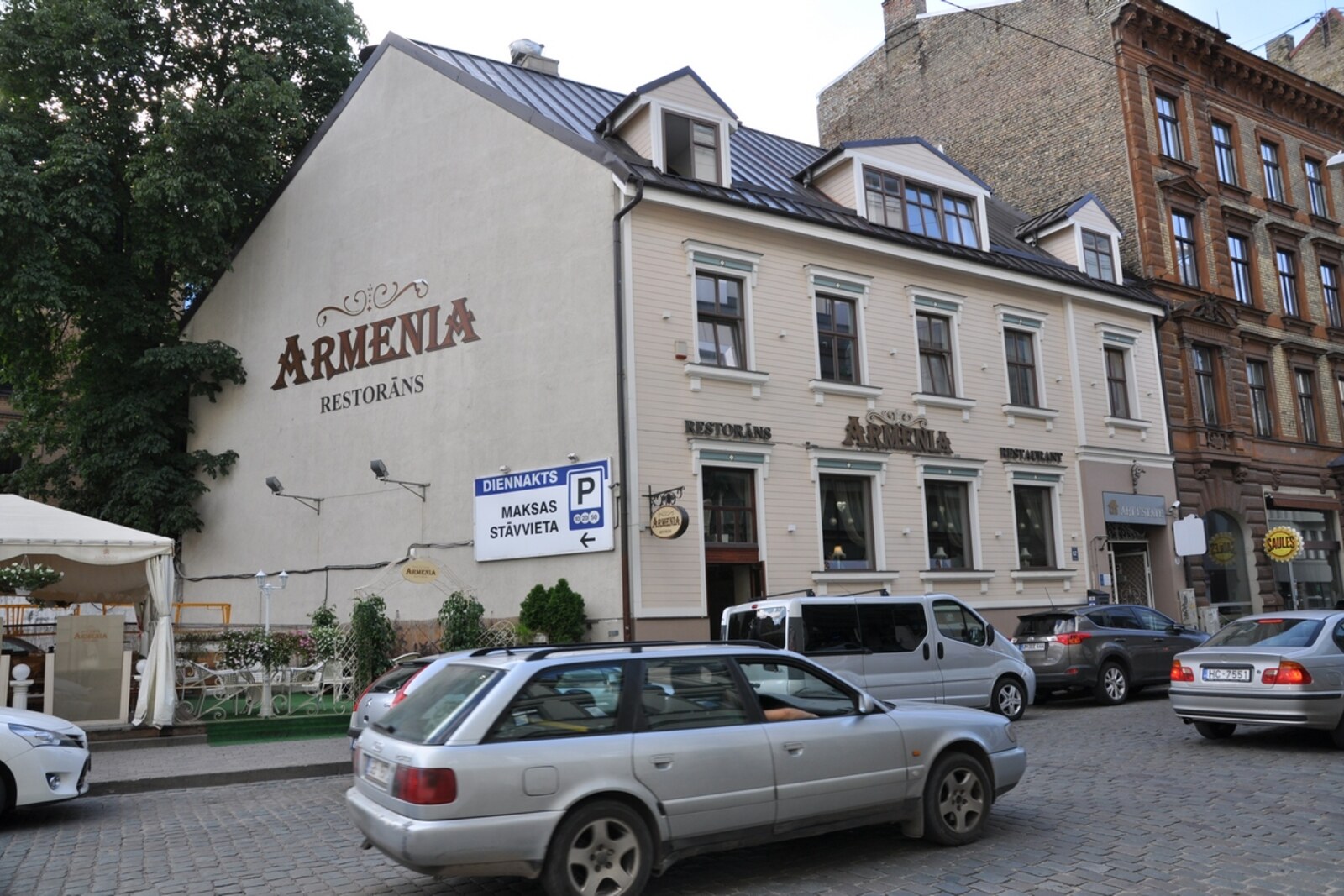
Look around first
What to notice
- Street-facing building
- Passage into the courtyard
- Courtyard buildings
The story of the place
The name Dzirnavu Street preserves the memory of mills that once stood closer to the intersection with Krišjāņa Barona Street. The street-facing building has a passage leading to the back of the property and the courtyard buildings. A bread-making enterprise operated there: flour arrived in tanker trucks and was sent by compressed air through pipes into sealed containers. Today, ordinary urban life has returned behind the facade, with apartments, offices, and a restaurant.
The street-facing building at number sixty-two was built in eighteen seventy-nine as an apartment building: the owner invested in apartments and recouped the money through rent. But the passage into the courtyard served more than just the residents. A branch of Riga Bread Factory Number Two later operated at the back of the property.
Dzirnavu Street means Mill Street. The mills that gave the street its name stood in the eighteenth century, closer to the present-day intersection with Krišjāņa Barona Street. Flour eventually returned to this address, but not on carts or for millstones: it arrived in tanker trucks.
The branch was managed by Rihards Krūmiņš, a baker who had earned his living from the trade even in prewar Latvia and had attained the rank of journeyman. After the war, he managed several Riga bakeries. In nineteen fifty-seven, he became head of Riga Bread Factory Number One, and then spent the longest stage of his career here on Dzirnavu Street.
His main concern turned out to be the flour before it was mixed into dough. Storing flour in sacks required dry, well-lit, and well-ventilated rooms. Pests appeared in a dark or damp storeroom; infested sacks had to be removed, and the room had to be treated immediately. Whether the branch could continue baking depended on the storeroom.
Krūmiņš introduced bulk storage. A tanker truck delivered flour to the building, and compressed air drove it through pipes directly into sealed containers. The unloading of sacks, the stacks, and the spills on the floor disappeared. Krūmiņš then converted the heating system to gas and installed new production equipment. The branch gradually became a modern bread-making enterprise. In nineteen ninety-seven, the Latvian Bakers' Association awarded Krūmiņš the title of honorary master.
There is no longer a bakery at this address. Today there are apartments, offices, and a restaurant here, while the passage through the street-facing building still leads to the back of the property—to the place where the tanker truck entered in Krūmiņš's time and from which the flour traveled through pipes without touching a sack.
Useful on site
Residential and commercial urban building; exterior viewing from the street, checked on 29.06.2026.
Checked: June 29, 2026. Check the official source before visiting.This is a residential building with no guaranteed access inside; view it from the street and do not look for Raisters's apartment in the entrance hall.