 Guide On Map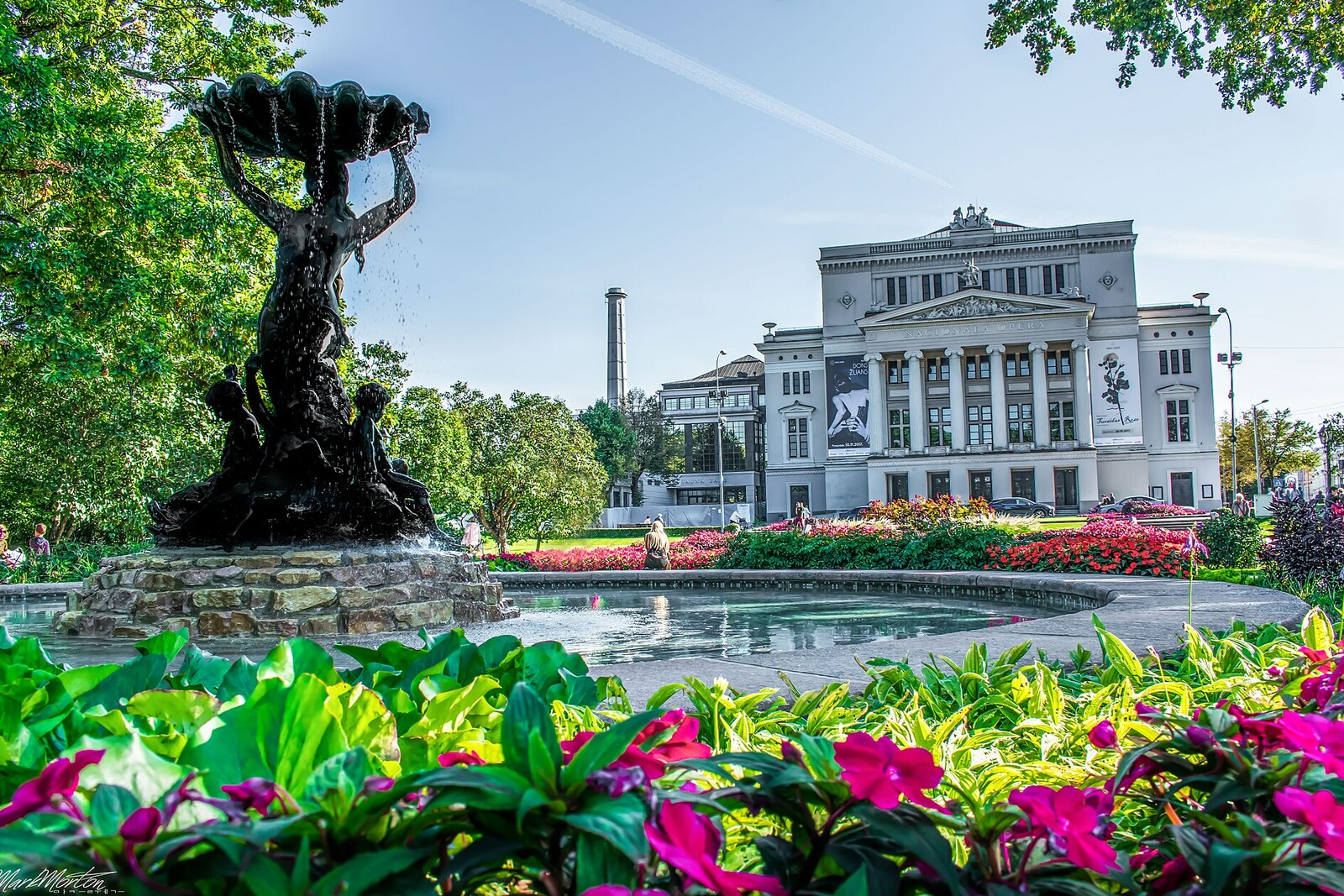
Look around first
What to notice
- Main façade with colonnade
- Triangular pediment
- Sculptures above the pediment
The story of the place
The colonnade, triangular pediment, and sculptures above give the building the appearance of a grand city theatre. It was built in eighteen sixty-three for the First Riga City Theatre. Opera, drama, and ballet performances here depended on the Great Guild, an association of the city's German merchants. Latvians bought tickets for this hall, although their own professional opera troupe was not allowed onto its stage.
On January twenty-third, nineteen nineteen, Teodors Reiters, chief conductor and director of the Latvian opera troupe, raised his baton here before the start of The Flying Dutchman. Latvians performed opera on this stage for the first time. For Reiters, the performance decided the company's fate: the troupe had gained a large hall, but did not yet know whether it would remain theirs.
The building was constructed in eighteen sixty-three as the First Riga City Theatre. Its opera, drama, and ballet were controlled by the Great Guild—an association of Riga's German merchants. Latvian audiences bought tickets here, but the first professional Latvian opera troupe, founded in nineteen twelve, was not allowed onto this stage. During the First World War, the artists scattered. In the summer of nineteen eighteen, patron Andrei Friedenberg gathered some of the singers and musicians in Petrograd and helped them return to Riga. They called their company Latvju Opera, meaning Latvian Opera, and began performing in another city theatre. They had neither permanent budget funding nor a home of their own.
At the end of that same year, employees of the German Theatre realized that they would soon lose the building. Most likely, it was then that they carried scores, books, and documents out of the annex and hid them beneath the staircase and the rows of the second balcony. These people considered themselves the theatre's rightful custodians and expected to return.
In January, the new city authorities allowed Reiters to move Latvju Opera here. On February ninth, the government nationalized the troupe and provided it with state funding. The artists continued the old productions and prepared new ones, now as the Soviet Latvian Opera.
On May twenty-second, that government was defeated. The name Latvju Opera was restored, but the former insecurity returned with the former name. The funding decree was no longer in force, and the Great Guild declared that its contracts for the theatre remained valid. Reiters could lose the stage, and the company reassembled after the evacuation could break apart again.
To keep the troupe together, it was temporarily attached to a Latvian military formation. On August sixteenth, the formation's headquarters occupied both city theatres by military order for Latvian performances and concerts. After that, correspondence with the Great Guild no longer decided who would perform on this stage. On September twenty-third, the Cabinet of Ministers adopted regulations on the National Opera: the troupe received premises and state funding guaranteed by law. On December second, Tannhäuser was performed here under the name Latvian National Opera.
The hidden scores remained beneath the second balcony until the reconstruction of nineteen ninety-one. Workers opened a dark space beneath the wooden staircase and seats and found documents from the German Theatre that had survived a fire, changes of institutions, and later archive purges. The name Latvian National Opera had already been restored in nineteen eighty-nine. Today, opera and ballet are still performed here, and the cache records the outcome of a long-standing dispute: it was created by people awaiting the return of the German troupe and found during the renovation of the Latvian opera's building.
Useful on site
Accessible outside at all times; check the current LNOB program for performances, tours, and interior access.
Checked: June 26, 2026. Check the official source before visiting.The story can be read well from outside. The foyer and auditorium are accessible only as part of a separate visit, tour, or performance.