 Guide On Map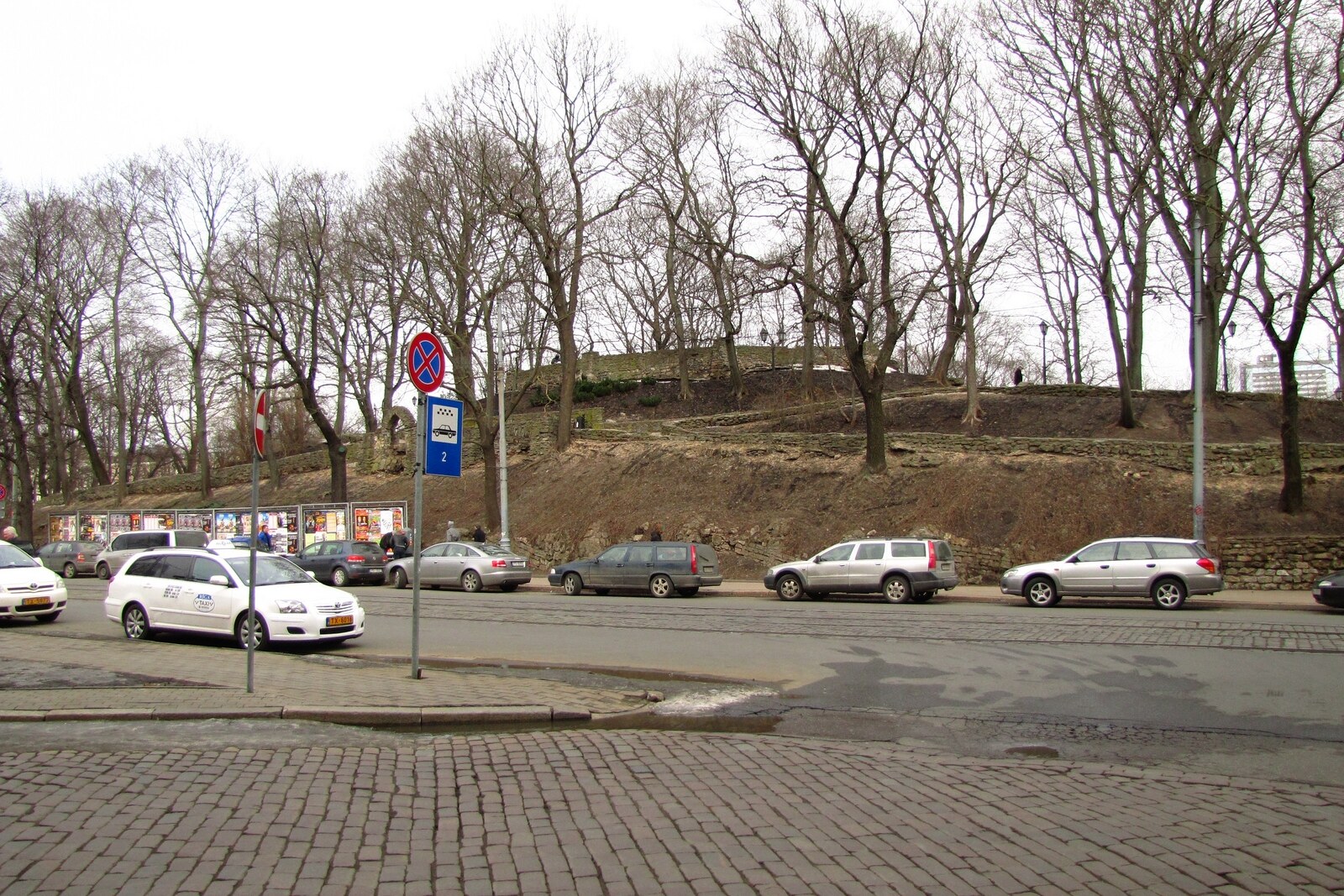
Look around first
What to notice
- Riga Canal
- Arched pedestrian bridge
- Five split granite stones
- Names on the stones
The story of the place
Bastejkalns was heaped up in eighteen fifty-six, when the people of Riga were dismantling the earthen fortifications around the Old Town. The former fortress moat was left in place and turned into the Riga Canal, while an artificial hill was raised on the site of the Sand Bastion. The Latvian name “Bastejkalns” literally means “Bastion Mountain.” The terrain, water, and narrow bridges between the banks are all that remain here from the old fortress.
On the evening of January twentieth, nineteen ninety-one, this layout determined who could reach where and where they came under fire. Latvia had declared the restoration of independence, but it still remained part of the Soviet Union. The Riga OMON refused to obey the Latvian government and recognized orders from the Union ministry in Moscow. After people were killed during the assault on the television center in Vilnius, Riga residents erected barricades at government buildings and communications facilities.
At the time, the Ministry of the Interior of Latvia stood on Raiņa Boulevard, beside the canal. It was guarded by police officers who had remained on the side of the republican government. Shortly after nine in the evening, Riga OMON vehicles pulled up to the building, and shooting began. Fire also came from the building opposite and from the side of Bastejkalns.
Documentary filmmaker Zigurd Vidiņš heard the shots in a nearby studio. The cameras there were kept loaded for just such a case. Together with director Juris Podnieks and camera operators Andris Slapiņš and Gvido Zvaigzne, he ran out to the canal: these people made their living filming and recorded the events around the Riga barricades.
They first tried to reach the ministry by way of the bridge. Podnieks ran ahead, but bullets struck the metal parts of the crossing. The film crew remained on the Old Town side and split up: Podnieks worked with Slapiņš, while Vidiņš worked with Zvaigzne.
Later, Vidiņš recalled two aimed bursts of gunfire. The first passed below the camera operators; the second hit Gvido Zvaigzne. Vidiņš dragged the wounded man uphill, toward a low wall on the slope, hoping to take cover behind a stone. He did not turn off the camera. Zvaigzne, already fallen, also kept filming and crawled with the camera in his hand.
Andris Slapiņš was wounded almost simultaneously. He demanded that filming continue. He was carried on a stretcher to Riga Cathedral, where the nearest medical post was located, but the camera operator could not be saved. Zvaigzne was taken to hospital; he died of his wounds on February fifth. Footage from that night was included in Podnieks’s film “Postscriptum.”
Three more people were killed in the attack: Vladimirs Gomanovičs, commander of the ministry’s security detail; Sergejs Konoņenko, a precinct inspector; and Edijs Riekstiņš, a schoolboy who found himself in the firing zone. The assault on the building by Riga OMON itself is confirmed by documents. The investigation could not establish who occupied all the additional firing positions or whose bullets exactly struck each person who was killed.
On August tenth of the same year, sculptor Arvīds Vojtkāns, on his own initiative, installed five reddish-brown granite stones beside Bastejkalns. The names of Gomanovičs, Konoņenko, Riekstiņš, Slapiņš, and Zvaigzne are carved into them. The slabs lie horizontally, each split in two. Nearby stands the bridge across the former fortress moat—the crossing the film crew was unable to use then.
Useful on site
Open city park; boat trips and events by the canal depend on the season and weather.
Checked: June 26, 2026. Check the official source before visiting.The stop is entirely outdoors. After rain and in cold weather, climb carefully: the sloping paths and steps may be slippery.