 Guide On Map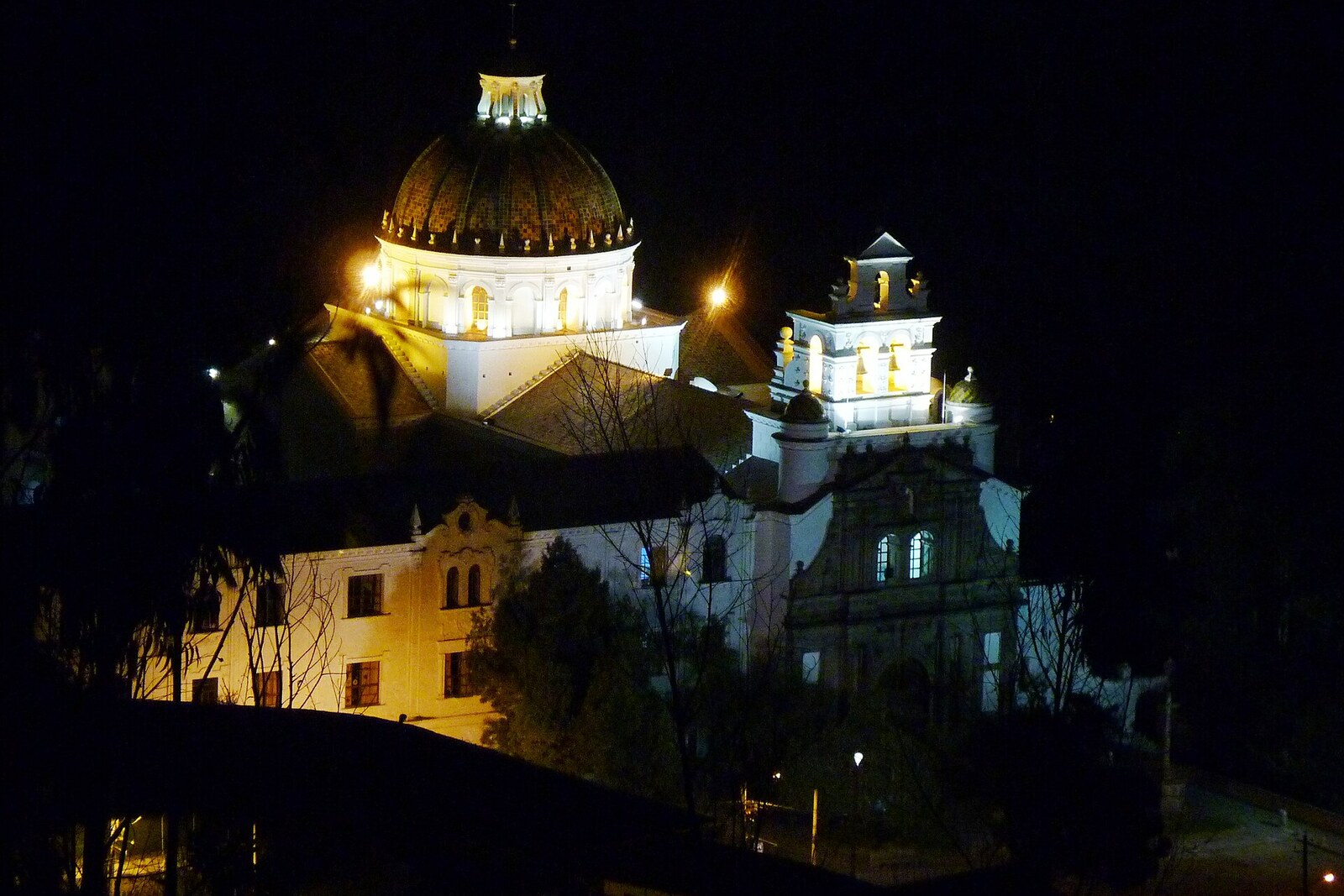
Look around first
What to notice
- The viewpoint railing
- The Guápulo slope
- The Tumbaco Valley
- The descending Camino de Orellana
The story of the place
Quito's urban plateau here drops sharply into the steep slope along which the Guápulo district descends toward the Tumbaco Valley. The railing marks the edge of the height, and beyond it a distant view of the valley opens up. From here, the Camino de Orellana leads to the plaza and sanctuary below.
At the beginning of September, pickup trucks with beds full of oranges head down from the viewpoint. Men and women throw the fruit to people along the road; the people catch it, put it into bags, and carry it home. By Plaza de Guápulo, the distribution often ends in an exchange of aimed throws. This descent is called the Entrada de las Naranjas and is part of the Feast of Our Lady of Guápulo.
The community itself must organize it. In the past, the main expenses were covered by the prioste—a person who promised to pay for the religious celebration out of their own pocket. For one family, such a promise meant months of preparation and serious expense. Later, the costs and work were divided among neighborhood organizations: the sports league, the association of women vendors, the families of children who recite verses of praise, and representatives of different parts of Guápulo.
For about twenty years, the festival committee was led by Genaro Vera, a member of one of the old local families. Two or three months before the celebration, he gathered people every Monday at seven in the evening. Between sixty and one hundred people attended such meetings. They looked for money, assigned roles, arranged vehicles, and decided who would lead the procession. After Vera's death, the committee remained, and expenses are still collected from across the whole neighborhood.
Why participants need oranges specifically is not known for certain. Modern organizers call them a sign of fertility and gratitude, but researchers of the local festival have found no confirmed account of how the custom began. The suggestion of a connection with an ancient Andean rite of new fire remains a suggestion.
Mirador de Guápulo is a public viewpoint at the upper edge of a steep slope. Quito's urban plateau ends here; below lie Guápulo and the Tumbaco Valley. That is why the procession gathers at the top: the descent along the Camino de Orellana to the plaza and sanctuary begins here. On an ordinary day, the same boundary is marked by a railing and an open view of the valley; on festival days, it becomes the starting point for vehicles loaded with oranges.
Useful on site
Outdoor viewpoint with no reliably published stable hours found; it is practical to come during the day and avoid returning on foot late.
Checked: June 30, 2026. Check the official source before visiting.Take in the view in daylight and remain within the equipped viewing area. At the edge, do not let your phone distract you, and after dark take into account traffic noise and a less calm atmosphere.