 Guide On Map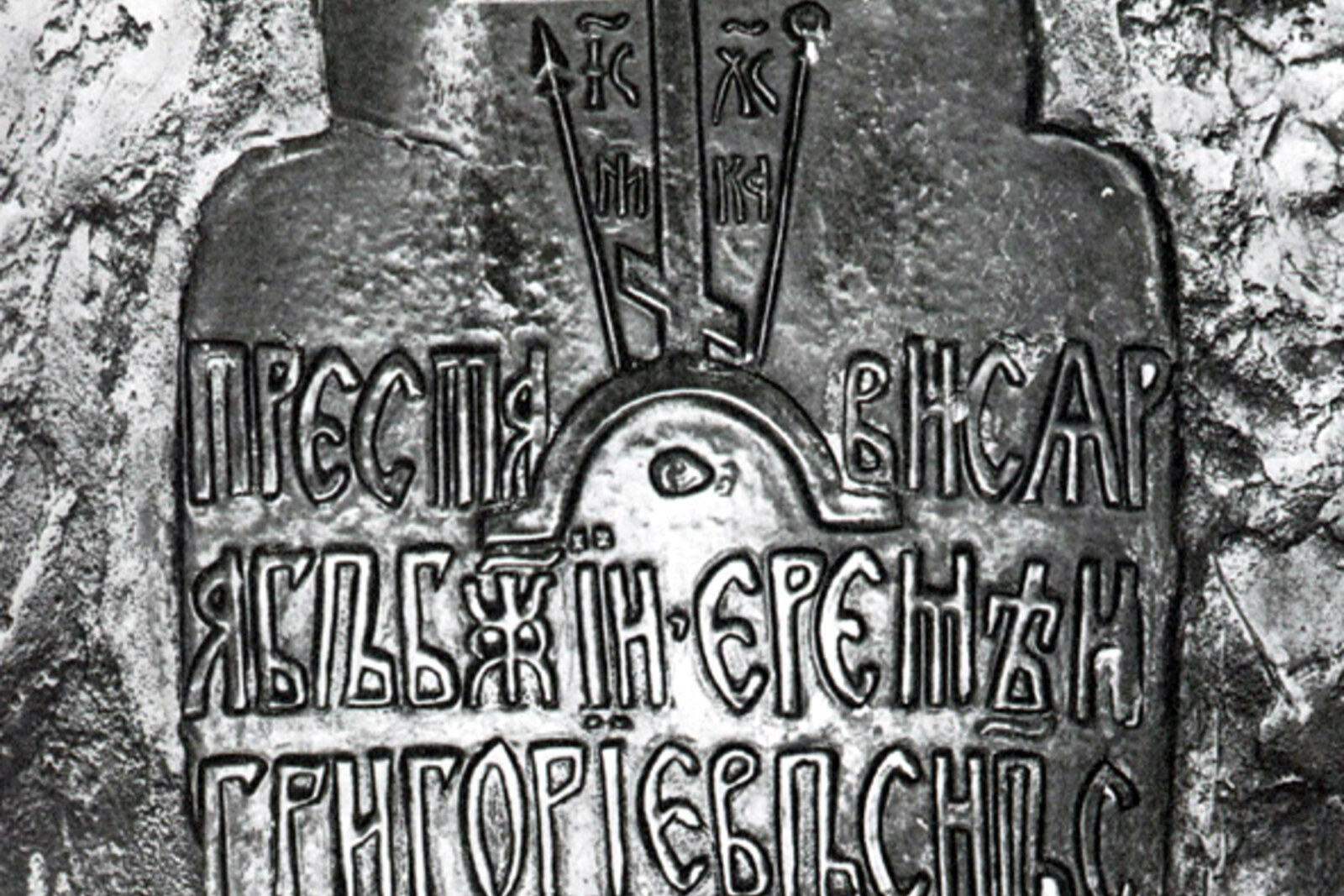
Look around first
What to notice
- The inscription “God-Built Caves”
- The tombs of Vassa and Iona
- Wall burial niches
- Underground galleries
The story of the place
Above the entrance, the words “God-Built Caves” are carved. “Built” means “created.” The sixteenth-century Tale of the Pskov-Caves Monastery says that Ivan Dementyev, the owner of this forest plot, was cutting down trees on the slope. One of them toppled a neighboring tree and tore up a layer of turf by its roots. An entrance opened beneath it, and above the entrance was that very inscription. This is a monastery legend, recorded from the words of Dementyev’s stepson. It explains the name: the original cave here was considered to have been found, not dug by a person. The underground church and burial galleries were cut into the sandstone by people later.
The first to begin this was Ioann, a priest seeking a place for monastic life. Before that, he had served in Yuryev—the name then used for present-day Estonian Tartu. Leaving the city, Ioann brought his wife Maria and their two sons to the cave. The family settled in Ivan Dementyev’s village, and Ioann began digging a small Dormition Church into the hill.
Maria soon fell ill. Before her death, she took monastic vows under the name Vassa—the first of the future Pskov-Caves community. Ioann dug a grave for her inside the cave and buried his wife.
The Tale relates what followed as a miracle. The next morning, Vassa’s coffin was found on the surface of the ground. Ioann and the priest who had performed the burial decided that they had made a mistake in the rite. They read the prayers again and lowered the coffin into the grave for a second time. The following morning, it was once more on the surface.
After that, Ioann stopped covering the coffin with earth. He cut a niche in the left wall by the entrance and placed his wife’s body there. Thus Vassa became the first person buried in the cave necropolis, and the coffin left open established the local burial practice: here, coffins are placed in wall niches, sometimes closing them with stone or clay slabs.
After his wife’s death, Ioann himself took monastic vows under the name Iona and completed the cave church. The priests of Pskov did not dare to consecrate a church of such an unusual underground design. Iona obtained permission from Archbishop Theophilus of Novgorod, and on Dormition Day in fourteen seventy-three, the church was consecrated. The monastery’s history is counted from that date.
At the entrance, the tombs of Vassa and Iona stand side by side. Behind them, seven underground streets with burial niches diverge. The first in this row is considered to be the left-hand niche that Ioann cut for his wife after the second attempt to bury Vassa in the ground.
Useful on site
Near Caves: daily 09:00–17:00; Far God-Built Caves—by prior appointment, not open on Mondays and Thursdays, number of pilgrims limited. Checked 2026-06-24.
Checked: June 24, 2026. Check the official source before visiting.The Far Caves may be visited only by prior appointment and according to the procedure established by the monastery. Do not leave those accompanying you, touch the burials, or take photographs without permission.