 Guide On Map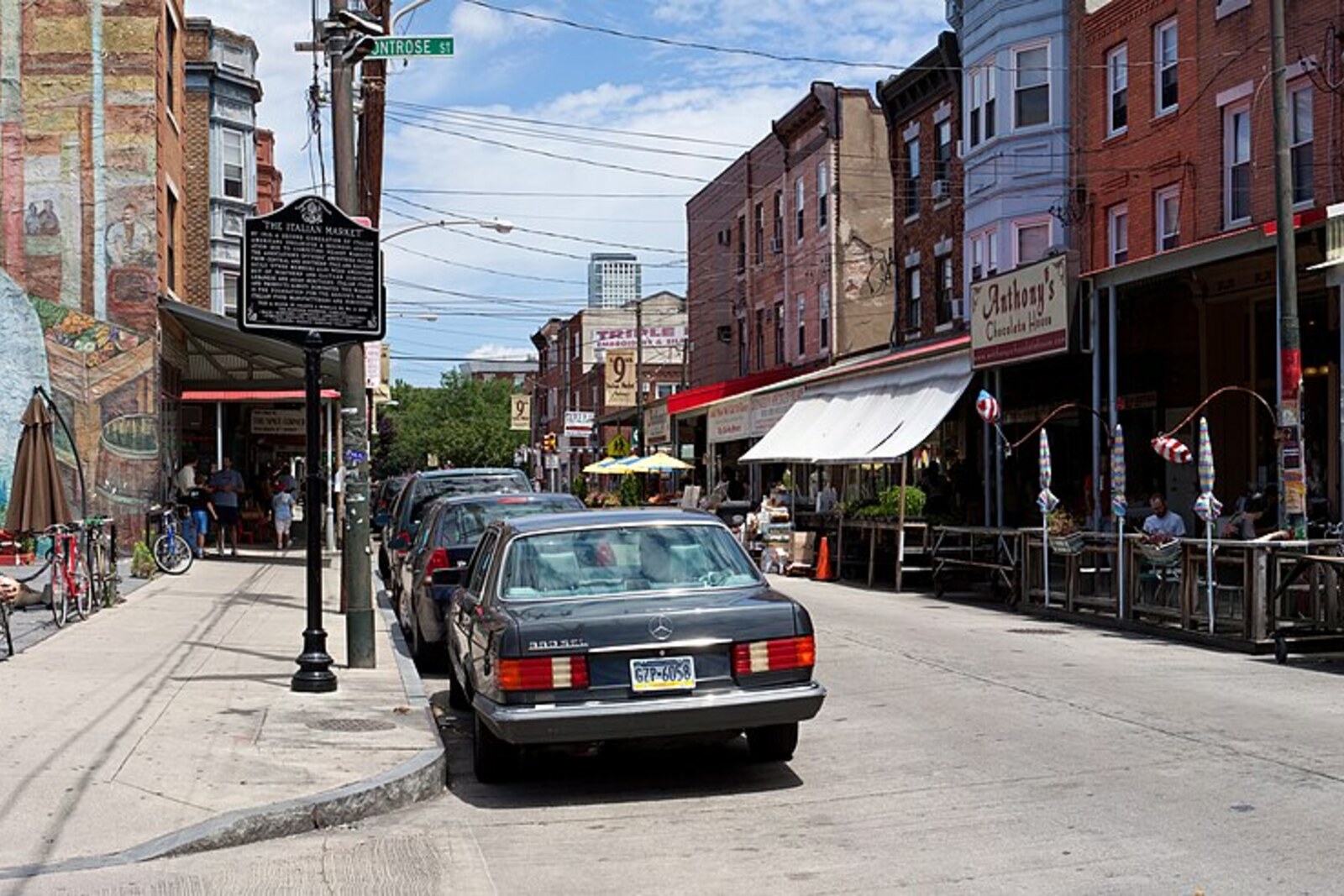
Look around first
What to notice
- Palumbo memorial plaque
- Rowhouse facades
- Shops on the ground floors
The story of the place
On Ninth Street, shops occupied the ground floors of rowhouses rather than gathering in a separate market building. Homes remained upstairs, so trade took place directly from the facades along the sidewalk. One family establishment later grew to about twenty houses: passages were knocked through their shared walls, and a former funeral home was added. After several fires, a memorial plaque remains at the intersection of Ninth and Catharine Street.
In eighteen eighty-four, Antonio Palumbo, a tailor from Abruzzo, opened a boarding house near Catharine Street for newly arrived Italians. He gave a fellow countryman a first city address: here, one could spend the night, eat, learn where people were hiring, and then move into a room of one's own.
According to local legend, some men got off ships at Washington Avenue with a tag reading “Palumbo” pinned to their clothes. A person without English could only show the surname to the conductor. The tags remain a legend, but the conditions at the boarding house are known: food and a bed cost ninety cents a week. Boarders stayed until they found a job on the railroad, in a mine, or in a garment workshop. The Palumbo family helped them get established and looked for permanent housing.
The more newcomers settled in the area, the more they needed familiar food, tableware, clothing, and services in a language they understood. Merchants first set up carts outside houses, then converted the ground floors of rowhouses into shops. The family worked downstairs, lived upstairs, and took in boarders there. That is how the market stretched along Ninth Street: no one built a market building for it; the facades of residential houses became its counters.
Later generations of the Palumbo family turned the boarding house into a restaurant and club. The family bought neighboring houses and knocked passages through shared walls, until the establishment occupied about twenty rowhouses and a former funeral home. A series of fires in nineteen ninety-four destroyed the entire complex. At Ninth Street and Catharine Street, a memorial plaque bearing the name Palumbo remains; the house with the first beds is no longer there.
Useful on site
Open urban space. Hours vary among merchants; many outdoor rows are more active in the morning and daytime, and some shops are closed on Monday. Checked against sources 2026-06-30.
Checked: June 30, 2026. Check the official source before visiting.Listen from the sidewalk, keeping doorways and the passage along the counters clear. You do not need to enter any shops for this stop.