 Guide On Map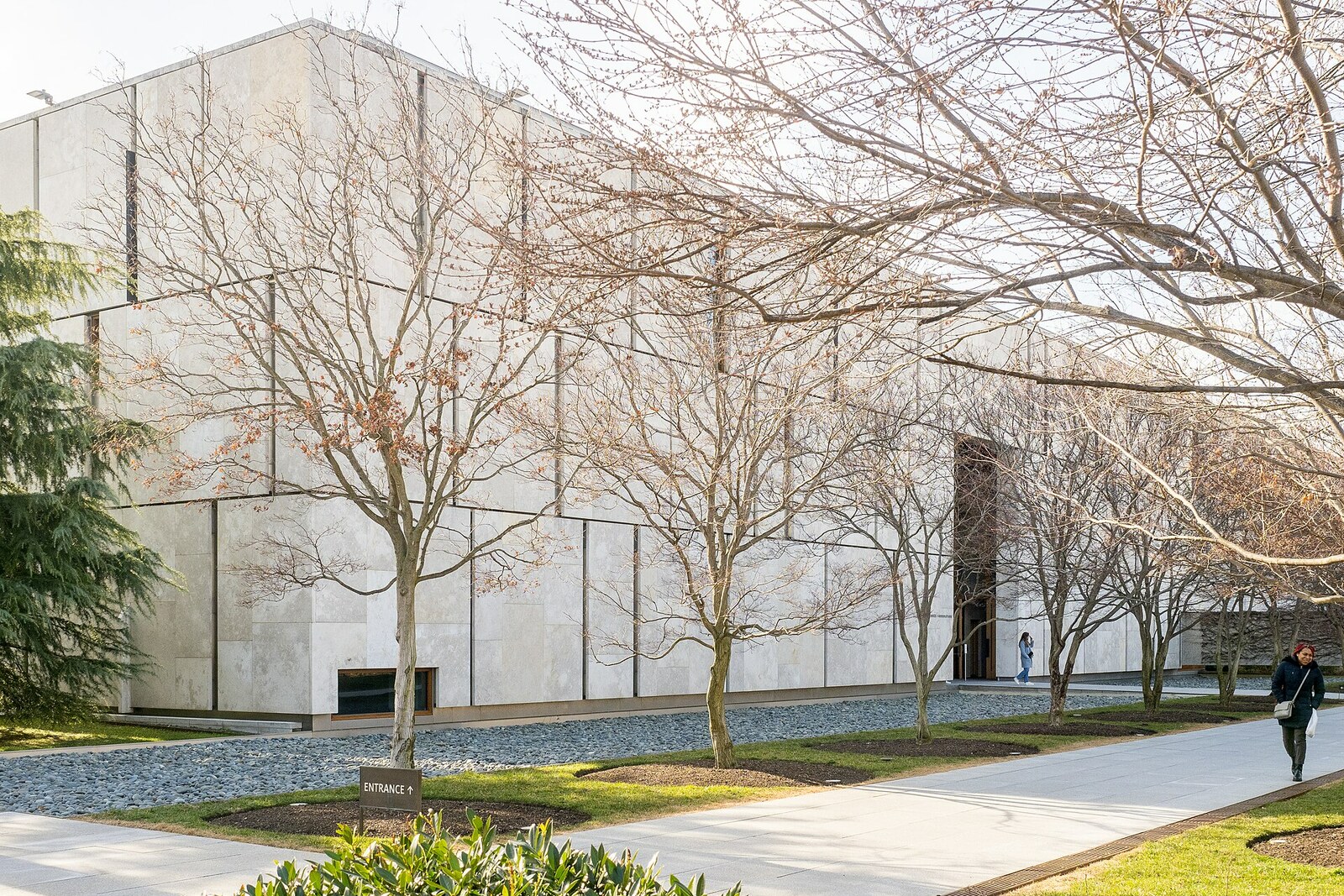
Look around first
What to notice
- Modern facade
- Re-created gallery rooms
- Symmetrical ensembles of paintings and objects
The story of the place
Behind the outer walls of the new building are small gallery rooms where paintings are not arranged by eras and countries. The canvases are gathered in symmetrical groups together with sculpture, furniture, and wrought-iron objects: here, visitors are invited to compare line, light, color, and form. Classrooms, a conservation laboratory, and temporary-exhibition galleries operate around the galleries, so this place retains its educational purpose rather than serving only as an art repository.
The name on the facade is the surname of Albert Coombs Barnes, a Philadelphia pharmacologist and factory owner. He grew up in a family of modest means, trained in medicine, and made a fortune from an antiseptic drug. Barnes used that money to buy paintings, but the collection first found a use right at the factory: every day, he stopped work for two hours and, during paid time, discussed painting and philosophy with the employees. Many of those employees were women and Black Philadelphians. Barnes wanted to give them the kind of education that usually remained a privilege of wealthy audiences.
In nineteen twenty-two, he founded the Barnes Foundation and built a gallery for it in the suburban community of Merion. Formally, it was an educational institution, and the collection served as visual teaching material. Barnes hung paintings in symmetrical groups that he called ensembles. A Renoir might be placed beside African sculpture, an antique chest, and a door hinge: students were taught to compare line, color, light, and form without sorting art by countries and centuries. Labels with ready-made interpretations only got in the way.
Barnes intended to preserve this arrangement after his death as well. In the foundation's charter, he required that all paintings remain in the exact places they occupied during his lifetime and his wife's. When Barnes died in nineteen fifty-one, the trustees inherited a celebrated collection, an educational program, and a ban on changing the arrangement of the works.
Half a century later, that combination became nearly impossible to resolve. The foundation spent more than it received, its endowment was depleted, and restrictions on visiting the gallery in residential Merion, along with years of litigation, made it difficult to earn money and attract donations. Bernard C. Watson, chairman of the board of trustees, sought a move to central Philadelphia. Major charitable organizations promised money for a new building and to replenish the endowment, but refused to support the former site. The city offered land here, on the Benjamin Franklin Parkway.
In two thousand two, the trustees asked the court to amend the founding documents. Barnes's students objected, believing that the collection could not be separated from the rooms and garden created for it. One of them, Jay Raymond, tried to stop the move through an appeal. Judge Stanley R. Ott, who handled charitable-foundation cases, decided after several weeks of hearings that without the move, the institution faced a continuing financial crisis. In December two thousand four, he allowed the collection to be relocated and the board of trustees to be expanded. Raymond's appeal was dismissed: the court had previously denied him admission to the case as an independent party, and the deadline to appeal that ruling had already passed.
The trustees gained the right to change the address, but preserved the arrangement on the walls. The architects of the new building reproduced the dimensions, shape, and sequence of the Merion galleries. They placed the paintings, sculpture, furniture, and wrought-iron objects in the same ensembles Barnes had left behind. Around these rooms came classrooms, a conservators' laboratory, and temporary-exhibition galleries—spaces that the old educational building lacked.
The foundation opened on the Benjamin Franklin Parkway in two thousand twelve. Behind the modern facade, the paintings hang in their former places in rooms from another building. Even their orientation was preserved: a window that faced south in Merion faces south here as well.
Useful on site
Open Thursday through Monday 11:00-17:00; for members from 10:00. Adult admission is 30 dollars, seniors 28 dollars, students and teenagers 5 dollars, and children under 12 are free. Large bags and backpacks are not allowed in the galleries.
Checked: June 29, 2026. Check the official source before visiting.The building can be included in the walk from outside, but Barnes's main principle is clear only in the galleries. Plan admission as a separate visit, so the route does not become a rushed viewing of the collection.